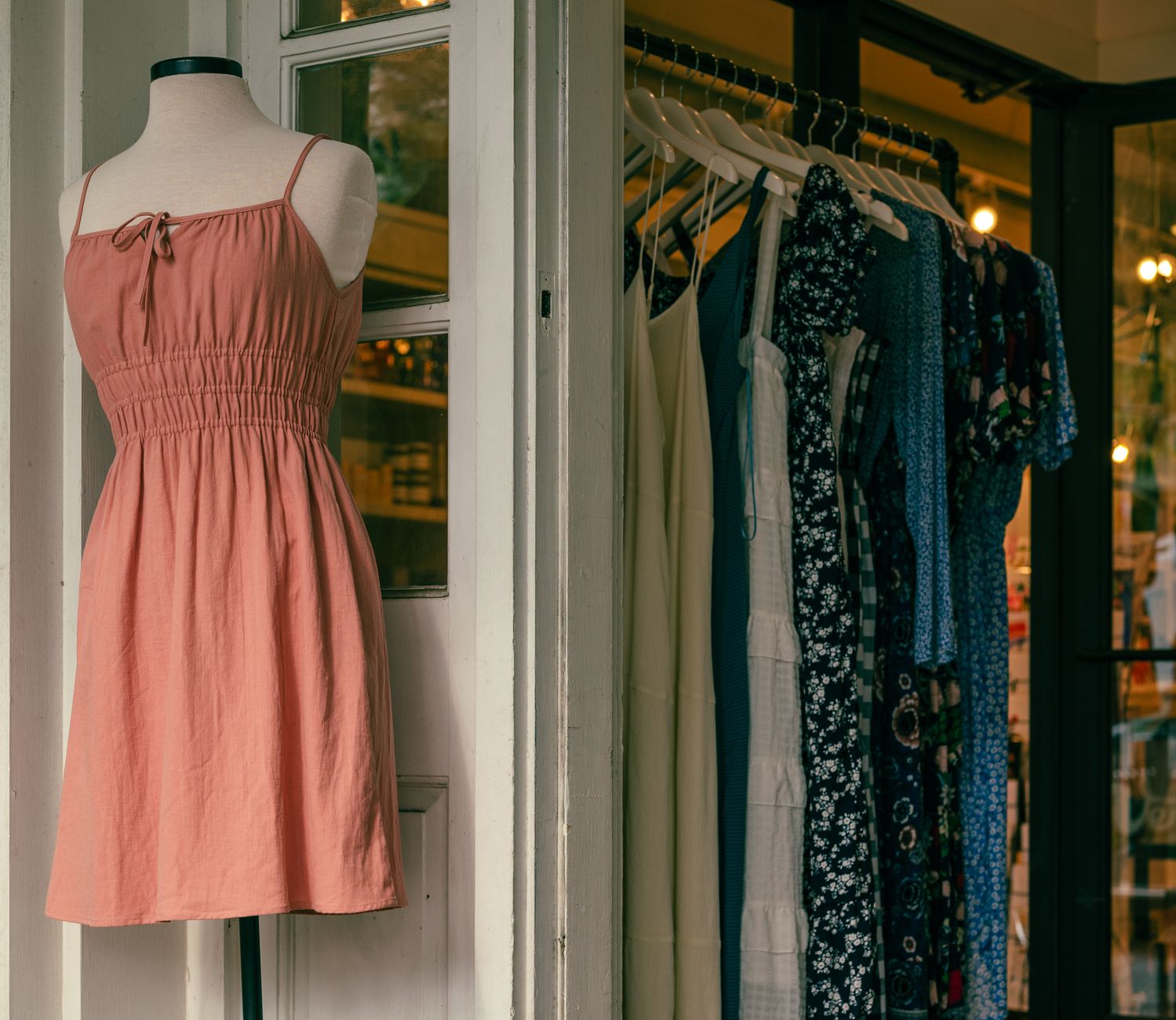
The Dress on the Gift Table
I looked at him. His ears were bright red and his chin was not steady and I had never in my life been so glad I married somebody.
Phyllis turned to Don. He was her last stop. He had been her last stop for forty years, and he had never failed to nod.
Don looked at the dress for a while. Then he reached up, slow and careful, and lifted it off the hook, hanger and all. He folded it once over his arm, with the card on the inside where nobody could read it anymore.
“Sit down, Phyl,” he said. It was the gentlest thing I ever heard. “Go on and sit down.”
She sat.
Don gave his toast. I would not have blamed him for skipping it. He stood up at the head table with a glass of ginger ale and thanked everyone for coming. He thanked the post for the hall. He said forty years was a long time and he had been blessed, and that he hoped the Lord would give him enough more of them to get a few things right that he had let slide.
He looked at me when he said that last part. Then he sat down.
People clapped. They were kind about it. They ate their cake and they were kind to Phyllis too, in the careful way people are when they have seen something they cannot unsee. But nobody stayed late. And I noticed that when the women went up to the head table to say good night, most of them stopped at Arlene first.
A good many stopped at me. Carol hugged me so hard my earring came out. Linda, the pastor’s wife, did not say anything at all. She only put her palm flat against my cheek for a second, the way my own mother used to before she passed.
Don caught me at the coat rack. He still had the dress over his arm.
“I should have stopped it a long time ago,” he said. “That scale. I knew that scale was wrong when she wrapped it.”
“It wasn’t yours to stop, Don.”
“Yes it was.” He looked down at the dusty rose. “What do you want done with this?”
I thought about it.
“The clothing closet at church,” I said. “It’s a nice dress. Somebody ought to get to wear it.”
“And the card?”
“Throw it away,” I said. “I don’t need it anymore. Everybody’s read it.”
He nodded. He took the pin out himself, right there, and dropped the card in the big gray trash can by the door, on top of the paper plates.
We drove home down the state road with the corn standing dry on both sides, ready for the combines. Katie fell asleep in the back before we got to the stoplight. Scott did not turn the radio on.
“I’m sorry,” he said, somewhere past the elevator.
“I know.”
“No. I mean for all of it. I kept thinking if I didn’t look right at it, it wasn’t that bad.” His hands were tight on the wheel. “Were you going to tell me? That you were going to hang it up?”
“No.”
“Why not?”
“Because you would have asked me not to make it a thing,” I said. “And I would have listened. I always did.”
He did not say anything to that. He reached over and took my hand again and held it the rest of the way down Elm Street.