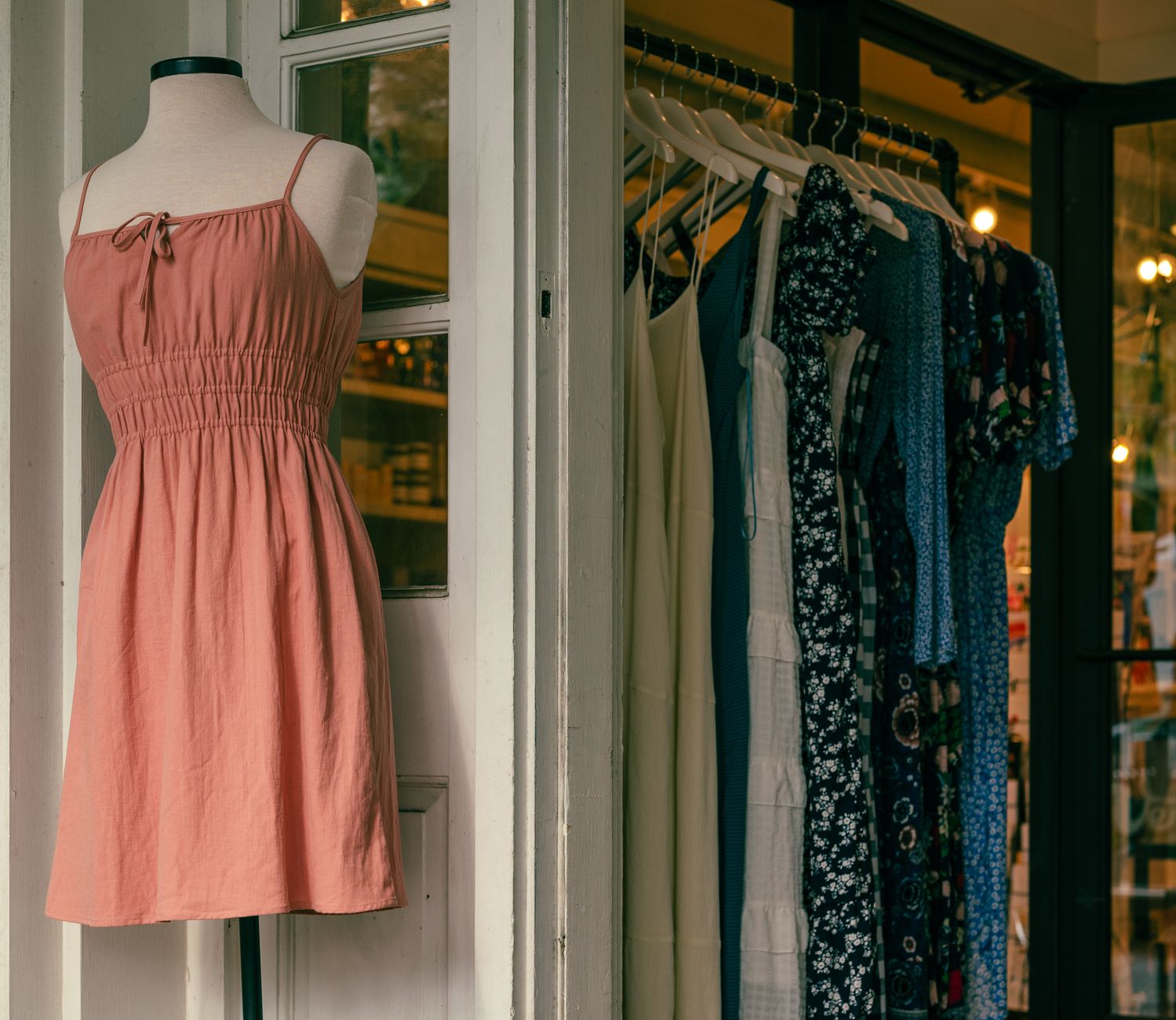
The Dress on the Gift Table
Gary, from the post, who had served with Don and brought a Crock-Pot because his wife told him to. He set it on the right side. He bent down, squinting, and read the whole thing with his finger under the words. Then he took his cap off and held it against his chest, and he looked at me and did not have anything to say, and nodded, and went to find his wife.
Two couples from the euchre club. The lady who had done Phyllis’s hair every Friday for thirty years, who read the card twice and said, “That’s her hand, all right,” and looked like she might be sick.
Nobody asked me if it was real. Nobody needed to. They had been getting that handwriting for forty years. On Christmas cards. On the sign-up sheet for funeral dinners. There was not a person in that hall who did not know Phyllis’s capital J on sight.
The hall filled up. The noise came up with it, the way it does, chairs scraping and the men laughing by the bar. But there was another sound under it, lower, moving table to table. A woman would lean to the woman beside her. A head would turn toward the door. Somebody would get up, casual, as if to check on a coat, and walk past the gift table, and slow down.
It got quieter one table at a time.
Phyllis did not notice. She was up by the stage having her picture made with Don in front of the flags, turning her good side to the camera, holding her chin up the way she had told me to hold mine at my own wedding.
Katie came and stood with me for a while. She looked at the dress on its stand.
“That’s the one that’s too little.”
“That’s the one.”
“Is Grandma going to be mad?”
I crouched down, which in a wrap dress and heels takes some doing, and I looked her in the eye.
“Katie. Did I write anything on that card?”
“No.”
“Then whatever happens, I want you to remember that. I didn’t say an unkind word. I just didn’t hide hers.”
She nodded. I think she understood more of it than I wanted her to.
Scott saw it at about a quarter to seven.
He was coming back from the bar with a pop for Katie and I watched him notice the little knot of people by the door, and then notice what they were standing around. He stopped walking. The color came up his neck the way it does.
He started toward me with his jaw set.
I knew what he was going to say. Take it down, Jill. Right now. He never got to say it.
Arlene got there first.
I should tell you about Arlene. She and Phyllis started the first grade together in the old brick schoolhouse that is a parking lot now. Arlene stood up with her as matron of honor in 1986. She was a big, comfortable woman with a cloud of white hair and a laugh you could hear from the church parking lot, and she had been late that night because her knee was acting up.
She came through the door on her cane with a wrapped box under her arm. She gave me a kiss on the cheek. She set the box down.
“Now what in the world,” she said, and got her reading glasses out of her purse.
She read every line.