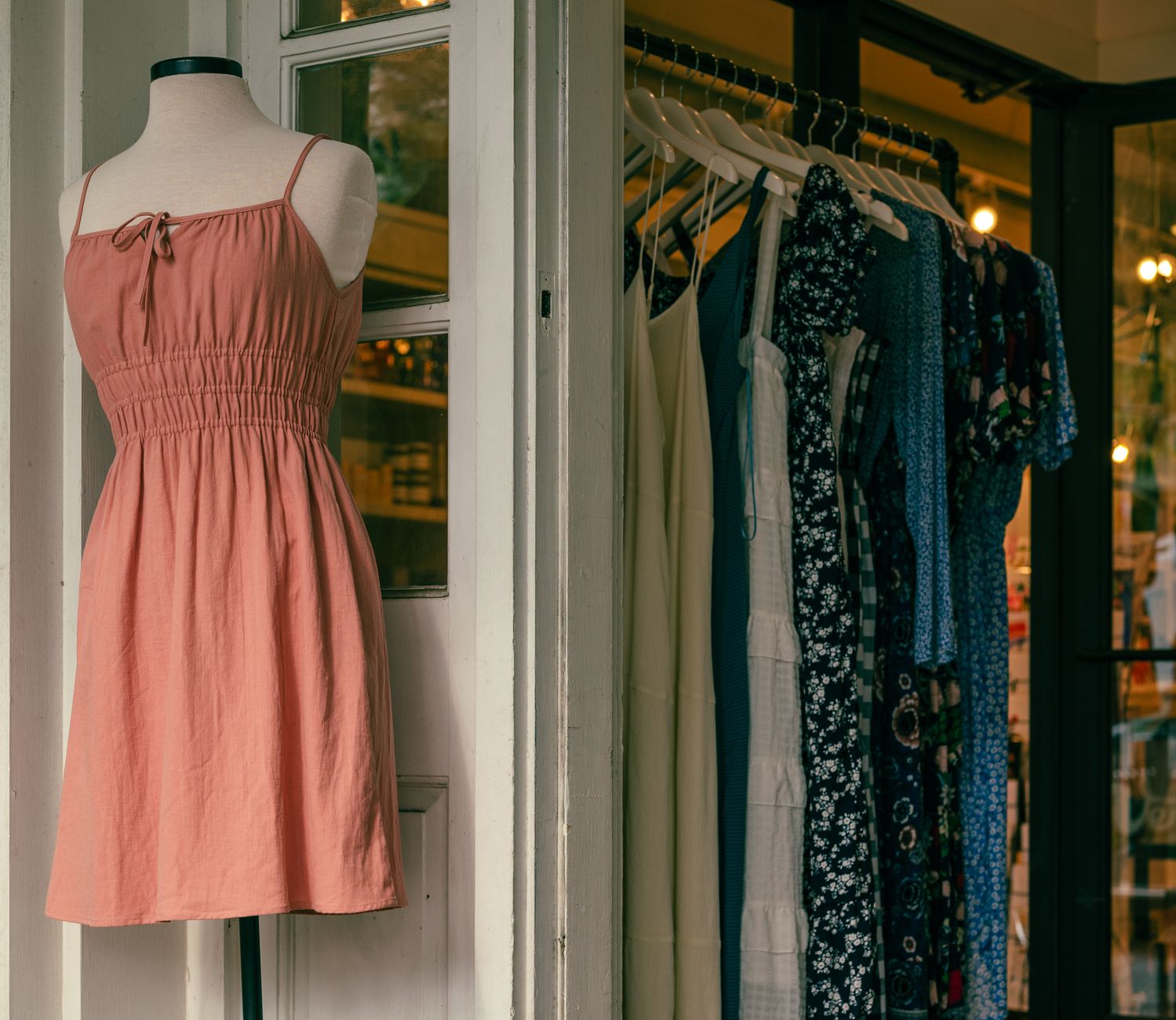
The Dress on the Gift Table
I watched her do it. She did not put her hand to her mouth like Carol. She did not go pale like the hairdresser. Arlene read that card the way you would read a doctor’s report on somebody you loved, all the way to the bottom, to the name.
Then she took the glasses off, slowly, and folded them.
She looked at me. Just for a second. It was not pity. I would have known pity. It was more like she was checking to see if I was still standing.
I was.
“Phyllis,” Arlene said, loud enough for the back tables. “Come over here a minute.”
It carried. The men at the bar stopped. Up by the flags, Phyllis turned with her smile still on from the photograph.
“Arlene! You made it. Come up here and get in a picture.”
“No. You come here.”
There is a kind of quiet that a hundred and twenty people can make all at once. I had never heard it before that night. Phyllis heard it too. I saw her hear it. She looked around at the tables, at all those faces she had known her whole life, and not one of them was looking at her the way she was used to.
She came down the middle of the hall. Her heels were very loud on the tile. Don came behind her, a few steps back, with his hands at his sides.
She saw the dress when she was about ten feet out.
I will give her this. She did not stop walking. She came right up to the table and stood in front of it with her back straight, and she looked at the dusty rose on its black iron hook, and at her own stationery, and at her own blue ink.
Then she looked at me.
“What is this?”
I did not answer. Arlene did.
“I believe that’s my question, Phyl.”
“It’s a private matter between me and my daughter-in-law, and she has decided to make a spectacle of it at my party.”
“She hasn’t made a thing,” Arlene said. “She hung up a present. You’re the one who wrote on it.” She tapped the card with one finger, not hard. “Is that your hand or isn’t it?”
Phyllis laughed. It was her company laugh, the bright one. She turned it out toward the room.
“Oh, for heaven’s sake. It was a little motivation. It was a joke, between us girls. Jill knows that. Jill, tell them.”
Everybody looked at me.
I said, “It came in the mail the last week of August.”
Phyllis’s smile held on for one more second and then it went.
“Well, somebody had to say it,” she said, and her voice had changed. It had gone flat and cold, the voice I knew, the one the room had never heard. “Look at her. Thirty-six years old. I was trying to help her. I have been trying to help that girl for eleven years, and this is the thanks.”
“Phyllis.” Arlene did not raise her voice. She did not have to. “I have known you since we were six years old.”
“Arlene, don’t.”
“I stood up with you forty years ago tonight. And I was in your mother’s sewing room the night before, till past midnight, while she let that wedding gown out for the second time, because you could not get the zipper past your ribs and you were crying so hard you gave yourself the hiccups.”
Nobody in that hall moved.