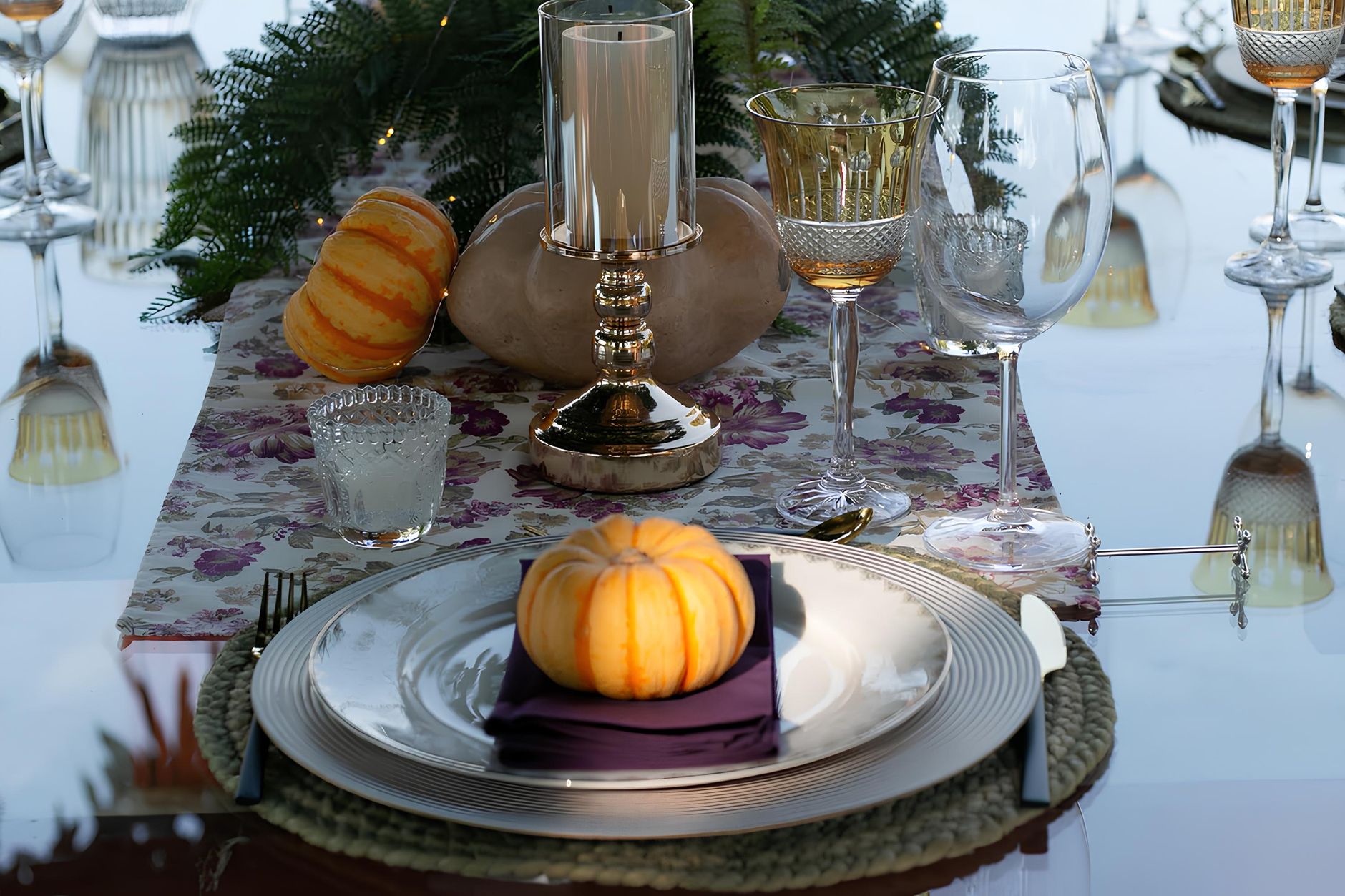
The Thanksgiving I Did Not Cook
And that is what they did. Roxanne took her gloves. The Rotary treasurer shook Judd’s hand. The church council filed out in their good coats, past the empty plates, past the name cards in the calligraphy, past a frozen turkey on a platter beside an electric knife that nobody had plugged in. Twenty-eight people walked down the driveway to their cars, and four of the old ladies, Judd said, did stop to pat his arm on the way.
Judd went too. He sat at a long table at the fellowship hall between a man who drove a school bus and a woman in a wheelchair, and he ate a plate of Opal’s cooking, and he was so ashamed he could hardly taste it, and he asked Pearl Upton for a second slice of pie.
Mavis and Garth stayed behind in the house with the seven chickens.
“I’ll tell you the part I cannot get out of my head,” Judd said, when he phoned me. “As I was leaving, I looked back through the dining room window. They were sitting at opposite ends of that long table. Mama had her hands folded. Garth was reading your note again. And there were thirty empty places between them, every one of them set perfectly.”
I turned my phone on at three in the afternoon, Arizona time. There were forty-one missed calls and a long run of messages that began angry, went pleading, and ended, around dinner, in an unnatural silence.
Judd’s call came at eight. I listened to the whole thing without interrupting. When he had finished, I said, “Is Pearl all right? Did she get the ham in?”
He laughed, a startled, wet laugh. “She said to tell you the ham was a miracle. She said you could run that kitchen in your sleep.”
I stayed four days in Tucson. I walked my cousin’s dog. I slept ten hours at a stretch. On Saturday night, I sat on the patio and wrote a list on a legal pad. Not a guest list. A list of what I needed, if I was going to go home.
I flew back on Sunday. Garth was at the airport, standing by the baggage claim in the same quarter-zip, looking about a decade older than when I had left. He did not say hello. He said, “I have been wrong about so many things.”
“Start with one,” I said.
He thought about it for a very long time, in the way a man thinks when he has finally run out of other men to be.
“I let you do all of it,” he said. “I told myself it was because you were good at it. But it was because it was easier.”
I did not forgive him in the airport, or in the car, or that week. I told him what I had written on the legal pad. That I would not host another holiday for his mother in this house unless she asked me, to my face, in advance, like a person. That he would learn to cook, not as a favor to me but as a skill, the way he had learned to sell. That he would go to the church on Sunday and apologize to Pearl Upton in person. And that I wanted him to see a counselor, and that I would be going, too, with a list of my own.
“And if I don’t?” he said.
“Then I will have already bought the second ticket,” I said, “and it will be one way.”