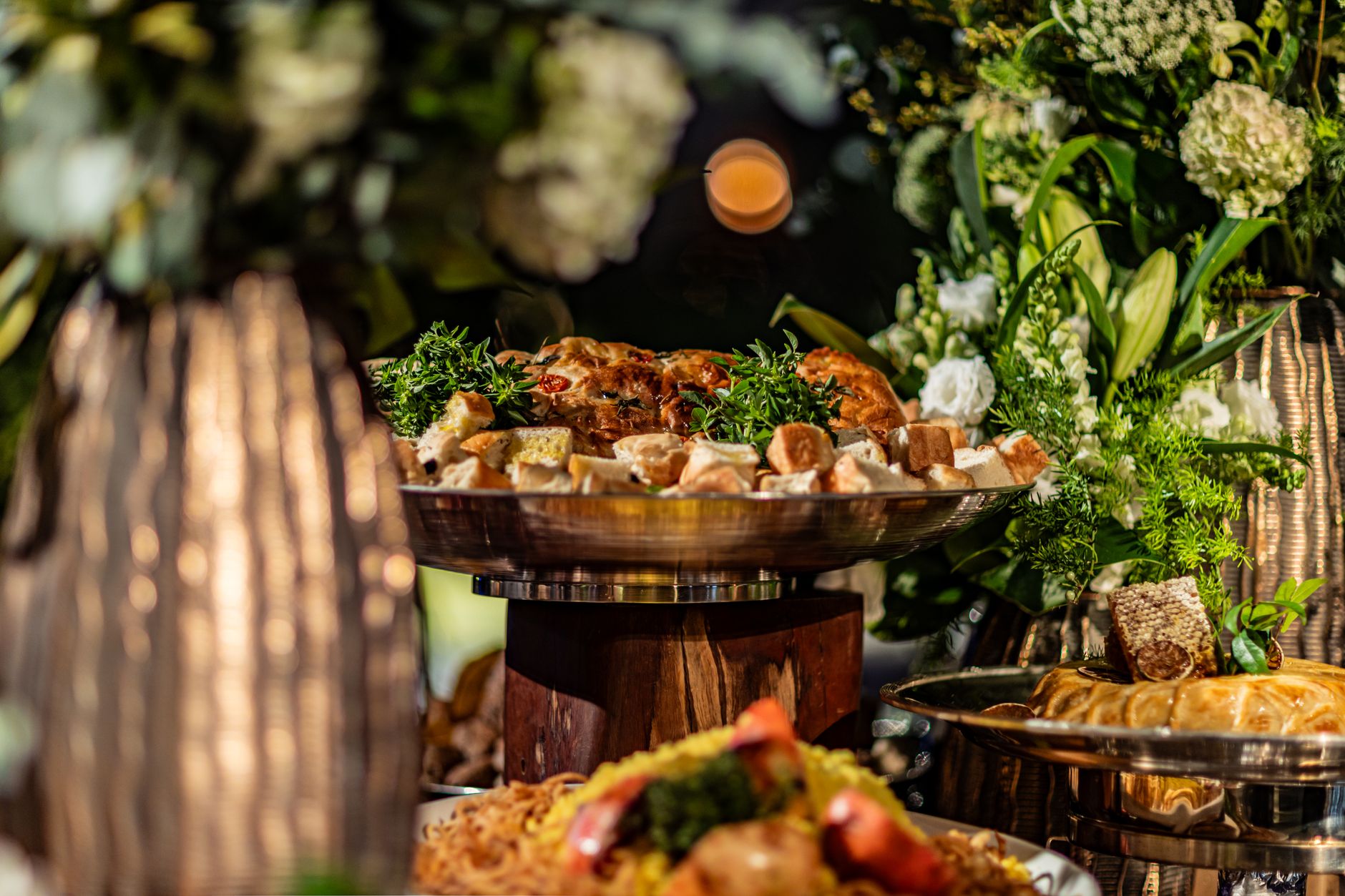
The Plate I Was Told Not To Fill
I stood looking at it for a while. Then I walked to the back of the room, to a small two-top beside the kitchen door where nobody had put a card at all, and I sat down in my green dress to wait for my parents.
They came in at six, my father in his good gray suit and my mother in navy blue with the gold wheat-sheaf brooch she wears to every occasion she considers important. Fifty guests clapped.
My mother walked past my little table on her way to the fireplace. She noticed the green dress, and she noticed where I was sitting, and she tilted her head with a look of pleasant satisfaction.
“Oh, good, you’re back here,” she said. “You’ll be right by the kitchen if anyone needs anything.”
I smiled. I am very good at smiling.
At seven, with the guests seated and the candles low and the champagne poured, Cheryl tapped a fork against her glass and stood in front of the fireplace with the light on her hair.
“When I decided to throw this party for Mom and Dad,” she began.
I put my ginger ale down.
She thanked the guests for coming. She said she had wanted to give our parents “a night they would never forget.” She said the flowers had been hard to find and the menu had taken weeks, and that none of it mattered because family was everything. She raised her glass, and her eyes were wet, and she was so good at it that for a moment even I wanted to believe her.
The room applauded. My mother pressed a hand to her chest. “Cheryl always takes care of this family,” she said, to no one and to everyone.
“What would we do without her?” my father added, a beat late, in the flat voice he uses when he has been handed a line.
Then the buffet opened, and the line formed, and I stood up and took a plate.
Which brings us back to the line, and to my mother’s voice, and to the plate.
“Wendy, don’t fill that. You didn’t pay for this. Let the guests go first.”
I want to explain what happened inside me, because I have tried to explain it to myself many times since. It was not rage. I have felt rage at my mother before, hot and ashamed, and it always collapsed into an apology by the end of the week. This was the feeling you get when you add a column of figures for the third time and it comes out the same, and you finally accept that the number is the number. I was sixteen again, and I was thirty-four, and they were the same moment.
“Of course, Mom,” I said.
I set the plate back on the stack. Cheryl came around the end of the table, still holding her own plate, and put her free hand on my elbow.
“Whatever you’re about to do, Wendy,” she said in a low, quick voice, “don’t make this about you. Please. Not tonight.”
“I won’t make a scene,” I said.
I watched the relief cross her face, the way relief crosses it every time I say that sentence. She patted my arm and went back to her seat. She believed she had won. She believed I would go sit by the kitchen door and eat a roll and drive home at nine and send a text the next morning that said, Lovely party, I’m so glad you enjoyed it.