The Daughter Who Cleans Floors
Four Seconds
Which brings me back to the Grange Hall, and my mother’s glass, and the room that had just finished laughing.
I raised my water, and I let the quartet fill the silence, and I counted the seconds until the next toast would swallow the last one.
That was when I noticed the groom’s father.
I had never met him. I want to be clear about that. Kay had been dating Jack for fourteen months and he had been to my parents’ house five times, and I had not been invited to a single one of those dinners. My mother always had a reason. Too crowded. Too formal. “Next time, sweetheart.” I knew Jack’s father only as a name on a place card, Ira Keller, the retired regional director at the health system. I had never seen his face.
He was sitting at the head table with his wife on his left, and he was sixty-eight or seventy, silver-haired, in a dark suit with a straight back. A man who had spent a lifetime being listened to. And he was the only person in the entire hall who was not laughing.
He had not laughed at “cleans floors.” He had not laughed at “every family’s got one.”
His face had stopped.
I watched it happen. A man who had been smiling pleasantly at his son’s fiancée’s family went rigid, as if someone had said his name in an empty room. He was not looking at my face. His eyes were fixed on my left hand, where it lay on the tablecloth beside my glass, palm half up, the scar catching the candlelight.
He set down his fork. Very carefully, the way you put down something fragile.
I looked at him. He looked at my hand.
One second.
Two.
Three.
My mother was still talking, saying something to the woman beside her about how “everyone has to start somewhere.” My father was still enjoying the echo of his own joke. At the head table, Kay noticed that her future father-in-law was not smiling, and I watched her face tighten the way it always does when something at her event is not going to plan.
Four seconds.
Then Ira Keller put both hands on the table, pushed himself to his feet, and the whole hall, which had been so loud, went quiet one table at a time.
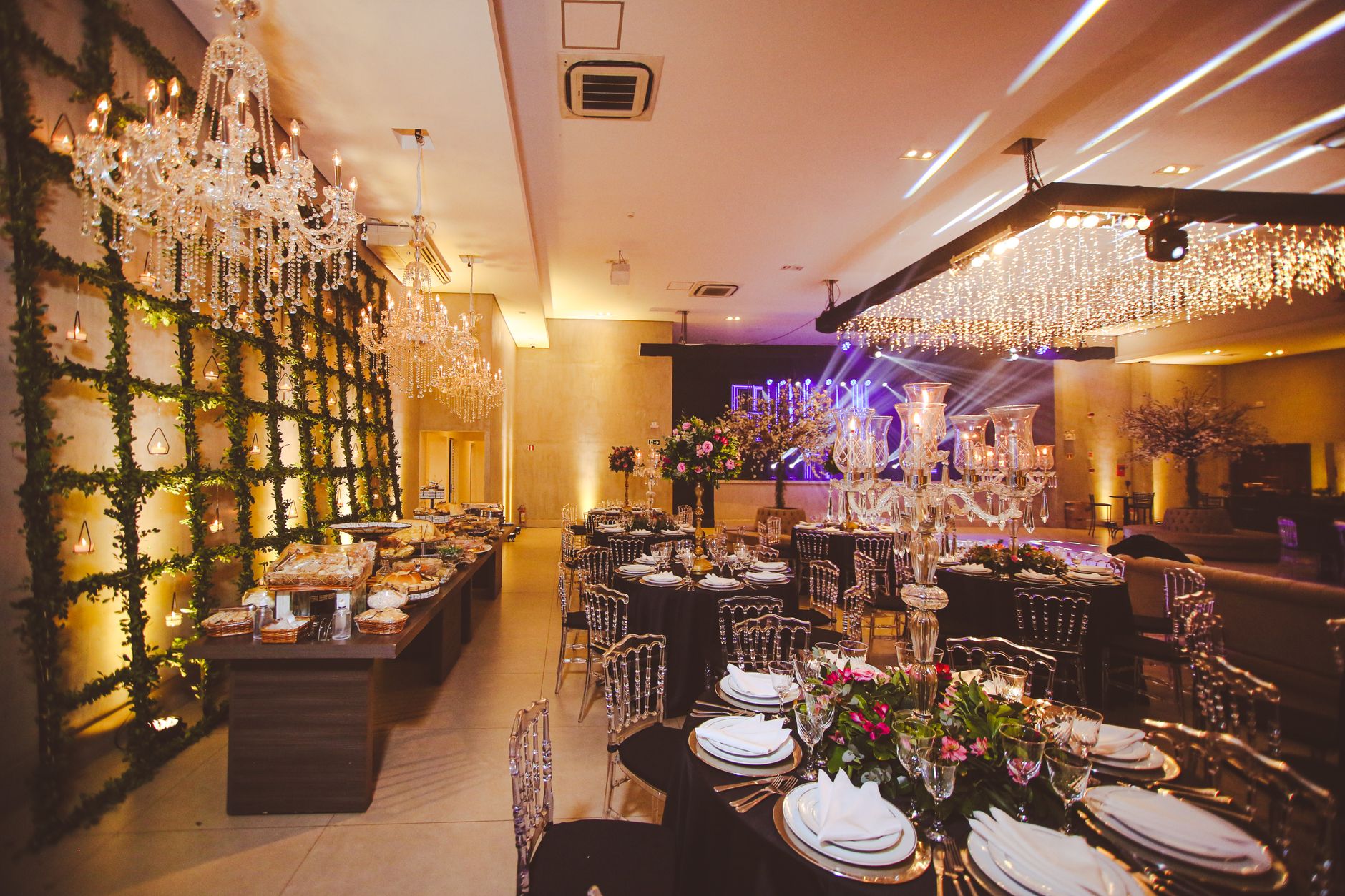
He did not look at my mother. He did not look at my sister. He stepped away from the head table and walked down the long center aisle, between the candlelit tables and the ivory flowers, past the quartet, and he did not stop until he was standing in front of my chair beside the kitchen doors.
Fifty people turned in their seats to watch him.
“Miss Jarvis,” he said. His voice carried to the back wall. “Would you show me your left hand?”
My mother’s wineglass was still in the air.
I did not say anything. I turned my hand over and laid it open on the cloth, palm up, in the candlelight.
He looked at it for a long moment. Then, very slowly, he rolled back the cuff of his dark suit and held out his own wrist beside mine, and I saw the thin white line where a seat belt had once burned him.
“May I ask how you got that scar?” he said.
“A work accident,” I said, because it was the sentence I had been saying for three years.
He waited. He did not move. Something in his face told me that was not enough, and that he was not going to let me walk away with it.
“Could I speak with you outside?” he said.
I stood. I could feel the whole room on my back. My mother’s mouth was open. My father had stopped chewing.
We walked through the kitchen doors, because they were closest, past a startled waiter holding a tray of crab puffs, and out through the service door into the back lot, where the rain had left the pavement shining under a single yellow light.