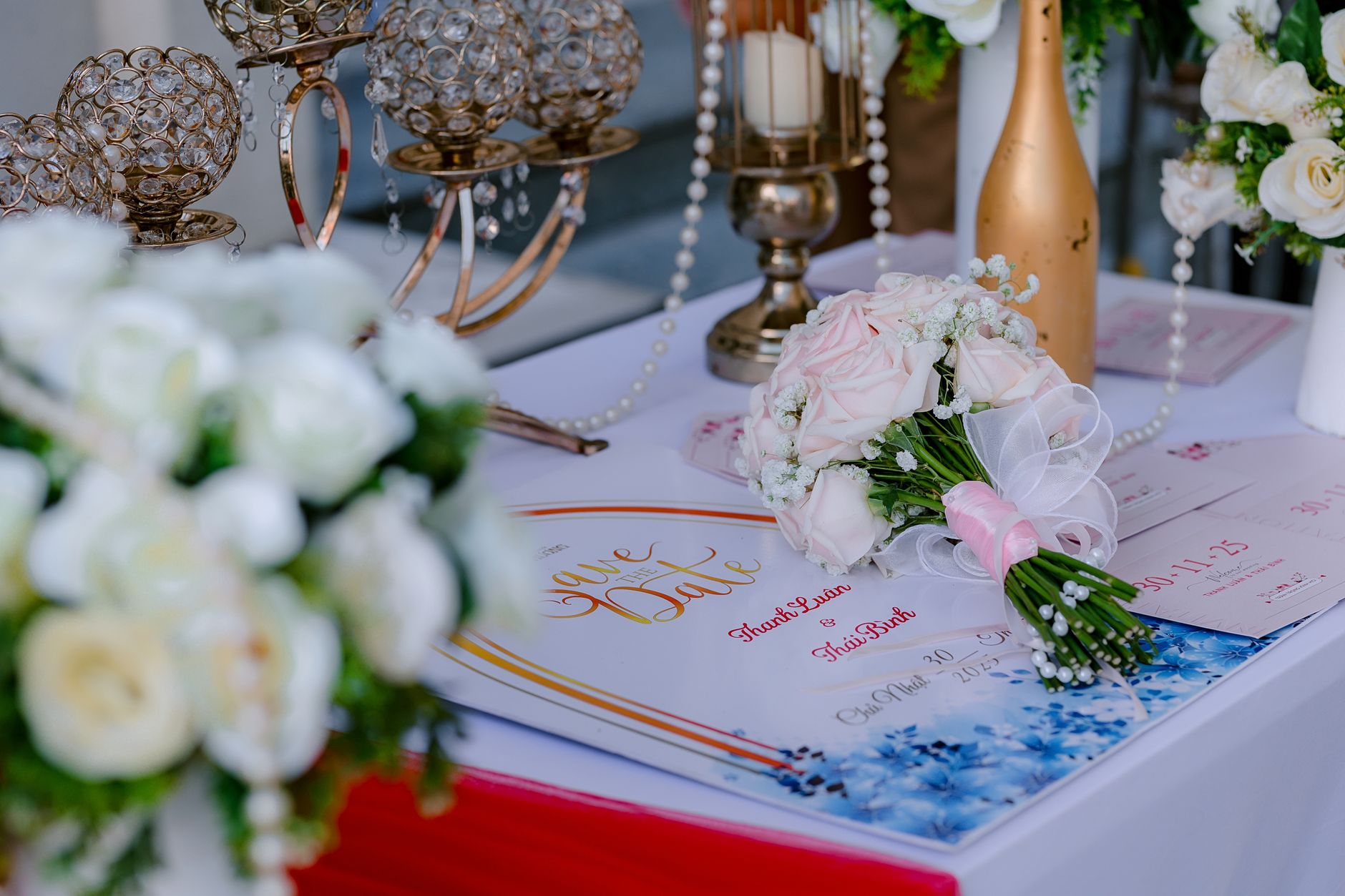
The Bouquet My Sister Took
Mom
I did not see her stand. I only heard the chair.
My mother had been sitting at table four with her untouched glass of wine and her napkin in her lap. She was seventy-three years old. For as long as I had been alive, she had been the person who kept peace in our family at any price, who looked at the tablecloth when Marge said something unforgivable, who told me to let it settle.
She got up so slowly that for a moment I thought she was going to the restroom.
“Marge,” my mother said. Her voice shook. It was the first time in my life I had heard it shake in public. “I told you in August to fix this.”
The whole hall turned.
“You told me you would,” my mother said. “I took you at your word. I told your sister to be quiet because you promised me. And you let this baby sit in front of every person we know and ask you for what is hers.”
“Mom,” Marge said. “Not now.”
“Yes, now.” My mother wiped her eyes with the napkin. “This is the now. I have waited too long for it, and I am sorry for that, Shelly. I am sorry, Trina. Marge, put those flowers down.”
Marge did not move.
It was Dottie who crossed the floor. I had forgotten, in all of it, that this was Dottie’s wedding. She came across the hall in her ivory dress with her veil half off, the way a bride does when she has been dancing, and she did not hurry. Wally was behind her. She walked up to my sister, and she looked her in the face, and she held out her hand.
“I threw that to Trina,” Dottie said. “Please give it to her.”
For a long moment I thought my sister would refuse. I watched the calculation go across her face, the same one I had seen her do over a church budget, over a funeral guest list, over our father’s estate: how to come out of this on top. I watched her find that there was no version of the next ten seconds where she did.
She put the bouquet in Dottie’s hand.
Dottie carried it to my daughter. She did not toss it this time. She knelt on the floor of the K of C hall in her ivory silk, and set the white roses in Trina’s lap, and folded my daughter’s fingers around the stems.
“This is yours,” she said. “It was always yours.”
And an old man in the back, I never learned his name, began to clap.
The Sound
Trina sat in the middle of it with the bouquet in her lap and the microphone still in her hand, and she looked at me.
I crossed the floor. I knelt down. She put her arms around my neck and I felt her whole body shaking, the tremor she had held back for ten minutes, and she whispered into my ear, “Did I do it right?”
“You did it perfect,” I said.
“I was scared.”
“I know.”
“I didn’t want to make Aunt Marge cry.” She said it into my collar. “I just wanted my van.”
Marge was standing alone at the edge of the dance floor. Her pearls had come loose from the clasp, and the pastor was speaking to her, quietly, with a hand on her elbow. I saw her look at the room, and I saw her find that nobody looked back. For one of the first times in forty-one years, my sister was invisible, and the thing I had expected to feel, which was triumph, did not come. What I felt was a sort of tired grief, for the sister who had once read our father’s eulogy without looking down.
She left through the kitchen door.