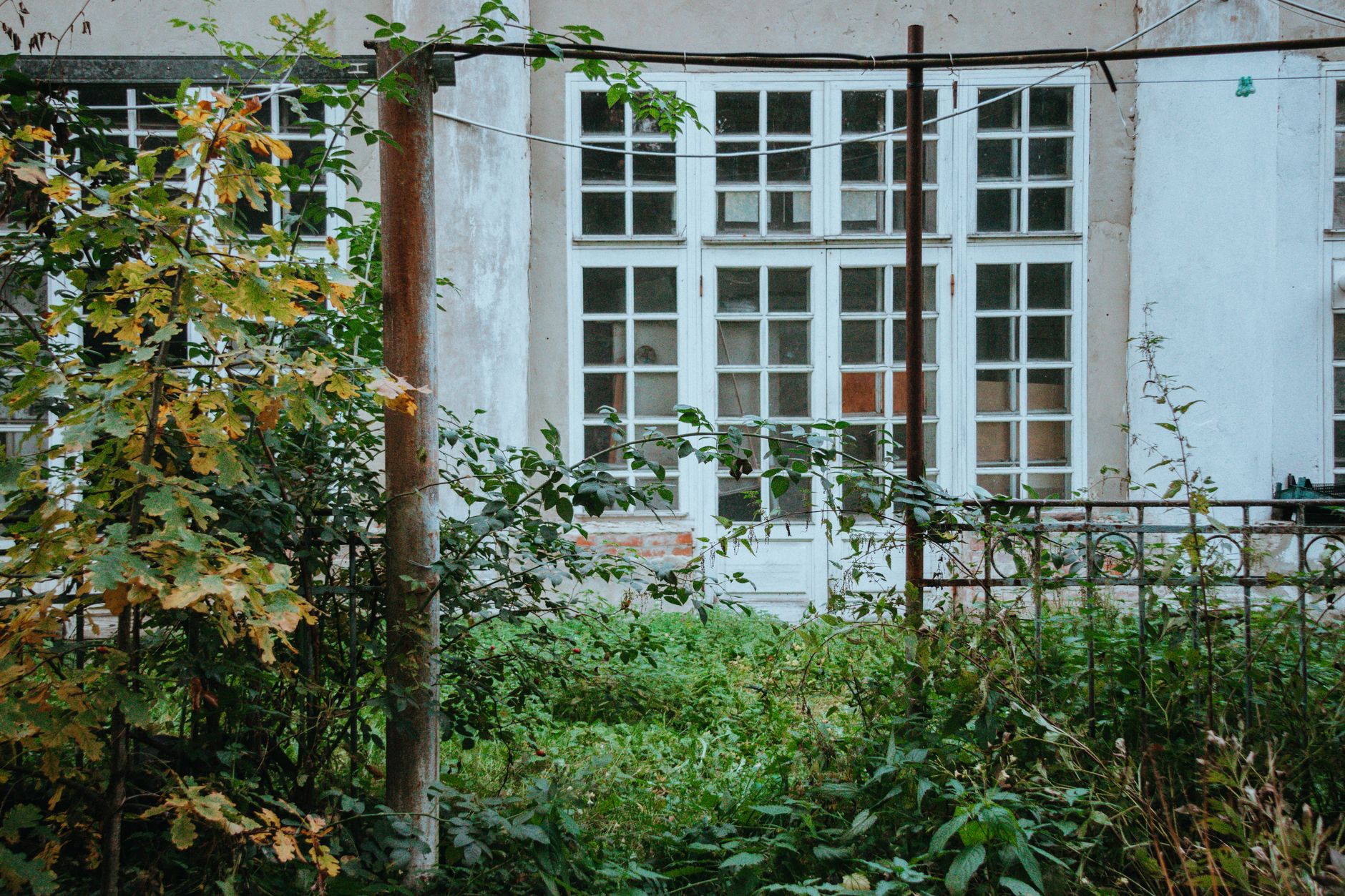
The Padlocked Box Behind The Foreclosed House
At a quarter to nine, I heard the chain-link rattle at the back of the yard.
A bicycle got laid down in the alley. Then a girl came through that gap in the fence on her hands and knees, the way she had obviously done many times, and stood up in the path she had worn. She was small for ten, with a brown ponytail and a purple hair elastic, carrying a bread bag of dog food and a jug of water.
She was halfway down the path before she saw the freezer standing open in the dusk.
She dropped the jug. It bounced and rolled into the weeds.
“Rooster?” she said. Then louder. “Rooster!”
She ran the last twenty feet and went down on her knees in front of that empty box, and she put both hands on the quilt, and she made a sound I will hear for the rest of my life.
“He’s alive,” I said. I stood up out of the chair so she could see me. “Sweetheart, he’s alive. I found him Sunday. He’s at the vet. He’s going to be all right.”
She whipped around and stared at me, an old stranger in a sage-green work shirt standing in the dark in her yard, deciding whether to run.
“You’re Josie,” I said. “I saw your name on the kitchen door. Yours and his.”
That did it. She sat down hard in the weeds and cried, and I sat down beside her, my bad knee be hanged, and waited.
It came out in pieces.
Her daddy had told her Rooster had to go to the shelter, and a boy at school had said shelters put dogs to sleep. So the night before they moved, she had walked Rooster out to the old freezer her daddy used to keep chicken scratch in, the one with drain holes he had drilled years ago, stood it on end so the rain could not get in, and put the quilt from her own bed inside.
“I never shut it all the way,” she said. “Never. I always put the block in.” She pointed into the weeds, and when I looked, there it was, a chunk of two-by-four I had walked right past, with teeth marks worn into one end where the lid had rested on it. “He could get out whenever he wanted. He just didn’t want to. He’d wait for me.”
She had scratched the number off his tag with her house key, so that if somebody found him, they could not call her daddy and send him to the shelter. She had told her parents he ran away. Every evening she rode her bike over and sat in her chair, and Rooster sat in his, the way they used to on the front porch, and she read to him until dark. Then she put him back with his supper, set the block, and scratched a mark.
“Thirteen,” I said.
She nodded. “And then on Thursday I came and there was a lock on it.”
She could hear him in there, scratching. She had tried to pry the hasp with a spoon from her backpack until the spoon bent in half. She had talked to him through the metal until full dark.
“Why didn’t you tell somebody?”
“Because then they’d know I lied. And they’d take him to the shelter.” Her chin was shaking. “And Grandma grounded me that night for coming home after dark. I snuck out tonight. I brought a hammer.”