The Padlocked Box Behind The Foreclosed House
Something was alive inside the padlocked box behind the house I had just bought from the bank, and when I got down on my knees in the weeds and said hello to it, it answered me.
Every strange thing I noticed in the hour before that turned out to matter. I just did not know it yet.
My name is Gene Moller. I am sixty years old. I have kept other people’s gardens in Halbrook, Missouri, for most of my life, and for the last eleven years I have bought the odd foreclosure the bank wants off its books, fixed it up, and sold it to some young couple who needed a start. My wife, Carol, used to say I just could not stand to see a yard give up.
Carol died two years ago this past March. After that, the flips were mostly about not sitting in my own kitchen listening to the refrigerator hum.
The house on Mercer Street was a white clapboard two-bedroom with a porch that sagged in the middle like a tired mattress. The bank’s agent told me the family had left in a hurry. “They always do,” she said.
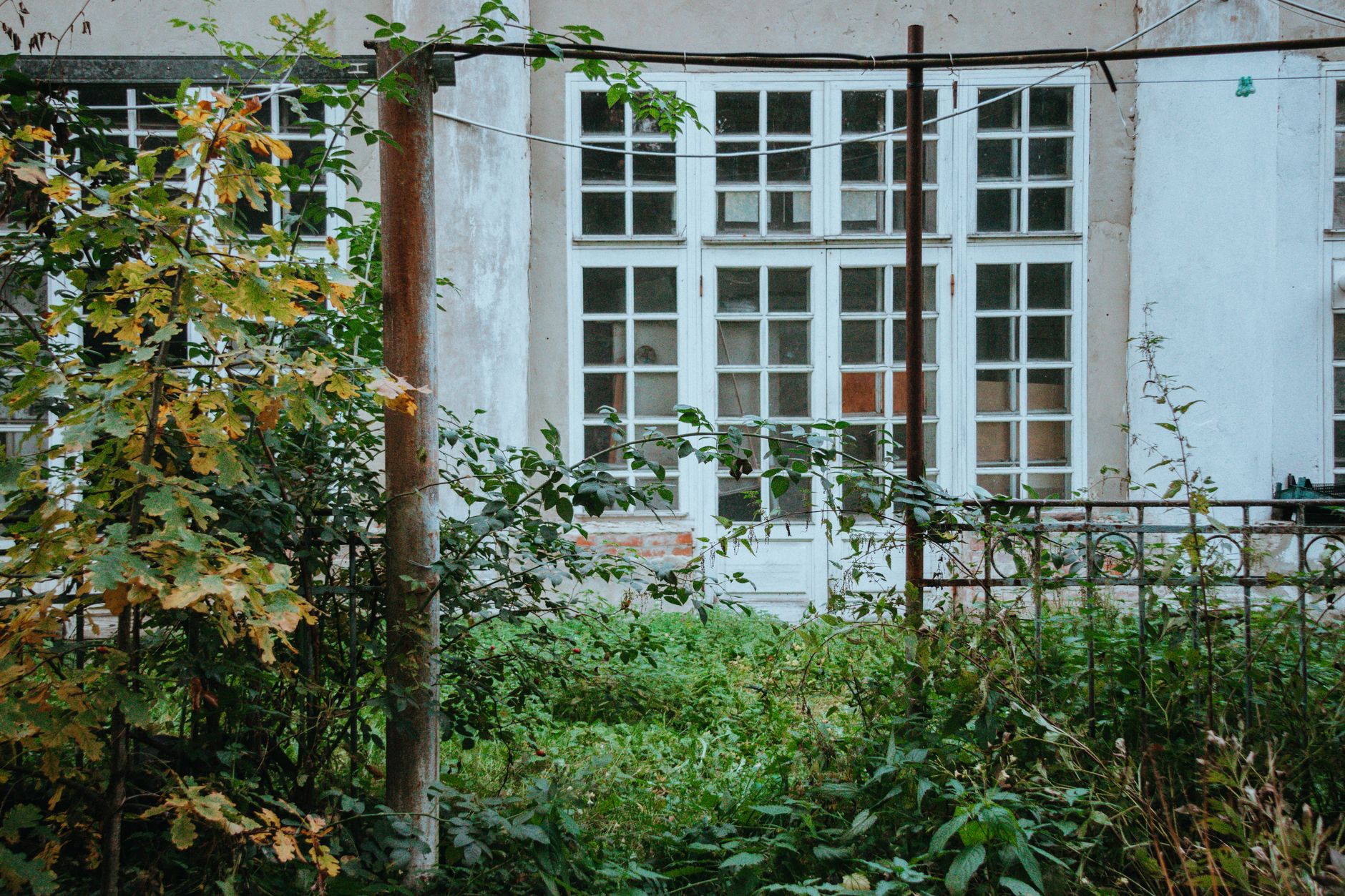
I went out to Mercer Street that Sunday morning with my red-handled loppers and my good leather gloves, the tan pair Carol bought me the Christmas before she got sick. It was hazy and hot by nine, the cicadas going like a power line, and the weeds in that backyard stood up to my belt.
I started cutting a path from the back steps, and the yard began showing me things.
A rusted kettle grill on three legs, the fourth gone somewhere. Rotten boards scattered where a deck had been started and never finished. And out in the middle of the weeds, about forty feet from the house, two cheap white plastic patio chairs.
That was the first thing that bothered me.
They were not tipped over or tossed. They were set side by side, close enough to touch, both facing the same direction, the way you would set chairs to watch a ballgame. In weeds nobody had cut since spring, somebody had arranged two chairs to look at something.
I could not see what yet. The weeds were too high.
The second thing was the path. Off to my left, running from the back fence toward those chairs, the weeds had been pressed down into a narrow trail, the kind you only get from walking the same line over and over. Where it met the chain-link fence at the back, the bottom of the fence had been bent up into a gap about the size of a bushel basket.
When I got close enough, I found a sneaker print in the dried mud along that trail. It was small. I put my own boot beside it, and my boot was nearly twice as long.
I stood up and looked over at the house next door. A woman was standing at her kitchen window with a dish towel in her hands, watching me. When I lifted my hand to wave, she let the curtain fall.
I cut toward the chairs. On the ground beside them were two little cellophane candy wrappers, the gold kind butterscotch comes in, and a pink plastic cereal bowl, bone dry, with a ring of dust in the bottom where water had been.
And then I cut through the last stand of ragweed and saw what the chairs were looking at.