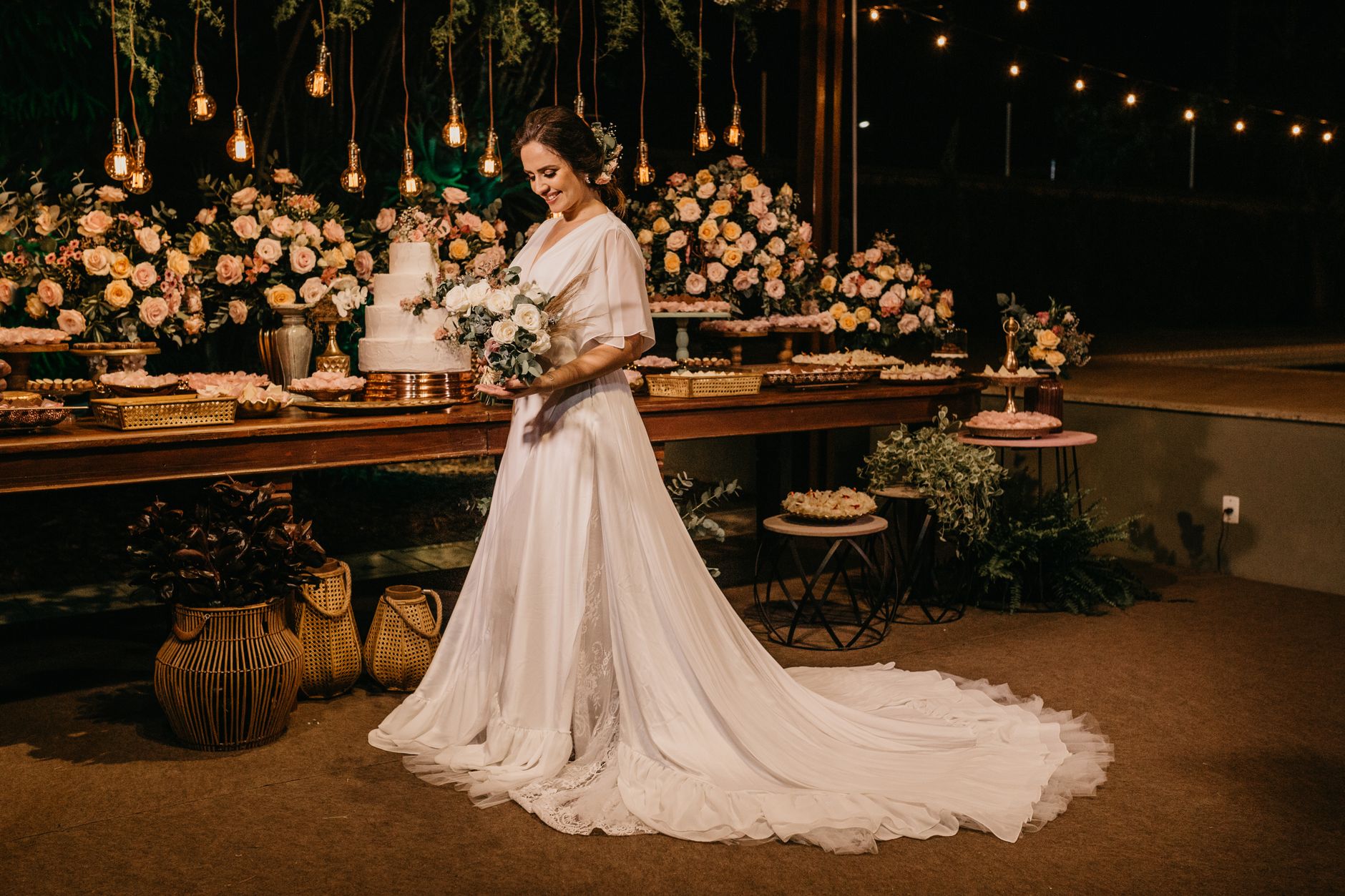
The White Dress I Wore To My Brother’s Wedding
“You let him do it,” I said. Not cruelly. Just true.
“I did,” she said. “I was afraid of him too, Claire. That doesn’t make it right. I’m not asking you to say it does.”
That was when Ernie Higby stood up from a table near the back, and I understood, with a small jolt, that our family’s oldest friend, the man who had kept Lang Hardware’s books for twenty five years before he retired, had come to this wedding carrying something he had clearly decided, watching this unfold, that it was finally time to say out loud.
“Dennis,” Ernie said, and his voice had the particular flatness of a man who has rehearsed a sentence in his head for a long time and is relieved to finally be rid of it. “Tell her about the surgery fund, or I will.”
The room went the kind of quiet that has a texture to it.
My father’s jaw worked once, twice, before anything came out. “Ernie, this isn’t the place.”
“You made it the place,” Ernie said, “the second you let that girl stand there being polite to you.”
I did not know, until that moment, standing in the same hall where I had once won a blue ribbon in a 4H sewing contest at age eleven, that there had been a second surgery recommended for my leg when I was fifteen, a follow up procedure meant to correct the hitch in my gait that the brace only ever managed, never fixed. I did not know that my grandmother had set aside money specifically earmarked for that surgery, money my father had access to as the estate’s executor, and that in the two years after my grandmother’s first stroke, with the hardware store bleeding money against a big box store that opened off the interstate, my father had quietly used most of that fund to keep Lang Hardware’s lights on.
I did not know that my leaving for Minneapolis, defiant and unaffordable and utterly outside his plan, had also meant he never had to explain to me, or to anyone, where that money had actually gone. It was easier, Ernie said, standing there in his good funeral suit at somebody else’s wedding, for Dennis to make my ambition the villain of the story than to admit what the store’s survival had actually cost his own daughter.
“That’s enough,” my father said, but there was no force behind it anymore. It came out like a man asking, not telling.
“It is not enough,” Ernie said. “I’ve watched you let this town believe Claire ran off chasing something silly for twelve years, when the truth is you were scared she’d come back healthy enough, and successful enough, to ask you a very simple question about where that money went.”