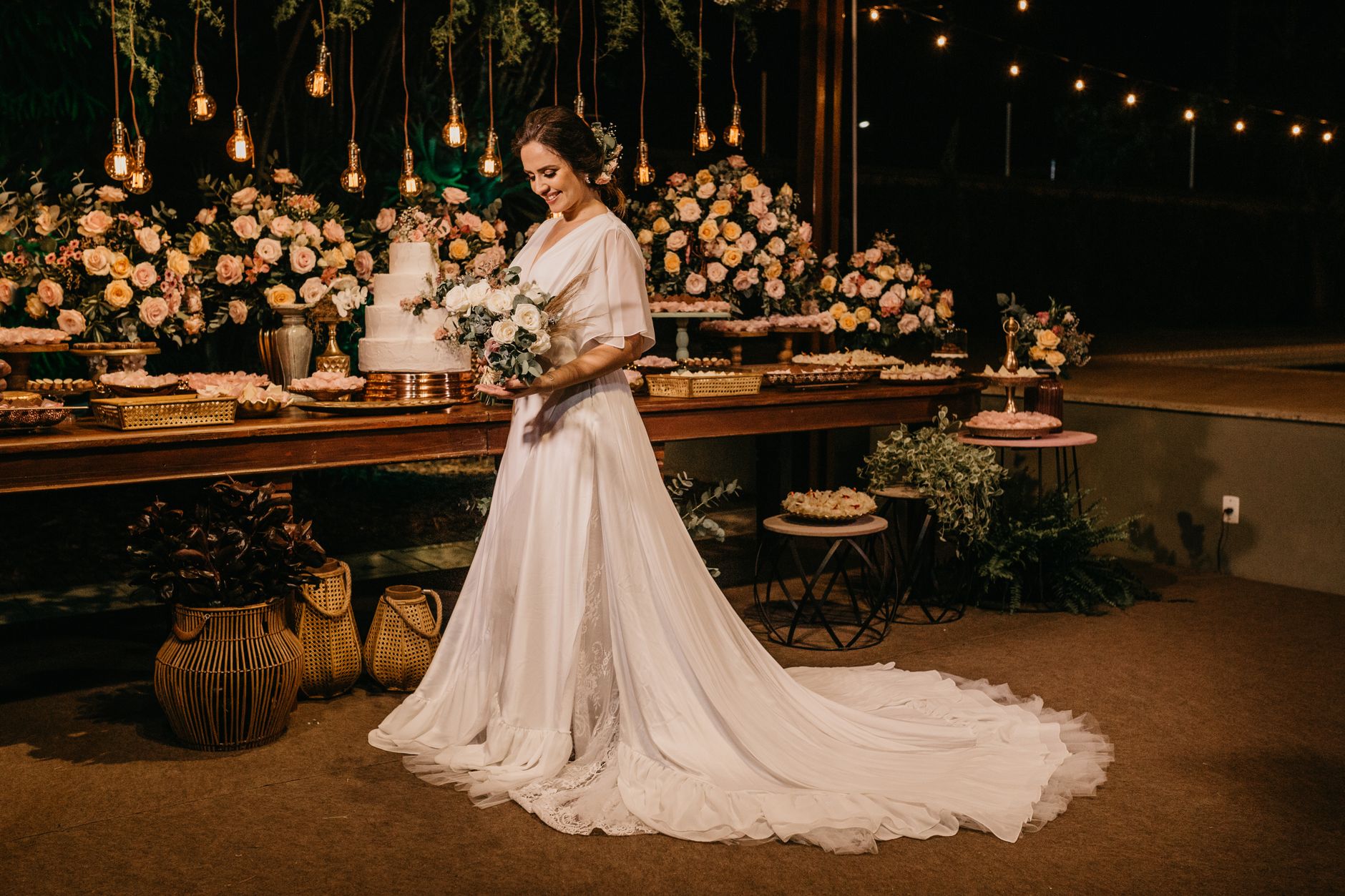
The White Dress I Wore To My Brother’s Wedding
I was eighteen. I had been accepted, quietly and without telling my parents until I had no choice, into a two year design apprenticeship in Minneapolis, the kind of program that takes maybe six students a year and pays almost nothing and asks for everything you have. I had been sewing since I was nine, since the year of my surgery, when six weeks in a hospital bed left me with nothing to do but watch my grandmother’s hands work a needle, and by sixteen I was altering prom dresses for half the girls in my class out of our garage. My father had never once come out to that garage. He ran Lang Hardware on Main Street, the store his own father built, and he had exactly one plan for his two children: Evan would take over the store, and I would marry someone steady and stay close enough to help out on weekends, because in his mind a girl who wore a leg brace and walked with a hitch in her step from a childhood surgery gone wrong should be grateful for whatever ordinary life came looking for her.
When I told him about Minneapolis at the dinner table, on a night the wind was already starting to howl against the storm windows, he did not raise his voice at first. He asked me, very quietly, whether I understood what I was throwing away. I told him I understood exactly what I was choosing.
That was when Evan, sixteen years old and full of the kind of cruelty only a little brother who has been coddled his whole life can produce on command, laughed from the doorway of the kitchen and said the words I have never fully been able to unhear. He called me an ugly disabled idiot who should be grateful anyone in this family put up with me at all, and he said it like a joke, like something he expected the table to laugh along with.
Nobody laughed. But nobody stopped him either.
My father stood up so fast his chair went over backward. He did not defend me. He told me that if I thought some sewing school in Minneapolis was more important than this family and this store, I could go find out how far a dress pattern got a person in this world. He said it while the first hard gusts of that January storm were already rattling the kitchen window, and by the time I had my coat on, he had already carried my suitcase to the porch and set it down in eight inches of snow.
He put eight hundred dollars in an envelope and pressed it into my hand at the door like that settled something. Then he told me I was welcome to call myself a Lang again the day I came to my senses and gave up on the whole idea.
My mother stood in the hallway the entire time, arms wrapped around herself, and said nothing. I have spent twelve years deciding how I feel about that silence, and I am still not entirely finished deciding.