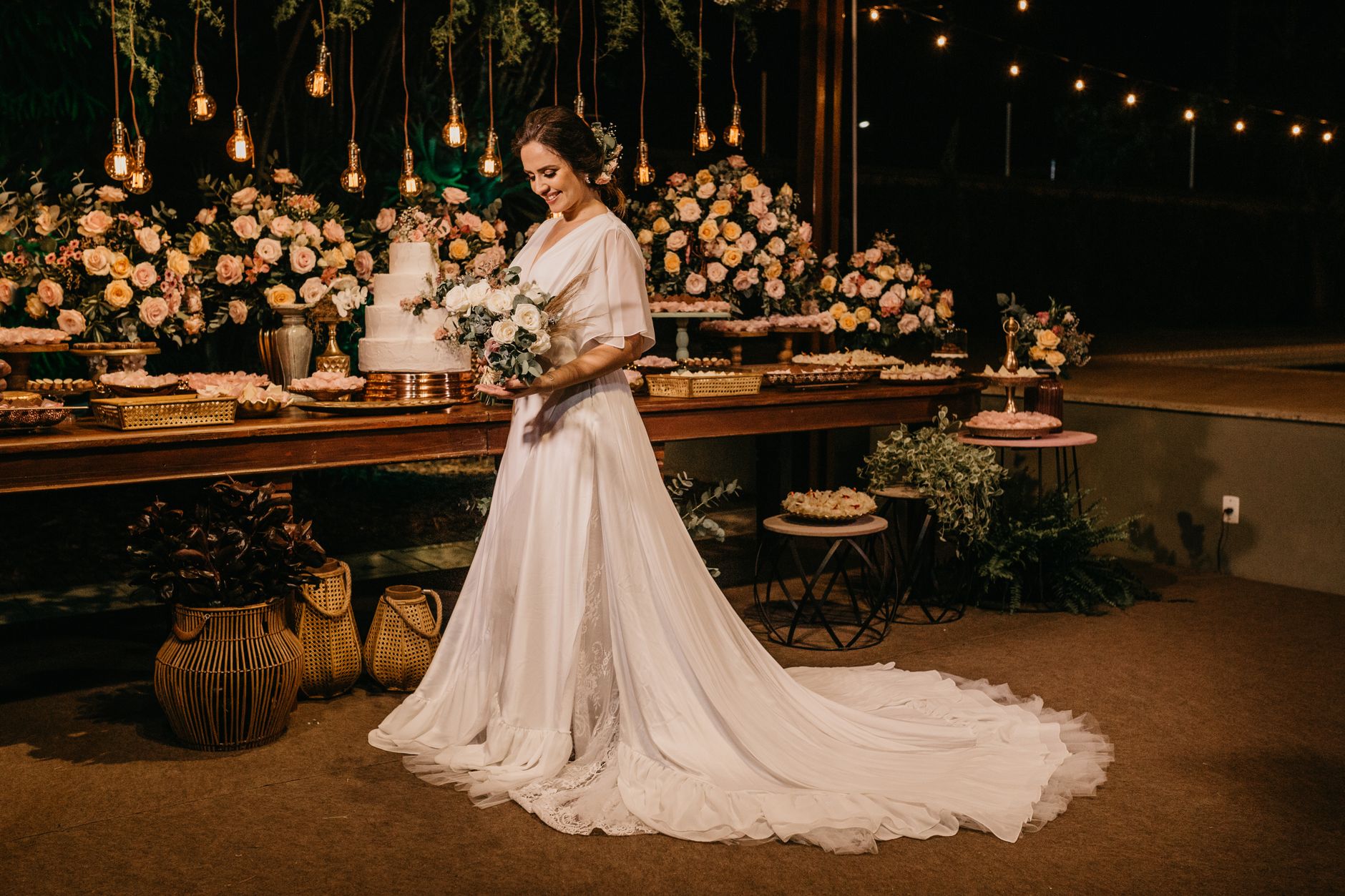
The White Dress I Wore To My Brother’s Wedding
I do not tell you this to make anyone in that hall villains for a movie. I tell you because you need to understand what it cost me to walk back through that door twelve years later, and what it meant to see my brother’s bride wearing a dress with my mark stitched into the cuff, a mark I chose specifically because it was the initial of the town my grandmother was born in and the shape of the very first hoop I ever learned to embroider on, a small private flag I had planted for myself in a life my father swore would go nowhere.
The Minneapolis apprenticeship nearly broke me in the first year. I slept on a fold out couch belonging to a woman named Ruth who ran the program and who, for reasons I still do not fully understand, decided I was worth extra hours after class. I learned pattern drafting until my hands cramped. I learned to bind a hem so it would survive a hundred wearings. I learned, slowly, that the leg brace that had made me an object of pity and cruelty in Carver was, in a design studio, simply a fact about how I moved through a room, nothing more remarkable than being left handed.
Ruth had a rule in her workroom that I did not understand at eighteen and have thought about almost every day since: she said a garment only earns the right to be called finished once it has been worn by the actual person it was built for, walked in, sat down in, cried in if it comes to that. Sketches do not count. Fittings on a dress form do not count. She used to say that a great deal of what people call talent in this business is really just patience, the willingness to keep unpicking a seam eleven times until the eleventh version finally understands the body it is meant to hold. I unpicked a lot of seams in that Minneapolis workroom, on client garments and on myself in equal measure.
The winter of my second year, my hands cracked so badly from the cold walk to the studio and the dry heat inside it that I wrapped them in gauze most mornings before I could hold a needle at all. I called home exactly once that winter, on a night I had let myself get low enough to want my mother’s voice more than I wanted my pride. My father answered instead. He asked, in a voice that had none of the fury of that January night left in it, whether I had come to my senses yet. I told him I had never lost them in the first place, and I hung up before either of us could say anything we would have to carry for another decade. I did not call again until my grandmother’s funeral, four years later.