The Uncle Who Chose Her Instead
What was in the drawer
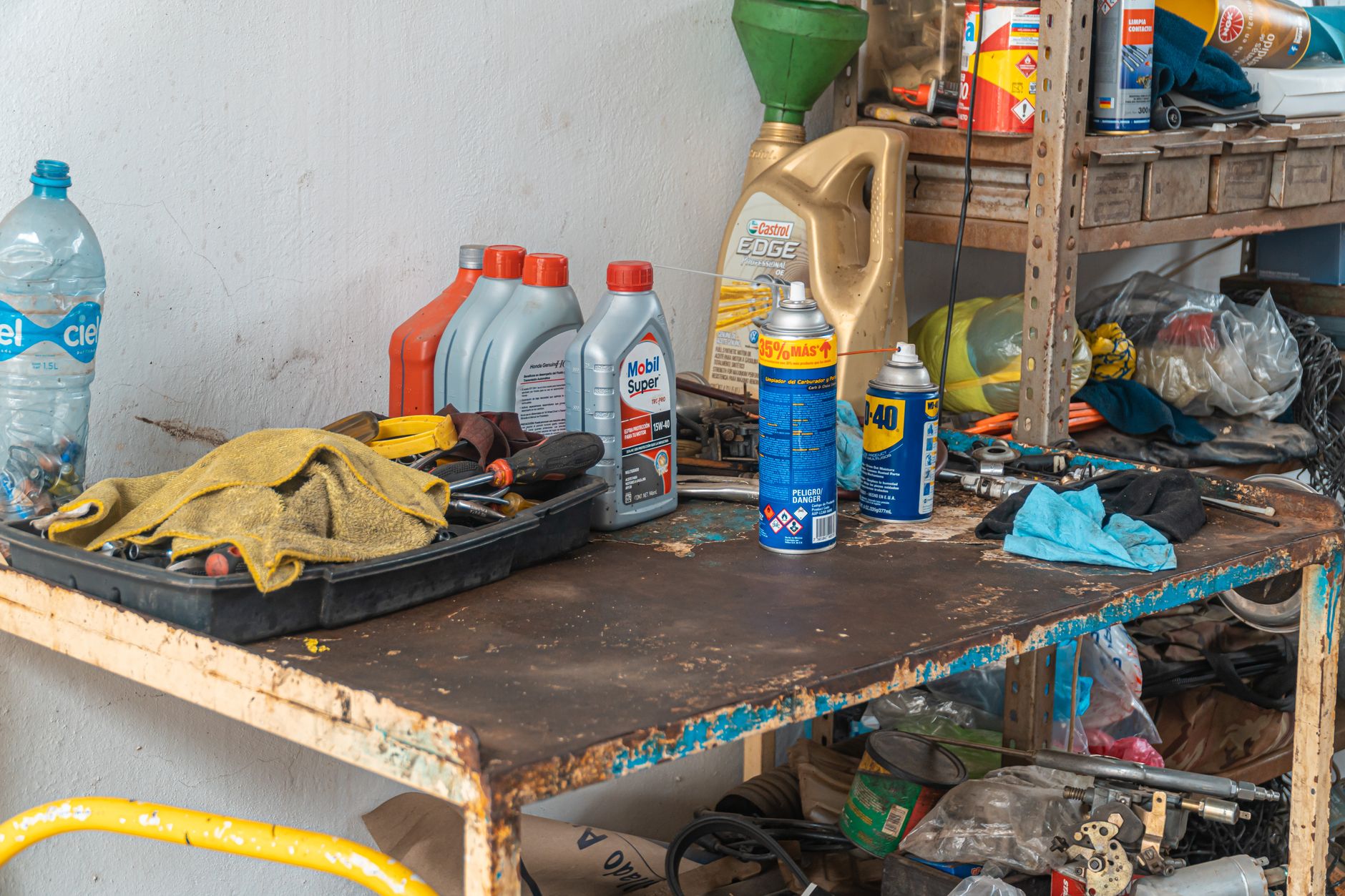
Mr. Voss led me back through the shop, past the workbench where I had learned to gap a plug at fourteen, to a metal cabinet behind the parts counter that had always been locked and that I had never once, in twenty years of coming in and out of that building, seen him open.
Inside was a shoebox, the kind that had once held a pair of work boots, tied shut with a length of the same red twine Everett used to bundle hose clamps.
There was no legal document inside it. No deed, no notarized paper, nothing with a county stamp on it, nothing that needed a courthouse to mean what it meant. Just a stack of birthday cards I had made him as a kid, construction paper and glitter glue, every single one he had ever received from me kept in order by year. A photograph of the two of us at the county fair the summer I was twelve, him holding up a ribbon I’d won for a welded gate latch in the youth division, grinning like I’d won a state title. And underneath all of it, a long letter in his own uneven handwriting, the kind of handwriting a man gets from forty years of gripping a wrench instead of a pen.
I am not going to put the whole letter down here, because some of it belongs to me and not to anyone reading this. But I will tell you the parts that mattered.
He wrote that he had watched, for twenty years, the way that house treated me like a line item instead of a daughter, and that he had never said anything out loud about it while he was alive because it was not his place to referee another man’s household, but that he wanted me to know he had seen it the whole time and had never once agreed with it. He wrote about the summer I broke my wrist falling off the swather platform and how nobody at home thought to take me the forty minutes to the hospital in town because it would have meant missing the second cutting, and how he had driven me himself, and sat with me in the waiting room, and never once made me feel like an inconvenience for it.
He wrote that he had started teaching me the trade at fourteen for exactly one reason, so that no matter what happened to me later in life, no matter who tried to control me with money the way my father had always tried to control everyone around him with money, I would always, always have a skill nobody could take from me and a way to earn a living that did not run through anybody else’s permission.
He wrote that the house and the shop and the money in the account were the easy part to give, paperwork Mr. Prescott could handle in an afternoon, and that the harder and more important thing he had already given me years before, on all those Saturday afternoons, one carburetor and one welded bead at a time, and that this letter was only there to say it out loud, in case he never got the chance to say it any other way.
I read it twice, standing at that counter, with Mr. Voss pretending to be very busy with an invoice a few feet away to give me some privacy in a room the size of a hardware store aisle.
I understood, reading it, what Everett had actually left me. Not nine thousand two hundred and eleven dollars, though I was grateful for it and would not pretend otherwise. Not even the house or the shop, valuable as they were to a woman who, three weeks earlier, had been standing in a driveway with two suitcases and nowhere in particular to go. What he had actually left me was the plain, stated fact, in his own handwriting, that somebody in my family had watched my whole life closely enough to know exactly what it had cost me, and had spent twenty years quietly making sure I would never be as trapped as he could see I might become.