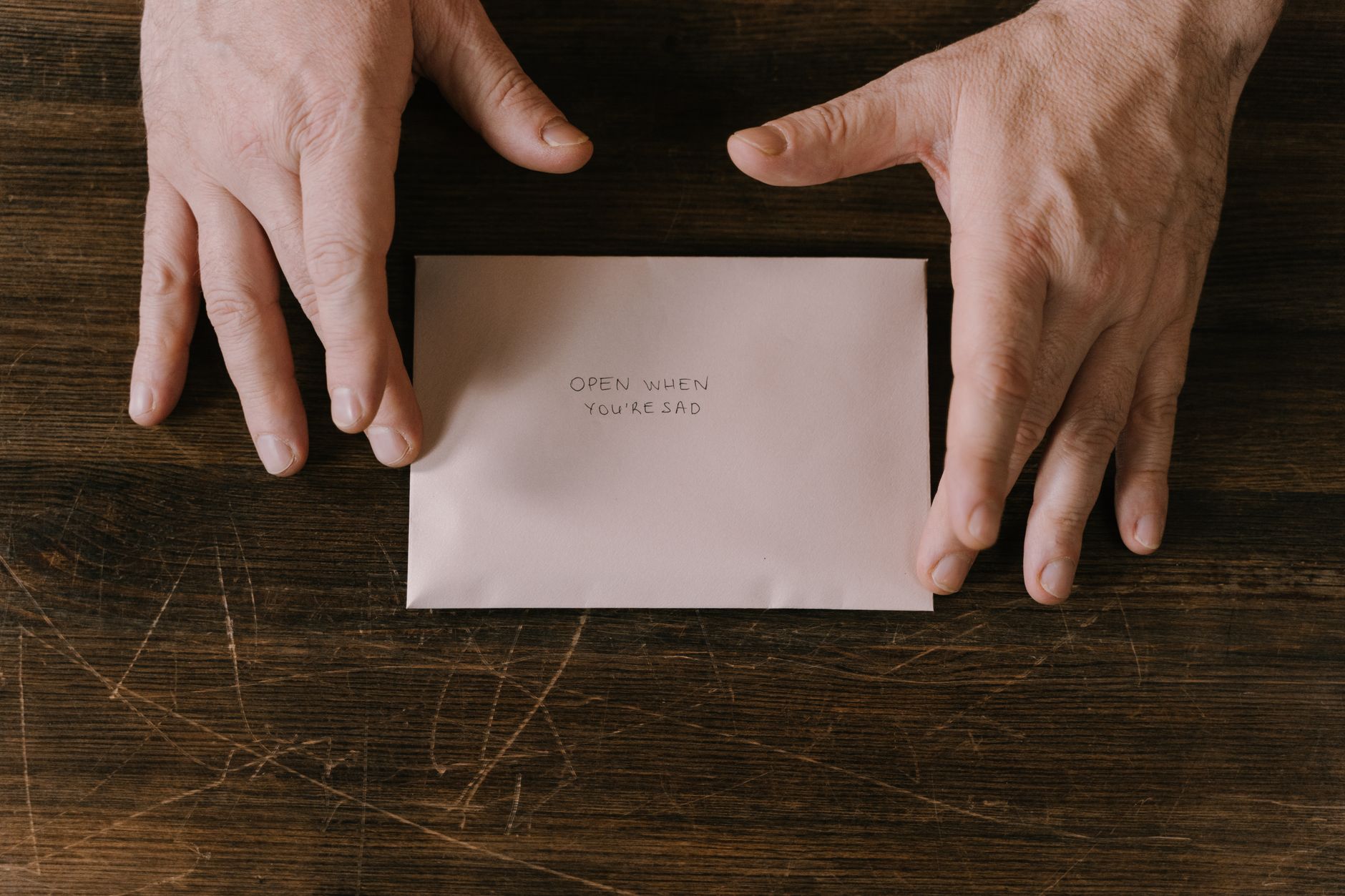
The Envelope My Brother Left Behind
The Hay Wagon
The wagon rolled back before I ever heard it move.
Hartwell is the kind of Iowa town you drive through on your way to somewhere bigger unless you already live there. One stoplight, a grain elevator that still runs the same route it ran when my grandfather farmed, a Friday-night football field that fills up every fall no matter how the Hawks are doing, and a diner on Route 9 called the Coachlight where the coffee is bad and the gossip travels faster than the county road crew can grade a mile of gravel. I was born two miles outside town, in the farmhouse my father’s father built, and I have never lived more than fifteen minutes from that grain elevator my whole life.
I was thirty-four years old, standing in the stubble of Walt Ferris’s south hayfield on a Saturday afternoon in July, doing what I’d done most summer weekends since my divorce: picking up cash work on other people’s farms because a third-grade teacher’s salary in Hartwell doesn’t stretch across a whole year, not with a mortgage on a little rental house and a car that needed a transmission the year before. Walt paid me thirty dollars an hour to help stack round bales and run the wagon gate, cash at the end of the day, and I was grateful for it the way you’re grateful for anything that keeps the lights on. Half the women I grew up with do some version of the same thing, detasseling corn in June or working the concession stand at the fairgrounds, because a single paycheck rarely covers a whole life out here, no matter what it says on the sign in front of the school.
The tractor lurched when Walt’s grandson popped the clutch wrong, and the loaded wagon behind it rolled backward two feet, maybe less. It doesn’t take much. My left leg was between the wagon frame and a fence post I’d been leaning against to catch my breath, and the wagon closed on it like a door.
I don’t remember screaming. Walt’s grandson told me later that I did, and that it was the kind of sound that brought two neighbors out of their houses a quarter mile off. I remember the color of the sky, a flat white-blue with no clouds in it, and I remember thinking, very clearly, in the middle of the worst pain of my life, that I still had lesson plans to grade for Monday.
They got the wagon off me. Walt drove me himself, doing eighty down the county road with his hazards on, because the volunteer ambulance out of Hartwell was twenty-five minutes out on a call to the nursing home, and he said later he wasn’t about to sit and wait on that with the way my leg looked. I have never thanked him properly for that, and I mean to.
The Hartwell clinic took one look and put me straight in another car to Des Moines. Crush injury, they said. Compartment syndrome, they said, a word I had never heard before that day and now know better than I know most people’s names. The pressure builds inside the muscle after a crush like that, and if it isn’t relieved, the tissue dies from the inside out, quiet and total, while the skin on top looks almost normal. By the time I reached the hospital in Des Moines, my calf was tight as a drumhead and the pain had gone past anything I had words for.