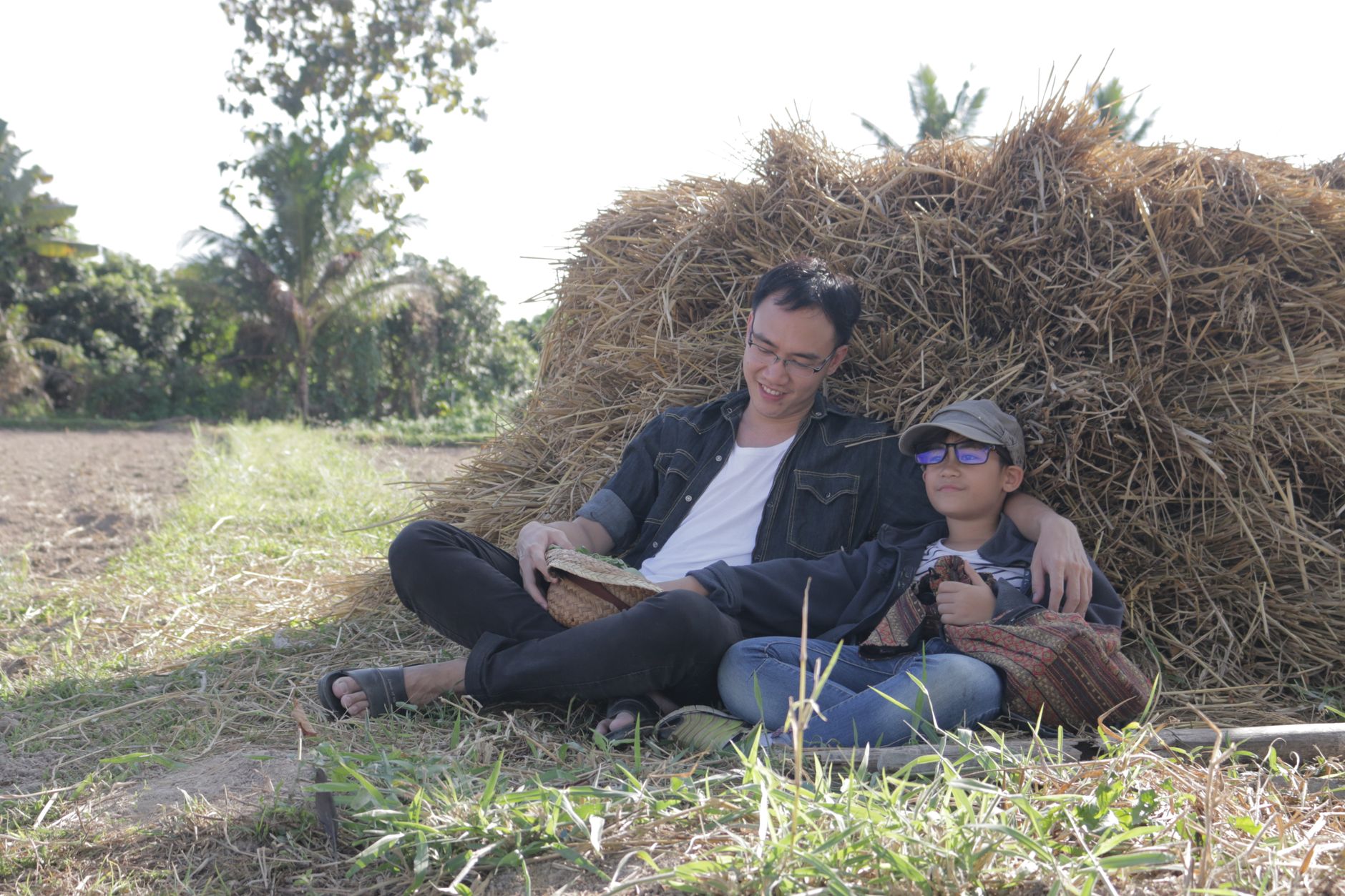
The Boy I Found In The Field
The Duffel Bag and the Forty Dollars
Herb left the morning after his high school graduation, eighteen years old, with one duffel bag over his shoulder, a folder of school transcripts under his arm, and every dollar I had to my name at the time, which came to forty, folded small and pressed into his palm on the porch steps.
“You’re going to need this more than I do,” I told him, which was not entirely true, but it was the kind of not entirely true that felt necessary to say.
He had enlisted in the Army National Guard that spring, one of the few paths a boy in our position had toward something bigger than forty rented acres, and he was headed first to basic training and then, he told me, toward some kind of civil engineering track once he’d put in his time. I did not fully understand the plan. I understood that it was taking him somewhere I could not follow, and that I was proud of him in a way that hurt worse than anything I have ever felt in my chest.
Norma was there that morning too, standing at the end of the driveway with her arms crossed in the same posture she’d held on my porch eighteen years before, and she said the thing half the town had apparently been waiting years for a chance to say straight to his face.
“He’ll forget where he came from by Christmas,” she told me, loud enough for him to hear it too, like she wanted it on the record.
I did not answer her. I just stood in that driveway until his bus turned the corner at the end of the county road and I could not see it anymore, and then I stood there a while longer after that, because I was not ready to walk back inside a house that suddenly felt too big and too quiet for one man.
He did not call that Christmas. I told myself it was training, deployment schedules, the kind of thing a young soldier could not control. He did not call the Christmas after that either, or the one after that. Four Christmases came and went with nothing but silence down that gravel drive, and every single one of them, I set two plates at the table out of a habit I could not seem to break, and every single one of them, I put the second plate away again without using it.
Norma never let me forget it. Every time our paths crossed, at church, at the feed store, at a funeral for somebody we’d both known our whole lives, she found a way to work it into the conversation, gentle as a slap. “Still no word from that boy, I take it.” She never said it cruel exactly. She said it like something she’d already been proven right about, which in her mind, I believe she truly was.
I want to say I never doubted him during those years. That would not be honest either. There were nights, plenty of them, sitting on that same porch where Norma had stood with her arms crossed twice now, when I let myself wonder if she’d been right all along, if I’d poured twenty five years into rocky, thankless soil and mistaken stubbornness for hope.
But then I would remember the exact weight of him in my arms that first rain soaked night, and the way he used to slide extra food across the table pretending it was an accident, and I would decide, again, the same way I’d decided the first time, that some things you do not get to take back just because they turn out to cost you more than you planned on.