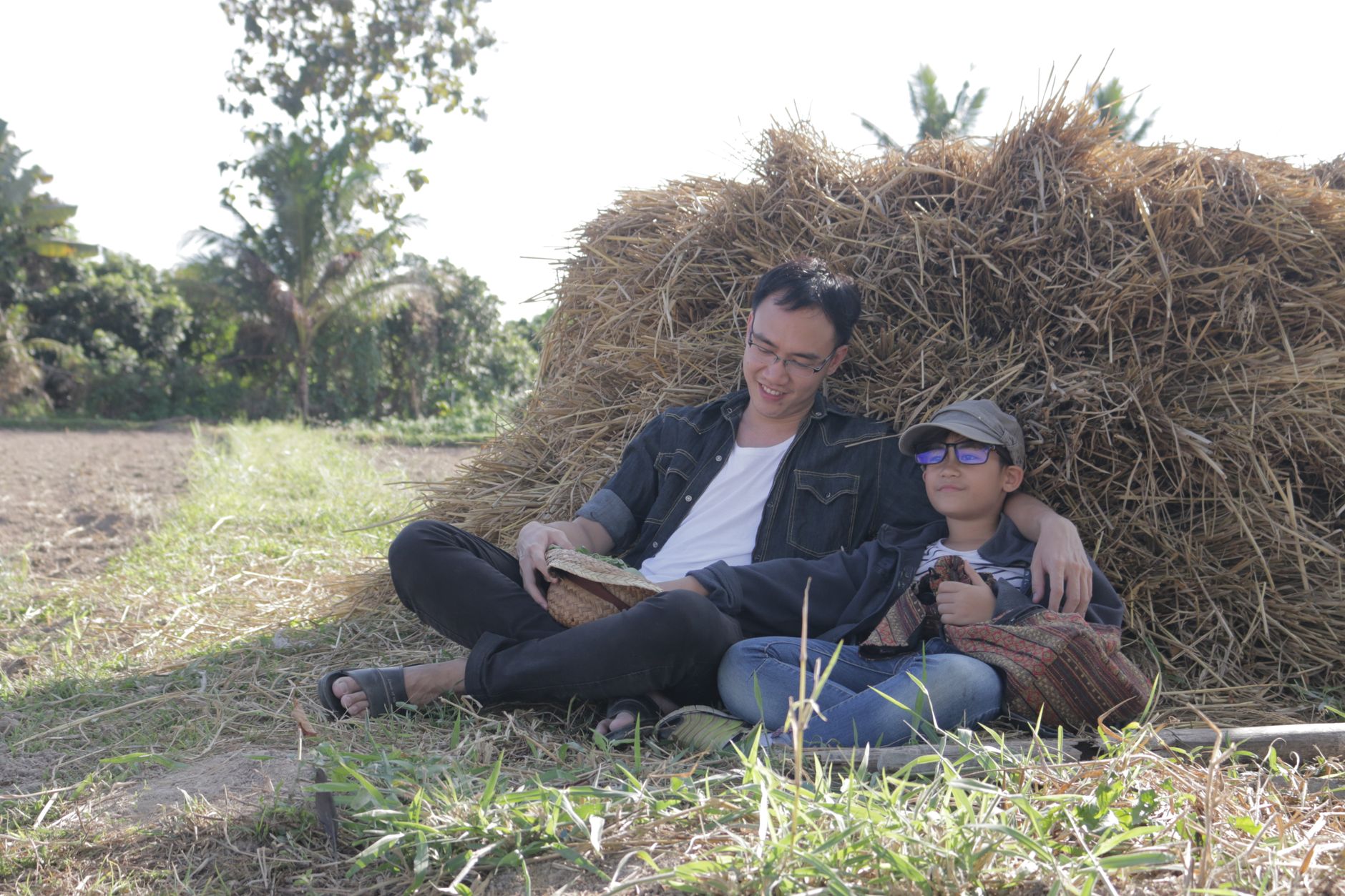
The Boy I Found In The Field
A week after I found him, my older sister Norma showed up on my porch with her arms crossed tight over her chest and the small flag I keep tied to the porch rail snapping in the wind behind her.
“You still have time to fix this,” she said. “Take him back down to child services. He is not yours, Matt. You don’t have the first idea where that baby came from, or who might come looking for him.”
I felt my jaw go tight, but I have learned over a lifetime that anger costs a poor man more than it costs anybody else, so I kept my voice level.
“He came from the mud at the edge of my field,” I told her. “And I found him. That’s where he came from, and that’s who he belongs to now.”
Norma didn’t have a answer for that, not one she said out loud anyway, but the look she gave me before she got back in her car told me this was not settled between us. It would not be settled for a very long time.
The county let me take temporary guardianship while they searched for any relative, any lead, anything at all. Nothing ever surfaced. A year later, in a small courtroom in the county seat with a judge who barely looked up from his paperwork, the guardianship became something more permanent, something with my name on it in the place where a father’s name goes. I signed it with a hand that shook a little, and I did not care who saw it shake.
Raising a Boy on Rented Ground
People think poverty is dramatic. It mostly isn’t. It is small and constant and quiet, a low hum underneath every single day, and it asks you to make the same choice over and over in a hundred small disguises.
I warmed Herb’s bottles in a saucepan on the stove because I did not own a microwave and could not justify buying one when the saucepan worked fine. I carried him in a cloth sling my neighbor’s wife sewed for me out of an old feed sack while I fixed fence, because there was nobody to leave him with most days and the fence still had to get fixed. I signed every single school form that came home over the years, and every single time, my pen paused for half a second over the line that said parent slash guardian before I wrote my name anyway, steady, like it was the easiest thing in the world.
It was not the easiest thing in the world. It was the truest thing, and there is a difference between those two, one I did not fully understand myself until I lived inside it for a decade or two.
Some winters, especially the early ones, there was only enough food on the stove for one full plate at supper. I told Herb the same lie every single time those nights came around. “I already ate out at the field today, son. You go on and finish that.”