The Night I Lost My Job
The drive home was the last quiet I would get
The plant let two hundred of us go on a Tuesday, and I got the news standing next to the time clock I had punched for eleven years. They called it a workforce reduction. The man from corporate read it off a laminated card so his voice would not shake, and I remember thinking that even his card was scared of him.
I am Della Hollis. I grew up on a gravel road outside Fenn’s Mill, a town so small the welcome sign and the goodbye sign hang on the same post. We have one blinking red light, a Casey’s, a feed store that still writes tickets by hand, and a Methodist church that runs a potluck the second Sunday of every month whether anybody is hungry or not. I could have left. People kept telling me I should have left. But my family was here, and for twelve years I had told myself that family was a thing you stayed for.
That Tuesday I sat in my truck in the plant lot with my termination papers folded in my coat pocket, and I did not cry. I want that on the record, because later everybody had a version of that night, and none of them included the part where I sat very still and felt something old and heavy finally start to loosen in my chest.
I drove the county road home the way I had a thousand times, past the Dutcher place, past the grain bins, past the little white cemetery where my grandmother is buried under a stone I paid for. The whole way I practiced how I would tell them. I thought they would be gentle. I thought, this one time, they would put their arms around me and say we will figure it out, Della, we always do.
I have been wrong about a lot of things in my life. That was the biggest.
Twelve years of being the checkbook
You have to understand what I was to them before you can understand what happened after.
I was the one who worked. My sister Brandy was the one they loved. That was the arrangement, and nobody ever said it out loud, but everybody in that house knew it the way you know which stair creaks.
Brandy is two years younger than me and she has been getting rescued since she was sixteen. When she wrecked her first car, I paid the deductible out of my summer job at the Dairy Barn. When she dropped out of the cosmetology program in Sedalia, I covered the tuition they would not refund. When she had her daughter, Kaylee, and the father drove off toward Tulsa and never came back, I bought the crib, the car seat, and eight months of formula, and I did it quietly so nobody would feel small.
My mother, Sharon, ran the emotional books. She kept a ledger in her head of who had done what for whom, and somehow the numbers always came out with me owing. If I bought Brandy a coat, Mom would remind me that Brandy had once given me a ride to the clinic. If I paid the light bill, Mom would say it was a shame I worked so much that I never came to church. There was no amount I could hand over that squared the account, because the account was never really about money. It was about keeping me useful and keeping me quiet.
My father, Roy, did not run any books at all. He ran the recliner. Dad had worked hard his whole life, I will give him that, thirty years driving a route truck for the co-op, but somewhere along the way he decided that being tired was the same as being wise, and he stopped looking at anything he did not want to see. When there was a decision to make, he would look at my mother, and my mother would look at me, and the decision would land on my shoulders like it had been mailed there.
I paid the mortgage on the family house. I want you to hold onto that, because it matters later. The house on Sawyer Lane, the one with the porch swing and the lilac bush my grandmother planted, had gone into arrears back when Dad’s hours got cut in the recession. The bank was three payments from taking it. I was twenty-three, I had just gotten hired on at the plant, and I did the only thing I knew how to do. I went to the bank in Fenn’s Mill, I sat across from a loan officer named Gil Pruett, and I refinanced the house into my own name to save it.
They never asked how it got saved. They just went on living in it. And I let them, because I thought that was what a good daughter did. I put my whole name on that debt and I never once said the words out loud, and that silence, I see now, was the first brick in the wall they eventually tried to throw me out over.
What they said when I told them
I came through the kitchen door around six. The house smelled like coffee and the lemon bars my mother makes when she is about to ask somebody for something. Brandy was on the couch with her phone. Kaylee was doing homework at the table. Dad was in the recliner with the TV loud enough to feel in your teeth.
Mom looked up from the counter and I knew, right then, that she already knew. Fenn’s Mill is small. Somebody’s cousin works in the front office at the plant. The whole town probably knew before I got my truck out of the lot.
“Sit down, Della,” she said. Not are you all right. Not I heard, honey. Just sit down.
I did not sit down. “I lost my job,” I said anyway, because I needed to hear myself say it in that room. “The plant is closing the second line. They let a bunch of us go.”
Brandy did not look up from her phone. “So it’s true,” she said. “You got fired.”
“Laid off,” I said. “It’s different.”
“It’s not different to my car payment.” Now she looked up, and there was something in her face I had spent twelve years refusing to name. It was not worry for me. It was worry about me, the way you worry about an appliance that has started making a noise. “Who’s supposed to cover my car loan now? I’ve got a payment due Friday. You said you’d handle it, Della.”
I had co-signed that car loan eighteen months earlier. A used Equinox off the lot in Warrensburg. I had told myself she needed reliable transportation to get Kaylee to daycare, and that was true, but the truer thing was that saying no to Brandy had always cost more than saying yes, and I was tired, and I signed.
My mother set her teacup down on the saucer. It made a small cold click, and to this day I can hear it, that little sound like a gavel in a courtroom the size of a thimble. “Della,” she said, “we need to talk about the budget.”
The lemon bars were already made
That is the detail that broke something loose in me. The lemon bars were already made.
You do not bake lemon bars on the fly. You make them when you have decided something in advance and you want the room to feel warm while you deliver it. My mother had spent the afternoon in that kitchen, creaming butter and sugar, zesting a lemon, deciding what to do with me, while I was two towns over signing a severance agreement in a fluorescent conference room.
They had known before I did. And they had not spent that time worried about how I would make rent or whether I would be okay. They had spent it grieving my paycheck.
“Della,” my mother said, using the tone she saved for closing a deal, “Brandy’s been sleeping on that pullout for a year now, and it’s not right, a grown woman with a child in the front room. She needs a proper bedroom. And you’re going to be, well, between things for a while. So it just makes the most sense for Brandy and Kaylee to take the upstairs room. Your room.” She smoothed the dish towel over her hands. “I went ahead and moved some of your boxes out to the garage this afternoon, to get a head start on it.”
I stood there in my own coat, in the house I had refinanced with my own name, and I listened to my mother reassign my bedroom while my termination papers were still warm in my pocket.
The empty shelves
I walked back to my room the way you walk toward a car accident you have already seen from the road.
The shelves were bare. My books were gone, boxed up somewhere in the garage among the Christmas decorations and Dad’s broken tools. My reading lamp was unplugged and set on the floor. And the one thing I had ever been allowed to hang on those walls, my associate’s degree from State Fair Community College, the framed certificate I had earned taking night classes for three years while working full days at the plant, that was gone too. There was a single nail hole where it used to hang, one small dark point in the pale square of wall where the paint had not faded.
I stood and looked at that nail hole for a long time. Twelve years of my life, and the only mark left of me in that room was the hole where my one accomplishment used to be.
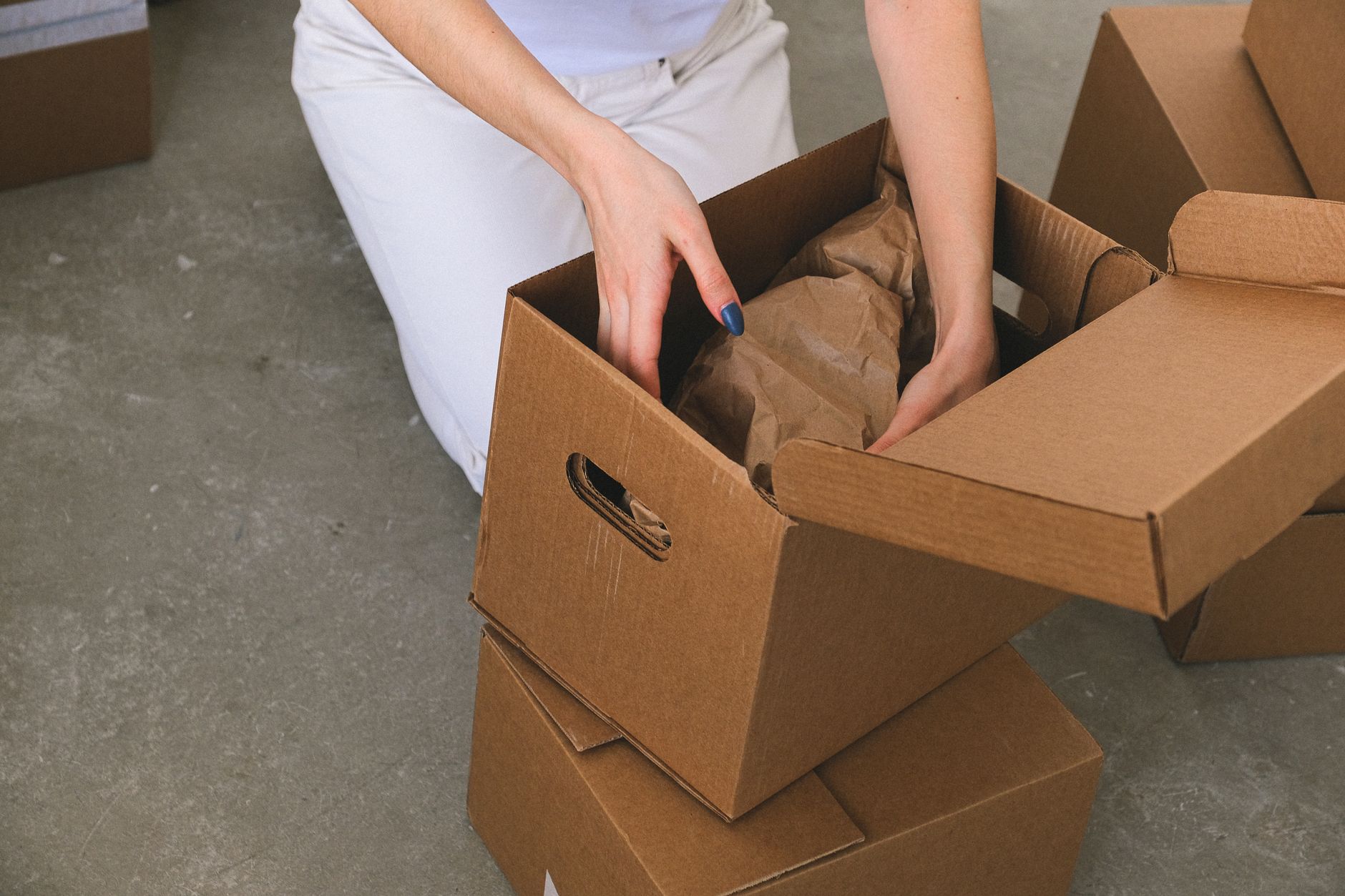
My father came in behind me carrying a flat cardboard box, the kind you fold together from a sheet. He did not say anything. He set the box on the stripped mattress and started taking my shirts out of the closet and folding them, slow and clumsy, the way a man folds who has never once folded his own.
“Dad,” I said. “Look at me.”
He kept folding.
“Dad. Please. Look at me.”
He looked at the shirt in his hands instead. “Your sister needs this house more than you do, Della,” he said. “You’ll land on your feet. You always do. You’re always fine.”
You’re always fine.
Those three words were the whole foundation. That was the load-bearing wall of everything they had built on top of me for twelve years. Because I was fine, I could carry it. Because I was fine, I never needed asking about. Because I was fine, I could be folded up and moved to the garage the very hour the checks stopped clearing.
I picked up the box off the mattress. It was mostly empty, just a few of my shirts and a pair of work boots. I carried it past my mother, who was standing in the hall now with her arms crossed and her mouth set in that patient, wounded line, and I did not say a single word to her. I did not slam anything. I did not cry.
I put the box in the bed of my truck, and I drove.
What they did not know
Here is what they did not know, sitting in that kitchen eating lemon bars over the corpse of my paycheck.
They did not know that four years earlier, a woman named Peg Sorenson had walked into the plant looking for a supplier. Peg ran a little mail-order company out of Clinton that sold heritage seed and canning supplies to people trying to put up their own food. She needed somebody who understood logistics, inventory, the boring backbone of moving a lot of small things to a lot of small places. Somebody had pointed her to me, because on the second line I was the one who kept the parts flowing and never let us run dry.
Peg and I had coffee at the Wagon Wheel on the highway. Then we had coffee again. By the third cup she asked me to come in with her, not as an employee, as a partner, because she was good at the growing and the story and I was good at the getting-it-there. I did not have money to put in. She said I had something better, which was that I understood how ordinary people in ordinary towns actually lived, and she could not teach that to anybody.
So for four years, on my evenings and my weekends and my two weeks of vacation, I had quietly built a company with Peg Sorenson. We called it Hollis and Sorenson, Provisioners, because Peg insisted my name go first, said it sounded more trustworthy, said Della Hollis sounded like somebody who would actually ship your order. There was a sign on the door of our new warehouse in Clinton that read, in gold letters on the glass, D. Hollis, Co-Founder.
They did not know about the company. And they did not know about the cabin.
Two years back, Peg’s brother-in-law had needed to sell a little place fast, a cabin and eleven acres up on Truman Lake, a fishing shack somebody’s granddad had built and nobody had loved since. I bought it for almost nothing, cash I had saved by not letting anybody know I had it. I put a new roof on it myself over three weekends. I did not tell my family because if I had told them, it would not have been mine for a week. It would have become the place Brandy and Kaylee needed more than I did.
So the night my family boxed up my shirts and gave away my room, I did not drive to a shelter or a friend’s couch or a motel out on the highway. I drove an hour north, up the lake road in the dark, and I let myself into my own cabin with my own key, and I built a fire in my own stove, and I sat in the quiet and understood, in a way that frightened me a little, that I was free.
I was thirty-five years old and I had just lost the job I thought was my whole security, and my family had just thrown me out of the house I was paying for, and for the first time in twelve years nobody in the world needed anything from me. My war, though I did not use that word yet, had only just started.
The first two weeks
I did not do anything dramatic at first. That is not how I am built. I put my head down and I worked.
The morning after they emptied my room, I called Peg and I told her I was ready to come in full time. She had been asking me for a year. She whooped so loud I had to hold the phone away from my ear, and then she cried a little, and then she said, well, it took your idiot plant closing to give us to each other full time, so God bless them, I suppose.
Full time changed everything. What Peg and I had built on the margins of my life exploded once I could give it my whole day. I renegotiated our freight contracts and cut our shipping costs by a third in the first month. I set up a route with three co-ops between Clinton and Springfield so we could move product without paying a middleman. I answered the phone in that warehouse and talked to a widow in Arkansas who wanted to put up her late husband’s tomato variety one more year, and I got her the seed, and she cried, and I understood that we were not selling supplies, we were selling people back a piece of the life they were afraid of losing. That is a thing you can only sell if you have loved that life yourself.
The orders came in faster than we could pack them. We hired two women from Fenn’s Mill who had lost their jobs at the same plant I did. We hired a third from Clinton. By the end of the second week, Hollis and Sorenson was doing more business in a day than it had done in a month the year before.
I heard nothing from my family. Which was fine. I was busy being someone.
The letter from the bank
Then, in the third week, the machine I had built without meaning to started to turn on its own.
When I refinanced the Sawyer Lane house twelve years earlier, I had set the mortgage on auto-draft from my checking account, the account that used to be fed by my plant paycheck. When the paycheck stopped, the account ran dry, and the auto-draft bounced. The bank did what banks do. They sent a notice.
They sent it to the owner of record. That was me. But the notice went to the property address, because that is where their file said to send it, and so a certified letter from the Fenn’s Mill Savings Bank landed in the mailbox on Sawyer Lane with my name on it, and my mother opened it, because my mother had opened my mail my whole life.
I know how that went because Kaylee told me later, and Kaylee, being nine, told me the true version.
My mother read the letter at the kitchen table and went white. She read the part about the loan being in the name of Della R. Hollis. She read the part about the balance and the past-due amount and the words property may be subject to foreclosure. And she did not understand, at first, because in her mind that house had always simply been the family’s, the way the weather is the family’s, something that just is.
She called Roy in from the recliner. Dad read it twice. Then, Kaylee said, her grandmother put her face in her hands at the table, and her grandfather stood at the window a long time not saying anything, and Brandy came in and asked what was wrong and nobody would tell her.
They had given away the room of the woman who owned the house.
They came up the lake road
Two days later I heard tires on my gravel.
I was on the porch of the cabin with a cup of coffee, watching the lake do the silver thing it does in the morning, and my father’s old Ford came up the drive slow, like it was not sure it was allowed. All three of them were in it. Mom, Dad, and Brandy in the back seat with her arms crossed.
They got out. Nobody knew what to do with their hands.
My mother spoke first, and she had clearly rehearsed it, and it clearly cost her. “Della. We didn’t know. About the house. About any of it. You never told us.”
“No,” I said. “I never did.”
“Why would you keep something like that from your own family,” she said, and there it was, the pivot, the way she could take a thing she had done and hand it back to me as a thing I had done. In her version, the crime was not that they had thrown me out. The crime was that I had let them do it without warning them I owned the floor.
I looked at her for a while. I had spent twelve years being talked out of my own eyes, and I could feel the old pull of it even then, the pull to apologize, to smooth it over, to make her comfortable at my own expense. But I had spent three weeks up on that lake in the quiet, and the quiet had taught me something the noise never let me hear.
“I kept it from you,” I said, “because the second any of you knew I had anything, you took it. The house, my paycheck, my degree off the wall. I have been paying to be part of this family since I was twenty-three, and the day the paying stopped, you put my life in the garage.” I set my coffee down on the rail. “So no. I did not tell you. You are right about that. That is the one true thing you have said to me in three weeks.”
Brandy started to cry, the loud kind, the kind that used to work. “So what, you’re just going to let them take the house? You’re going to put Kaylee out on the street to prove a point?”
What I actually did
Here is where I want to be honest, because the easy story would be the one where I let the house go and drove off into my new life while they stood in the ruins. That is not what I did, and I need you to understand why, because it is the whole point.
I love that house. My grandmother planted the lilac by the porch. Kaylee sleeps in the room I grew up in. Whatever my mother and my sister and my father are, that child did nothing but be born into it.
So I did not let the house go. But I did not save it the old way either, the way where I quietly carry it and let them go on pretending it carries itself.
I called Gil Pruett at the bank, the same loan officer, gray now, still there. I brought the mortgage current out of what the company was making, and I paid off the delinquency. And then I sat down at that kitchen table on Sawyer Lane with my whole family in the room, Kaylee included, and I put a piece of paper in front of them.
It was a lease.
“The house is mine,” I said. “It has been mine for twelve years, and it is going to stay mine. You are not being put out. But you are not living here for free on the idea that I am fine anymore. Dad, you get your co-op pension and your Social Security. Mom, you have your egg money and your quilting sales. Brandy, you are going to get a job, and I have already talked to Peg, there is a packing line spot in Clinton with your name on it if you want it, and daycare for Kaylee is part of the deal. Everybody in this house is going to pay something toward this house, even if it is small, even if it is twenty dollars, because you are going to know what it costs to keep a roof up. I have known for twelve years. Now you will too.”
The room was very quiet.
My mother said, in a small voice, “And if we say no?”
“Then you will find out what it is like to carry your own weight somewhere else,” I said, “and I will be sad about it, but I will not carry you anymore, because carrying you was killing me and none of you ever once asked if I was heavy.”
Brandy took the job
I did not expect it, but Brandy took the job.
She started on the packing line in Clinton the next Monday, sullen, sure it was beneath her. She lasted the first week out of spite. She lasted the second week because one of the Fenn’s Mill women, Donna, took her under a wing and taught her the rhythm of it. By the end of the month, Brandy could pack an order faster than anyone on the floor, and I watched something come into her face that I had never seen there in thirty-three years. It was the thing you get from doing a hard thing well and getting paid honest money for it. I think it was the first time in her life she felt like she was worth something that did not have to be given to her.
She paid her own car loan in November. She handed me the confirmation on her phone like a kid bringing home a report card, and I said good, Brandy, that is good, and I did not say anything else, because some things you can ruin by saying too much.
My father put fifty dollars a month toward the house, on his own, without being asked to make it fifty. He never said sorry in words. Roy Hollis does not have those words. But one Saturday that winter he drove up to the cabin by himself, and he helped me hang a gutter I had been fighting with, and when we were done he stood on the lake road looking at the water and he said, “You did a hard thing, keeping that house all them years. I should have carried more of it.” For my father, that is a weeping apology on his knees. I took it as one.
My mother was the last and the hardest. She never fully let go of the idea that she had been wronged. But she is old, and she is my mother, and one Sunday at the potluck she stood up in front of the whole Methodist fellowship hall and said her daughter Della had started a company that was hiring half the county back to work, and there was pride in her voice that I had wanted my whole life. It was not I am sorry. But I had stopped waiting for I am sorry. I had a whole life to build, and it was already being built.
The sign on the glass
Hollis and Sorenson, Provisioners moved into a bigger warehouse in Clinton the following spring. We employ nineteen people now, most of them from towns like Fenn’s Mill, most of them women somebody else decided were finished. Peg still does the growing and the story. I still do the getting-it-there. We shipped to all forty-eight lower states last year, and every single order goes out with a card that says, in my handwriting on the master copy the printer works from, made and moved by people who love the same life you do.
There is a sign on the glass door of that warehouse. It is gold letters, and Peg insisted my name go first. It says D. Hollis, Co-Founder.
The nail hole in my old bedroom wall is still there. Kaylee sleeps in that room, and one day when she is older I am going to tell her that there used to be a certificate hanging over that hole, and that the certificate got taken down, and that the woman it belonged to went and built something so big it did not need a wall in that house to hang on anymore.
What I know now
I lost my job on a Tuesday, and I thought it was the worst day of my life.
It was the best. It was the day the checks stopped and the truth came out, the day my family showed me exactly what I had been to them, which was not a daughter or a sister but a checkbook with a pulse. If the plant had never closed, I would still be on Sawyer Lane, still on the second line, still paying for a room I was told I did not deserve, still fine, always fine, fine right up until the day it finally hollowed me out for good.
They boxed up my shirts and set them in the garage, and they thought they were throwing something away.
They were setting it free.
I keep the termination papers in a drawer at the cabin now. Once in a while I take them out and read that laminated corporate language, workforce reduction, position eliminated, and I laugh, because they had no idea what they were reducing me to. They reduced me to exactly the thing I should have been the whole time.
Mine.