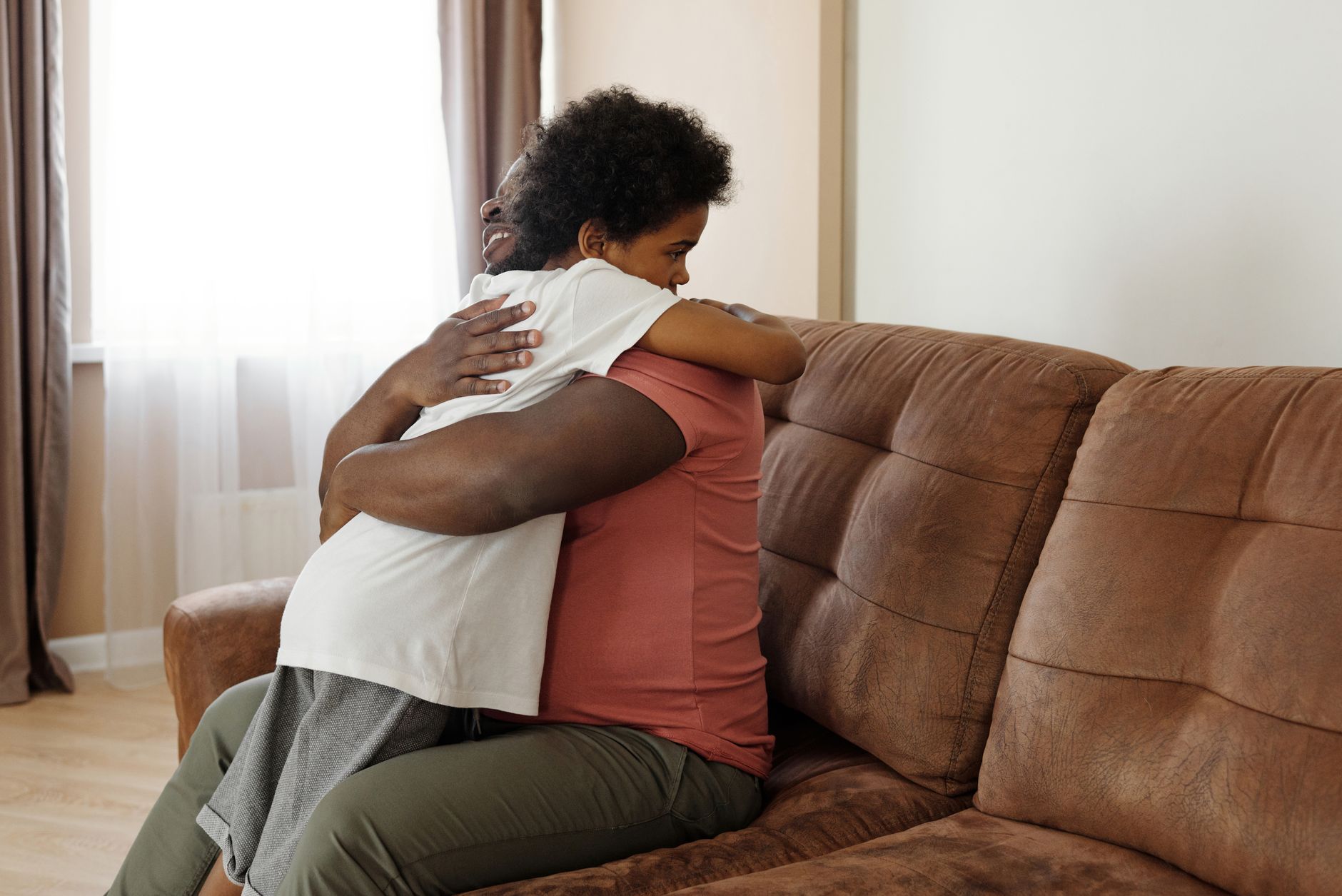
Blood Makes A Relative Showing Up Makes A Mother
The call came at 6:47 on a Tuesday morning in late August, and I know the exact minute because I had already been awake for two hours, sitting at my drafting table in the back bedroom, pretending that a set of blueprints could hold my attention the way my daughters once had.
I do drafting work for a small engineering firm two counties over. Steel beams, load calculations, the boring math that keeps grain elevators standing and church additions from sagging. It is quiet, careful work, and I had learned to hide inside it. When you cannot sleep, you find something with straight lines and no feelings, and you pour yourself into it until the sun comes up over the wheat.
My phone buzzed against the wood.
An unknown number, Seattle area code.
I almost let it ring out. Seattle was the place that had swallowed my children. Seattle was where Graham had moved them after the judge looked down at me from the bench and used the two words that had been carving a hole in me for seven hundred and thirty-two days. Unfit mother. Seattle was the direction I no longer let myself face when I stood on the porch at night.
But my thumb moved before my fear could stop it.
“Mrs. Hayes?” A woman’s voice, steady, but with something braced underneath it.
“This is she.”
“My name is Dr. Whitman. I am calling from Seattle Children’s Hospital, about your daughter Sophie.”
Your daughter.
Two words I had not been allowed to say out loud in the courtroom, in the grocery store, at the diner on Route 9 where the waitress used to ask me how the girls were doing until she learned not to. Two words that hit me so hard I had to grip the edge of the table.
“What happened,” I said. It did not come out as a question. It came out flat, because I was already reaching for my keys with my other hand. “Is she alive?”
“She is stable,” Dr. Whitman said. “But she is very sick. Sophie was admitted in the night. Her blood counts are dangerously low. We are still confirming, but we are treating this as acute leukemia.”
The wheat field outside the window went soft and blurred, and I realized I was crying without any sound at all.
“She is going to need a bone marrow transplant,” the doctor continued, gentle and precise at the same time. “The first thing we do is test the family for a match. Her father is here. He gave us your name and number himself.”
That stopped me.
Graham had given them my name. Graham, who had spent two years and most of his savings making sure I did not exist to those girls. Graham had said my name to a doctor.
“I’ll be there tonight,” I said.
The Drive
I did not pack the way a sane person packs.
I grabbed a bag that already had a sweatshirt in it, my wallet, the phone charger from the wall, and the one photograph I kept face-down in the drawer of the drafting table because I could not look at it and keep working. Sophie and Emma, my twins, six years old in the picture, standing in front of the little Lutheran church on Easter with their shoes scuffed and their hair coming loose from the braids I had put in that morning. Emma was laughing at something out of frame. Sophie was looking straight at me, straight at the camera, the way she always did, like she was making sure I was still there.
I drove to the regional airport an hour away and bought the first seat I could get. I did not call my mother. I did not call my sister. I did not call anyone, because the last two years had taught me that when I said the words out loud, when I told someone what had been taken from me, they got a look on their face, and the look was pity, and pity made it real, and I could not carry it real.
The whole flight I held that photograph in my lap and I made bargains with God the way you do when you have run out of everything else. Let me match. Let me be the one. Let it be my bones that save her. If I could give my daughter the marrow out of my own body, then no judge and no ex-husband and no piece of paper could ever again say I was not her mother. Blood does not lie. Blood does not need a lawyer.
By the time I stood outside a hospital room with a paper tag that read HAYES, SOPHIE in a plastic sleeve on the door, it was almost nine at night, and I had rehearsed seeing my daughter’s face so many times that I did not trust myself to survive the real thing.
The Hallway
Dr. Whitman met me before I could go in. She was younger than her phone voice, with kind, tired eyes and a lanyard heavy with badges.
“Before you see her,” she said, “I want you to know what you are walking into. She is on the pediatric oncology floor. There are lines and monitors. She is weak, and she is scared, and she has been asking questions we cannot fully answer yet. Are you ready for that?”
“I have been ready for two years,” I said.
She almost smiled. “First, we need to do your donor testing. A blood draw, a cheek swab. Then we compare your markers against Sophie’s. If you are a match, everything moves quickly. If you are not, we widen the search. Can we do that now, while you gather yourself?”
I rolled up my sleeve right there in the hallway.
The needle was nothing. I had been through worse in a courtroom. They took two vials, swabbed the inside of my cheek, labeled everything, and a technician carried it away like it was ordinary, like it was not the most important thing that had ever left my body.
And then I waited, on a vinyl chair the color of dishwater, under lights that hummed, and I watched the door with my daughter’s name on it.
That is where Graham found me.
He came around the corner with a cup of vending machine coffee going cold in his hand, and he looked wrong. Not the way I had pictured him for two years, powerful and certain and cruel in a pressed shirt. He looked like a man who had not slept in a week and had lost weight he did not have to lose. There were new lines around his mouth. For the first time in the fifteen years I had known him, Graham did not look like a man who was in control of the room.
He stopped when he saw me.
“You came,” he said.
“Of course I came. She’s my daughter.”
Something crossed his face then. It was fast, and I did not understand it at the time. Later I would understand it completely. At the time it just looked like he had swallowed something bitter.
“She doesn’t know you’re here,” he said. “I don’t want her upset.”
“You gave them my name, Graham.”
“Because you might match.” His voice cracked on the word might, and I saw how far he had fallen. “The counselor said siblings and parents are the best chance. I gave them your name because I would give them anything. That is not the same as wanting you here.”
“I don’t care what you want,” I said, and I was surprised by how calm I sounded. “I am not leaving this hospital until my daughter is well.”
We sat there, the two of us, on opposite ends of a hallway that smelled like antiseptic and fear, not speaking, both of us watching the same door, both of us wanting the same one thing for the first time in years. It should have felt like a truce. It felt like sitting next to a stranger who happened to be wearing my old life like a coat.
The Second Test
Dr. Whitman came back forty minutes later, and I knew before she said a word that something was off, because she did not have the walk of a woman bringing normal news. She had a folder in her hands and she was holding it against her chest like a shield.
“Mrs. Hayes,” she said. “I need to ask you to do the blood draw again.”
I stood up. “Did I match?”
“I would rather not discuss preliminary results until we have confirmed them. There may have been a labeling error. It happens. I want to be certain. Would that be all right?”
“Of course.”
Graham was on his feet too. “What kind of error?”
“Nothing for you to worry about, Mr. Hayes.”
But he did worry. I watched him worry. I watched him follow the doctor’s face with his eyes the way you follow a car that is drifting toward the shoulder.
They drew my blood a second time. They swabbed my cheek again, both sides, and the technician was more careful this time, slower, saying my name and date of birth twice and writing it down. When she left, the hallway got very quiet.
We waited again. This time the wait had weight to it. Nurses came and went from the desk down the hall, and twice I saw two of them stop and glance our way and then look at the folder in the doctor’s office window, and I felt the first cold finger of something I could not name.
Doctors began to gather. Not one. Several. A geneticist with wire glasses. A transplant coordinator with a clipboard. They stood in the little office with the blinds half open, and they passed a printout between them, and every one of them looked at it, and then looked out at me, and then looked at each other.
Graham noticed. Of course he noticed. He had always been the smartest, most watchful person in any room, and it was the thing I had once loved and later feared.
“Why are there so many of them,” he said, low.
I did not answer. I did not have an answer.
When Dr. Whitman finally came out, she had four people behind her. She looked at me first. Then, and this is the part I remember most clearly, she looked at Graham. A long look. A look that already knew something.
“I am going to say this as plainly as I can, because you both deserve that,” she said. “We have run the comparison three times, with two separate samples, in two separate labs. The results are consistent.” She took a breath. “Mrs. Hayes, you are not Sophie’s biological mother.”
The hallway tilted.
“That’s not possible,” I said. My voice sounded far away, like it belonged to someone standing behind me. “I carried her. I was in labor for nineteen hours. I have the stretch marks. I nursed both of them. I am her mother.”
“I do not doubt for one second that you gave birth to her,” Dr. Whitman said, and her gentleness was almost worse than the news. “But the DNA does not lie. There is no genetic relationship between you and Sophie. None. And that is not something a nineteen hour labor changes.”
I turned to Graham.
I turned to Graham the way you turn toward a sound in the dark, on instinct, before you decide to.
And what I saw on his face was not shock. It was not confusion. It was not the free fall I was in. What I saw on my ex-husband’s face was fear. The specific, cornered fear of a man watching a locked door start to open.
“Graham,” I said. Everything in me had gone very still and very cold, the way the air goes before a storm crosses the county line. “What did you do?”
He opened his mouth. Nothing came out.
Dr. Whitman glanced between us. “There is more,” she said. “We would like to review the records for Sophie’s twin as well. For Emma. Because if these results are accurate, then it raises questions we have to answer for both girls.”
“Don’t,” Graham said. It came out as a whisper. He was not talking to me. He was talking to the doctor, and then to the whole hallway, and then, I think, to God. “Don’t. Please.”
But it was already too late for don’t. It had been too late for don’t for eleven years.
What He Did
They took us to a family conference room. Soft chairs, a box of tissues in the center of the table like a centerpiece, a print of a lighthouse on the wall. Hospitals have rooms like this for exactly one purpose, and everyone in them knows it.
Graham sat down heavily. He put his face in his hands. And then, in a voice I had never heard him use, small and stripped of every ounce of the certainty that had crushed me in that courtroom, he told the truth.
We had wanted children for years. That part I already knew. That part I had lived. Cycle after cycle, test after test, the two lines that never came. We had done everything the little clinic in the city could offer, and then, when that failed, we had done the last, expensive thing. In vitro. I remembered the injections in my stomach, the alarm going off at the same time every night, Graham warming the vials in his hands so the medicine would not sting.
What I did not know, what I had never known, was what happened in the weeks before that cycle.
“They told us your eggs weren’t viable,” he said, not looking up. “The doctor pulled me aside, at the appointment you missed because of your grandmother’s funeral. He said the numbers were bad. He said the chance of it working with your eggs was almost nothing, and that a donor egg would give us a real shot.” He swallowed. “And I made a decision. I made it for both of us. I told him to use a donor. And I told him you could never know.”
The room was so quiet I could hear the lighthouse print buzzing against the wall in the draft from the vent.
“You let me think they were mine,” I said.
“They were yours.” His head came up, and his eyes were wet, and even now, even here, he was arguing his case. “You carried them. You fed them. You were their mother in every way that a person can be. I convinced myself the biology didn’t matter, that I was protecting you, that if you knew you would feel like less of a mother, and I could not do that to you.”
“You didn’t do it to protect me.” The words came slow and even. “You did it so you would always have this. So you would always know something about my own children that I didn’t. So that if it ever came to it, you could stand in a courtroom and be more their parent than me.”
He did not deny it. That was the worst part. Graham, who could argue his way out of a speeding ticket, who had argued me out of my own daughters, did not say a word.
Because it was true.
I thought back to the custody hearing, to the way his lawyer had painted me, the long hours I worked, the antidepressants I had taken for one hard winter, the time I had left a pot on the stove and the neighbor smelled smoke. Little things. Human things. Things any tired mother has done. He had gathered them like kindling and lit them into a bonfire that burned my name to the ground, and I had never understood how a man who once loved me could do it so coldly.
Now I understood. He had never fully believed I was their mother. He had told himself a story eleven years ago in a clinic hallway, and that story had let him do everything that came after.
Dr. Whitman spoke quietly. “Mr. Hayes, we still need to test Emma. If Sophie was conceived from a donor egg, we need to know Emma’s status as well, for the transplant search. Twins are our best hope for a match.”
“They used the same donor,” Graham said dully. “For both embryos. The girls are full biological sisters to each other. Identical, the clinic thought, though they were never sure. They just aren’t.” He finally looked at me, and there was nothing left in his face to hide behind. “They aren’t yours. Neither of them. And I have known it every single day.”
The Longest Night
I want to tell you that I was strong in that room. That I stood up with grace. I did not.
I walked out into the hallway and I put my back against the cold wall and I slid down it until I was sitting on the floor of a hospital in a city that had taken everything, and I cried the way I had not let myself cry in two years. Not pretty. Not quiet. A nurse tried to help me up and I could not make my legs work. I kept thinking about the labor, the nineteen hours, the moment they laid two slippery, screaming babies on my chest and I looked at their faces and thought, mine, finally, mine. And now a piece of paper from a lab was telling me that had been a lie sewn into my body by the man I trusted most.
But somewhere in the middle of that dark, something else came up through the floor of me, slow and certain, like water finding a crack.
I thought about the braids. The nineteen hours. The fevers I sat up through. The scraped knees, the two in the morning nightmares, the school plays where they could only see me because I always sat in the front. The way Emma laughed at things out of frame. The way Sophie looked straight at the camera to make sure I was still there.
A donor gave an egg. A clinic put it in a dish. But I built those girls, cell by cell, for nine months inside my own body, and then for ten years with my own two hands. And no test on earth could take that away from me, because that was never written in DNA. It was written in the getting up. In the showing up. In the nineteen hours and the seven hundred and thirty-two days I spent aching for children a court told me I had no right to.
I got up off that floor.
I wiped my face on the sweatshirt in my bag. And I walked into the room with my daughter’s name on the door.
Sophie was so small in the bed. Pale, with a scarf someone had tied over her thinning hair, and a line taped to the back of her hand. She was ten now, not six, and the two years I had lost showed in every inch of her. She had my expressions, I realized. Not my genes, but my expressions. The way she chewed her lip when she was scared. She had learned that from me before she was old enough to remember learning it.
Her eyes found me in the doorway and went wide.
“Mom?” she whispered.
Not are you here to visit. Not the polite word for a stranger. Mom. Two years of Graham’s careful work, and the first thing out of my daughter’s mouth was the truest word in the English language, and no lab in the world had a test for it.
“I’m here, baby,” I said. “I’m not going anywhere.”
The Match
Emma came the next morning.
Graham had kept her at his sister’s, trying to shield her, and when she walked into the hospital and saw me standing in the hall, she froze exactly the way Sophie had, and then she ran the length of the corridor and hit me so hard we both nearly went down, and she cried into my shirt and said mom, mom, mom, like she was afraid to stop in case I disappeared.
They tested Emma that afternoon. And Emma, my other daughter, the one who laughs at things out of frame, was a perfect match for her sister.
Not because of me. Because the two of them came from the same donor, full sisters to each other in a way they were not to me, and that shared blood was the exact thing that could save Sophie’s life. There is a strange mercy in that, and I have stopped trying to make sense of it. The truth that broke my heart in that hallway was the same truth that was going to save my child. Both things were real at once. Life is like that more often than we admit.
The transplant was scheduled for two weeks out, once Sophie was strong enough. Emma was so proud. She kept telling the nurses she was going to give her sister her superpowers. She asked if the marrow would make Sophie like broccoli, because Emma likes broccoli and Sophie never has, and the whole floor laughed for the first time in what I imagine had been a long while.
I did not leave. I slept in the vinyl chair. I learned the names of every nurse on the floor and the exact sound each monitor made, and I sat with Sophie through the hard nights, and I braided what was left of her hair, and I told both girls the stories I had been saving for two years with nowhere to put them.
And Graham. Graham sat in the corner of that story, watching a family he had tried to redraw find its true shape without him at the center.
The Truth Has Weight
Here is the thing about a lie that big. It does not just hurt the person it is told to. It becomes load-bearing. Graham had built the entire custody case on his certainty that he was more their parent than I was, and that certainty rested on a secret, and once the secret came out, the whole structure was unsound.
I did not have to fight dirty. I did not want to. But the truth has weight, and when you finally set it down where people can see it, it does the work for you.
The hospital’s records were clear. The clinic’s records, once my new lawyer subpoenaed them, were clearer still: a consent form for donor egg use signed by Graham alone, in a place where both signatures were required, with a note in the file that the patient (that was me) was “not to be informed per spouse’s request.” Eleven years old. A paper trail of a decision made about my body and my children without my knowledge or consent.
My lawyer, a plainspoken woman named Ruth who had grown up on a dairy farm and did not scare easily, told me it changed everything. Not because biology made me less of a mother. The law, it turns out, does not care much about the egg once you have carried and raised a child as your own for a decade. But it cares a great deal about a man who lies to a court. And Graham had built his whole “unfit mother” case in a courtroom while sitting on a secret that reframed every word of it. The isolation. The controlling of information. The pattern.
The judge who had once called me unfit read the clinic file, and the consent form with one signature, and the note about keeping me uninformed, and something in his face changed. I was in the room this time. I watched it happen.
Custody was reopened. It did not happen overnight, and it was not clean, and there were more hearings and more waiting, which is its own kind of ache. But by Christmas, my daughters were splitting their weeks between two homes again, and by spring, the primary residence was mine, in the small town where they were born, where the church still had their names in the Easter photo on the fellowship hall wall, where the waitress at the diner on Route 9 started asking about the girls again and meant it.
What Graham Learned
I am not going to tell you Graham became a good man. People do not turn into different people because they got caught. But something in him did break open in that hospital, and I do not think it fully closed back up.
He is still their father. He was there for the transplant. He held Emma’s hand while they took her marrow and he held Sophie’s while they gave it to her, and I let him, because whatever he had done to me, he loved those girls, and a child cannot have too many people who love her.
He apologized to me once, really apologized, in the hospital cafeteria at two in the morning over coffee that neither of us drank. He said he had spent eleven years believing he was protecting the family, and it took a DNA test to show him he had only ever been protecting his own power. He said he was sorry, not for the outcome, but for the choice, the original one, the one that made all the others possible.
I told him I forgave him.
I want to be careful about that word, because forgiveness is not the same as forgetting, and it is not the same as trust, and I have not given him either of those. Forgiveness just meant I refused to carry his lie around inside me for the rest of my life the way I had carried it in my body without knowing. I set it down. I set it down for me, and for the girls, so they would not grow up in the middle of two parents at war. I set it down because I finally had my life back, and I was not going to spend it clenched.
What A Mother Is
Sophie is in remission now. The transplant took. She has a full head of hair again, dark and stubborn, and she still chews her lip when she is scared, and she still looks straight at me across a room to make sure I am there. I always am.
Emma tells everyone she saved her sister’s life, and she is right, and I let her say it as many times as she wants.
Sometimes, late, one of them will ask about the donor. They are old enough now to understand the shape of it, that a woman we will never meet gave something that started them, and that I am the one who finished them and always will be. Sophie asked me once if it made me sad that they were not really mine.
I told her the truth.
I told her that a test can tell you where a person’s eyes came from, and the color of their hair, and whether their body will fight off a certain disease. I told her a test is a very good map of the body. But there is no test for the thing that happens at three in the morning when a child is burning up with fever and calls for one specific person in the whole world, and that person comes, every single time, for ten years, for a lifetime. There is no lab that measures the nineteen hours. There is no marker in the blood for the seven hundred and thirty-two days I spent missing them so hard I could barely draw a straight line.
“You are mine,” I told her, “because I chose you every day, and I would choose you again every day, and that is the only thing motherhood has ever actually been made out of.”
She thought about it. She is a serious girl, my Sophie. Then she nodded, the way she does when a thing lines up right, and she leaned her head against my shoulder.
“Okay, Mom,” she said.
Okay, Mom.
Outside the window the wheat was coming up green in the long light, and both my daughters were under my roof, and the man who had tried to erase me had learned, too late and at a terrible cost, the one thing I had known all along.
Blood makes a relative.
Showing up makes a mother.
And I have never once, not for a single day of their lives, failed to show up.