The Tow Receipt That Named Him
Chesley Pardue had my wheelchair van towed out of my own driveway at six in the morning, and when I finally got him on the phone, standing on my own porch rail because my legs had not agreed to hold me up yet that day, he told me, “Handicap plates don’t exempt you from the aesthetic standard.”
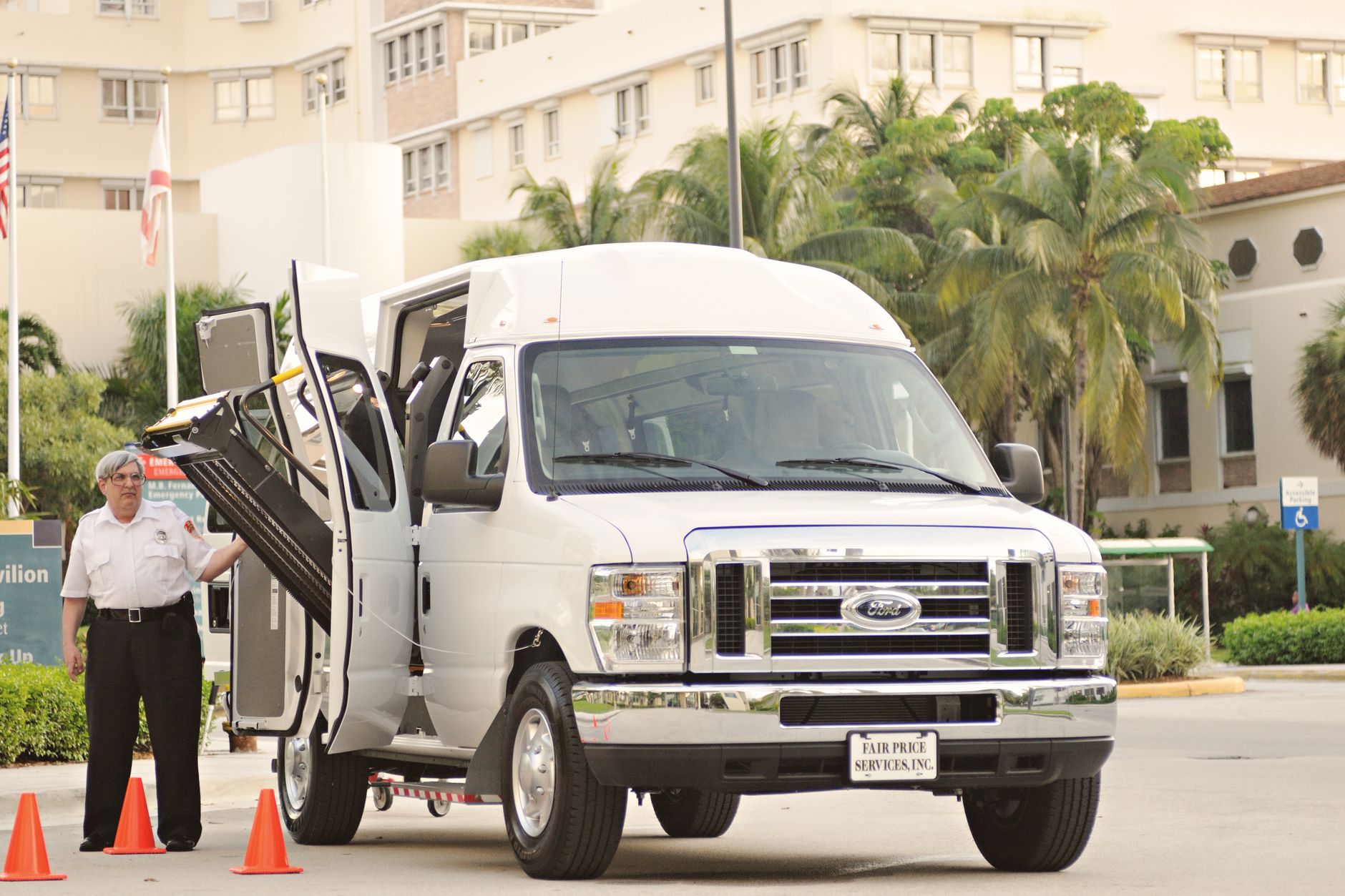
I am forty five years old. I live in Owensboro, Kentucky, in a subdivision called Harvest Bend, in a single story house my wife and I picked out six years ago because it had no steps at the front door. I was a Sergeant in the United States Army, two deployments to Iraq, and I have been home for twelve years now with a spine that stopped fully cooperating with the rest of me somewhere outside Ramadi. That van sitting in my driveway every night is not a vehicle to me the way a car is a vehicle to most people. It is the only way I leave this house on my own.
I want to tell this whole thing from the start, because if I only give you the ending you will not understand why it took me two full days to believe what had actually happened to me in my own neighborhood.
My wife Nolene found the driveway empty. She gets up before I do most mornings, puts the coffee on, and that morning she carried her cup out to the porch out of habit, the way she has for six years, to look at the yard while it wakes up. Instead she stood there in her robe with the coffee going cold in her hand, staring at bare concrete where a raised roof Ford conversion van with a fold down ramp and hand controls had been parked the night before. She came back in and said my name in a voice I had heard maybe three times in our whole marriage, twice when her mother was in the hospital and once the year I came home from my second deployment different than I left. I knew from that voice alone that something was badly wrong before she even told me what it was.
I got myself into my chair and out to the porch as fast as I could manage it, which some mornings is faster than others, and I looked at that empty stretch of driveway for a long moment before my mind would accept it. My first thought, I am ashamed to admit, was that someone had stolen it. Some kid looking for parts, some opportunist who saw a modified van and figured the equipment alone was worth the risk. I almost wish that had been true. A thief, at least, would have made sense to me. A thief is not supposed to make sense, that is what makes him a thief. What we found out instead made a different kind of sense, the kind that sits in your stomach like a stone because it was done by someone who is supposed to be your neighbor.
Nolene called the police first, and I will say this for the officer who came out, he was polite and useless in equal measure. He looked at the empty driveway, looked at the little laminated placard I keep zip tied to the mailbox post that lists my handicap parking authorization number, and told us gently that this looked like a civil matter between me and my homeowners association, and that we should call the tow company listed on the placard sticker Nolene found taped to the mailbox, which none of us had noticed in the dark and the confusion of that morning.
So I called, at quarter past six, still in the t shirt I sleep in, my hand on the porch rail because I had not gotten my crutches yet and did not want to sit down to make the call. The woman on the phone at the tow company was not unkind. She read me a case number, an address forty minutes across town near the interstate, and a release fee of two hundred and eighty five dollars, climbing fifteen dollars a day for every day the vehicle sat uncollected on their lot. I asked her, as calmly as I could manage with my heart going the way it was going, who had authorized the tow of a vehicle from a private residential driveway before six in the morning. She told me, reading off her screen in the flat voice of someone who has read this exact sentence to a hundred other frightened people, that the authorization on file listed the Harvest Bend Homeowners Association as the requesting party.
That was the moment I knew who had done this. I did not need her to say a name. I already had one.
I have known Chesley Pardue for as long as we have lived in Harvest Bend. He was already on the board back then, and he became president of the association two years ago, and he has had some form of a problem with my van since the week the conversion company delivered it to our driveway with a bow on the mirror because Nolene had asked them to, back when we still thought that van was going to be the happy ending to a hard couple of years. Within a week there was a letter. The van’s raised roof, the letter said, exceeded the “profile guidelines” implied by the covenant’s language on vehicle silhouette. I wrote back with the DMV’s adaptive equipment certification. Another letter came, this one about the exterior ramp track along the passenger side, which Chesley’s letter described as giving the vehicle a “commercial appearance inconsistent with residential use.” I sent him the manufacturer’s ADA modification documentation and a letter from my VA case manager explaining exactly what the equipment was and why federal disability law protected it. He filed every single thing I sent him, he told me once at a block cookout, smiling the whole time, in a folder he kept just for my address. I did not understand until much later that he had said that to me as a threat and I had heard it as a joke.
That morning I had a nine o’clock appointment at the VA hospital in Louisville that I had waited eleven weeks to get. Pain management. The only doctor in three counties willing to actually adjust my medication regimen instead of just renewing the same prescription every ninety days without looking up from his screen. Nolene called in sick to her job at the elementary school to drive me in her sedan, which does not have a ramp or a lift, which means transferring me from the passenger seat into my chair in a hospital parking garage takes the two of us working together for the better part of ten minutes and an audience of strangers I never asked to have. We hit traffic on the bridge. We missed the appointment by six minutes. Six minutes, after an eleven week wait, because I had spent that morning on the phone with a tow yard and a homeowners association trying to find out where my own van had gone.
When I finally reached Chesley directly, close to seven that morning, he picked up on the second ring, the way a man answers when he already knows exactly why you are calling and has been looking forward to it. He was almost cheerful. He said he was sorry about my morning, he truly was, but that the standard has to apply to everyone equally, that was what made it fair, and if he made an exception for one van the whole street would start looking, in his words, “like a commercial lot inside a year.” I asked him, my voice shaking in a way I am not proud of, if he understood what that van actually was. If he understood that I do not have another way to leave this house by myself. That is when he said the sentence I have not been able to get out of my head since. Handicap plates don’t exempt you from the aesthetic standard. He said it the way a man corrects a parking ticket dispute, like I had asked him to overlook a paint color instead of asking him to explain why he had a truck haul away the only independence I have left, in the dark, without a word to me first.
I sat with that sentence for two days. I do not fully know how to explain the particular kind of stillness that settles over you when someone in a position of small, ordinary power decides you are the easiest person on the street to push around, and turns out to be right about it for a while. I had spent two tours learning how to move fast under pressure, and here I was frozen at my own kitchen table by a man with a clipboard and a laminated badge that says President on a lanyard he wears to the mailbox.
What got me moving again was Nolene, who came and sat across from me on the third morning and said that whatever I decided to do, she was not going to watch me disappear into this the way she watched me disappear for a while after I came home the second time. She did not say it unkindly. She said it like a woman who has already decided the answer and is waiting for her husband to catch up to it.
So I called Trace.
Trace and I served together, same platoon, both deployments, and if you have ever had a battle buddy you already know there is no clean way to describe what that means to a civilian. He came home a year after I did, went back to school on the GI Bill, and ended up doing insurance claims investigation work, the kind of job where reading fine print and finding the one sentence that does not match the other nine hundred is the whole point of the paycheck. I called him and asked one question. Can they even do this. Can a homeowners association call a tow truck to a man’s own private driveway at six in the morning over a rule about how a van looks.
Trace came over that same afternoon with a legal pad, and he had the look on his face I remembered from a long time ago and a much worse place, the look he got right before he found the thing that mattered inside a pile of things that did not. He did not say much at first. He asked me to lay out everything Chesley had ever sent me, every letter, every warning, going back six years to the week the van arrived. I had all of it. I am the kind of man who keeps paperwork, the Army trains that into you whether you want it or not, and I had a folder almost two inches thick.
Trace read every page without saying a word. Then he set the folder down and asked me the question that changed the way I understood every single thing that had happened to me in this neighborhood.
He asked if I had ever actually seen the tow authorization itself. Not the tow company’s invoice, which just lists a fee and a case number. The original document, the one Chesley would have had to physically produce and sign, to get a truck onto private residential property, at my own house, before the sun was even up.
I told him no. Nobody had ever shown that to me. I had not even thought to ask for it.
Trace looked at me for a long moment and said three words that I have not stopped thinking about since. Then we’re getting it.
What Trace explained to me over the next hour, sitting at my kitchen table with a legal pad filling up in his neat block handwriting, is that a homeowners association is not a kingdom, no matter how much a man with a lanyard wants it to feel like one. The Harvest Bend declaration and bylaws, the real ones, filed with the county clerk’s office when the subdivision was built, say specific things about how the association is allowed to act against a homeowner’s vehicle. They require a documented violation notice with a minimum waiting period. They require, for anything as serious as removing a vehicle from a resident’s own driveway, an actual vote of the full board, recorded in minutes, not a decision made alone by one officer at his kitchen table. And separately from any of that, Kentucky’s towing statute requires a company that removes a vehicle from private property without the owner’s consent to notify local law enforcement of the tow within a set window of time, specifically so a car is never simply gone with no record anyone can find in the middle of the night.
Trace’s plan was simple. If the tow company had to notify police, there would be a police department log entry with a timestamp on it. And if the association had authorized the tow, somewhere on file with that tow company was a document with an actual name and an actual signature and an actual time on it, because no towing company hauls a vehicle off private property on a verbal say so from one man on the phone. Somebody signs something. Every time.
It took Trace four days and two formal written requests, one to the tow company directly citing the statute, and one to the Owensboro Police Department for the log entry the statute required, before both pieces of paper were sitting on my kitchen table in front of us.
The police log entry came first, and it told us something we had not expected. The tow truck had been dispatched to Harvest Bend at 5:31 that morning. My van left my driveway at 5:47.
The authorization form came two days later, faxed over by a clerk at the tow company who told Trace on the phone that she had no idea any of this was going to end up mattering to anybody. It was a single page. Property: my address, listed by street number. Reason for removal: “Vehicle Aesthetic Standard Violation, Non Conforming Modification, Repeat Offense.” Authorized by: one name, one signature, one line. Chesley Pardue, President, Harvest Bend Homeowners Association. Time of signature: 5:47 in the morning. No board resolution number. No second signature. No reference anywhere on the page to any vote, any meeting, any other officer of the association at all. Just Chesley, alone, at an hour when the rest of the street was still asleep, signing his own name to send a truck to a disabled veteran’s driveway to take away the only vehicle he owns that lets him leave his house on his own.
Trace found something else on that same fax, tucked into a line item at the bottom of the invoice attached behind the authorization page, something I would never have understood on my own and something Trace went very quiet reading. A referral credit. Fifty dollars, applied as a credit toward the association’s own annual towing service contract, for every non consensual tow processed through that particular company. Chesley was not simply enforcing a rule he believed in. Every time he had a vehicle removed from a resident’s driveway under the aesthetic standard, the association’s contract with that tow company got fifty dollars cheaper, and Chesley controlled how that credit got spent, because Chesley controlled the association’s books.
Trace looked up from that invoice and said something I will remember the rest of my life. He said, Sergeant, this is not a man protecting a rule. This is a man running a business off your driveway.
We found out, once we started asking around carefully, that I was not the only one. There were at least two other households on our street who had quietly paid a tow release fee sometime in the last three years without ever telling anyone, because they were embarrassed, or because they assumed it was simply how the neighborhood worked, or because Chesley had a way of making a person feel like they were the one who had done something wrong. Nobody had ever compared notes. Nobody had ever seen a single piece of authorization paperwork before Trace pulled ours.
I want to be honest about what I felt reading that fax at my own kitchen table. I did not feel triumphant. I felt something closer to what I felt the day I understood exactly how close a vehicle two positions ahead of mine had come to something that would have ended very differently, a kind of cold, clear anger that does not shout, it just sets in and does not leave. Nolene put her hand on my shoulder while I read it a second time. She did not say anything either. Some things do not need a comment.
Trace wanted to go straight to a lawyer, and honestly, we could have. But I spent twelve years learning that the way you deal with a man who has decided he can do whatever he wants in the dark is not always to go quietly find a different kind of dark to answer him from. Sometimes you bring it into the light, in front of everybody, so the next person never has to go through it alone the way I almost did.
The Harvest Bend Homeowners Association held its regular monthly meeting on the second Tuesday, in the clubhouse off the pool, folding chairs, a coffee urn, and fluorescent lights that hum loud enough you notice them. Normally eight or nine people came, mostly the same eight or nine people, and Chesley liked it that way. I called every board member individually in the four days before that meeting and asked, politely, if I could have five minutes on the agenda to discuss a vehicle removal from my property. Nobody on the actual board, it turned out, three people besides Chesley, had ever heard of a five forty seven a.m. authorization with their association’s name on it. Two of them told me, quietly and separately, that they had never voted on a single vehicle removal in the two years Chesley had been president. They had simply assumed, the way you assume about a lot of things with a man who talks confidently, that the process was being followed somewhere behind the scenes.
The night of the meeting, Nolene drove me over, and Trace came too, carrying a folder of his own, the twin of mine. The clubhouse was fuller than I had ever seen it. Word travels fast in a neighborhood once two other families realize their own quiet, embarrassing tow story is not actually unique to them. Every folding chair was taken. People stood along the back wall near the coffee urn. Chesley stood at the little podium up front in a pressed shirt with his lanyard on, and when he saw the crowd, he smiled, because for two years a full room had only ever meant one thing to him, that people had finally shown up to appreciate the job he was doing.
He called the meeting to order and moved through the minutes and the landscaping budget in that same pleasant, reasonable voice I had heard on the phone a week before, and then he reached the item I had asked for, listed plainly on the agenda as “Resident concern regarding vehicle removal.” He nodded at me, still smiling, the way a man smiles when he is certain he holds every card in the room.
I did not stand up first. Trace did.
He did not raise his voice. He set his folder on the table at the front where everyone could see it and said that before anyone responded to my concern, the board and the community deserved to see the actual documentation behind what had happened to my van, because he had obtained it directly from the tow company and from the Owensboro Police Department, and none of it matched anything Chesley had ever told any of us.
The room went still in the particular way a room goes still right before something changes in it permanently.
Trace read the timestamp from the police log first. Five thirty one a.m. dispatch. Then he held up the authorization form and read it word for word, the violation description, the single signature line, the time, 5:47, and the complete absence of any board resolution number anywhere on the page, even though the association’s own bylaws, which Trace then read aloud directly from the county recorded copy, require a documented board vote before any vehicle removal action against a homeowner. He asked Chesley, in front of the full room, to name the date and the vote count of the board resolution authorizing my tow. Chesley opened his mouth and nothing useful came out, because there was no vote to name.
Then Trace read the line item at the bottom of the invoice. The referral credit. Fifty dollars, applied to the association’s contract, for every non consensual tow processed. He explained plainly, no theatrics, what that line meant in dollars over two years, and asked how many other vehicles on this street that same signature line and that same five a.m. hour had applied to. Two other families in that room, on their own, without Trace naming them or asking them to, stood up and said they had paid a release fee they had never told anyone about, and had never seen a single authorization document either.
Chesley tried to talk over it, the way a man does when the room he built his authority in front of stops believing him mid sentence. He said the aesthetic standard existed to protect property values for everyone. He said he had given up countless hours of his own time to this community with no one else willing to step up and do the job. That last part was the first true thing he had said all night, and it landed in a silence that told him exactly how little it was worth to the people listening.
I stood up last, on my crutches, because some things a man wants to say standing on his own two feet even when it costs him something to do it. I told the room what that van actually was. Not a vehicle. Not a compliance question. The only way I get out of my own house without asking somebody else to carry me there. I told them about the eleven week wait and the six minutes we missed it by. I told them Chesley had said, on the phone, that handicap plates do not exempt a man from an aesthetic standard, and I let that sentence sit in the room exactly as long as it needed to.
The vote that followed did not take long. The board, all three members besides Chesley, voted unanimously to remove him from the presidency effective that night. They voted to void every fine and release fee tied to any vehicle removal action he had personally authorized, and to reimburse every dollar, mine included, two hundred eighty five dollars plus the daily storage charge that had accrued while my van sat on that lot, from the association’s own operating account rather than from dues, since Chesley had generated the expense without proper authority in the first place. They voted to draft a formal complaint to the county attorney’s consumer protection division regarding the referral credit arrangement with the tow company, since a public official, even an unpaid HOA president, directing business toward a vendor for his organization’s financial benefit without disclosure raises real questions a lawyer needed to look at properly. And on a motion from the woman two houses down whose son parks his own van here on visits, the board adopted, on the spot, unanimously, a written amendment stating that any vehicle bearing a valid state disability placard or plate, or documented ADA adaptive modifications, is expressly exempt from any aesthetic or profile provision in the covenant, permanently, with no annual review required.
Chesley left before the meeting formally closed. He gathered his folder and his lanyard and walked out through a room full of his own neighbors, and nobody said anything cruel to him on his way out, because we are not him. But nobody moved a chair aside for him either. He walked out alone into a parking lot that, I noticed without meaning to, did not have a single boat or trailer or anything else parked in it that might have violated one of his own letters over the years. I felt something for him for about four seconds. Then I thought about 5:47 in the morning, and I let the four seconds go.
My van came back from the tow lot the next day, Trace driving me over in his truck to collect it. There was a fresh scuff along the rear bumper where the tow operator had hooked it up too fast in the dark, and the shop fixed it inside a week at the association’s expense, no argument from anyone this time. I sat in the driver’s seat in that lot for a minute before I pulled out, both hands on the wheel, and I will admit I had to just breathe for a second before I put it in gear.
The new covenant amendment is filed now, recorded with the county the same as the original declaration, so it cannot quietly disappear the way a folder full of letters once nearly disappeared me. The board asked what to call it in the minutes, since these things sometimes get a name attached so people remember why a rule exists. I told them I did not want my name on anything. They named it the Placard Provision instead, plain and useful, exactly the kind of name Nolene said suited me better than anything fancier would have.
Trace still comes by most Sundays, the way he did before any of this happened, except now Nolene sets an extra plate without anyone asking. We do not talk about the war much, we never really did, but we talk about almost everything else, and I have come to understand that the men who watch your back in one kind of fight tend to keep doing it in every kind that comes after, whether or not either one of you signed up for the second kind.
I still keep that authorization form. Trace made me a copy, and I keep the original in the same folder where I used to keep Chesley’s letters, except now it means something entirely different sitting in there. It is not evidence of how small a man can make you feel with a clipboard and a lanyard. It is proof of exactly how much a signature at 5:47 in the morning can cost a person, when somebody finally cares enough to ask to see it.
Every morning now, Nolene still carries her coffee out to the porch out of habit. Most mornings there is nothing to see, just a van sitting exactly where it is supposed to sit, ordinary as anything. I have come to understand that ordinary is not something you get to take for granted. Ordinary is something somebody has to be willing to stand up and protect, sometimes at 5:47 in the morning, sometimes at a folding table under fluorescent lights that hum, sometimes just by staying at your side long enough to notice when the driveway is finally, quietly, exactly the way it should be.
This story is a dramatization. Names, characters, and details are invented, and any resemblance to real people or events is coincidental.