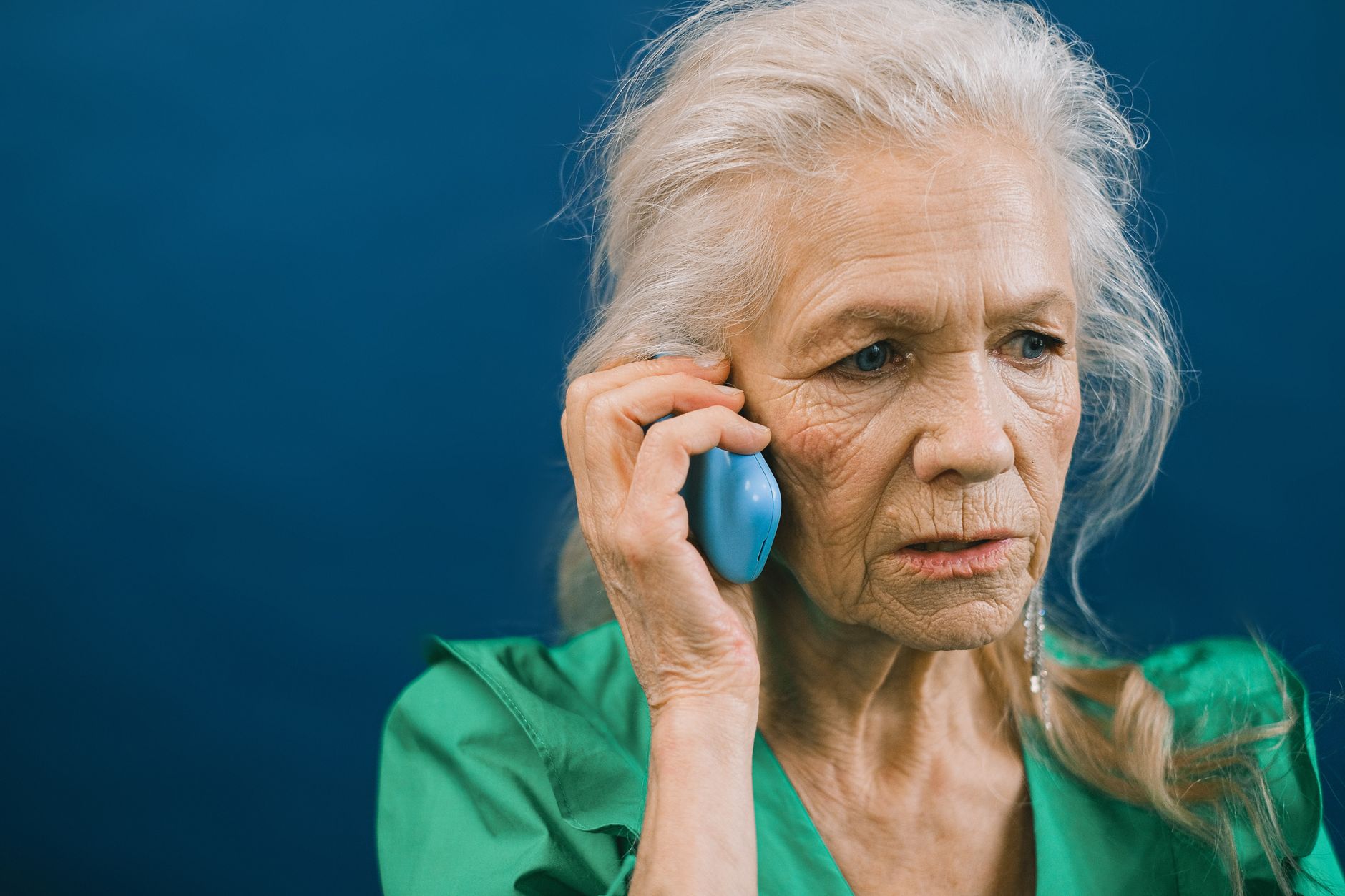
The Vacation She Quietly Canceled
At 5:47 in the morning, forty-three minutes before boarding for a flight none of us would end up taking, I was standing at gate A19 of the Cincinnati/Northern Kentucky International Airport, holding a boarding pass with my own name printed on it, watching my daughter-in-law explain to me, in the gentlest voice she owns, that I would not be needed.
“Gerry,” Kristen said, tucking a strand of hair behind her ear the way she does when she has already rehearsed something, “don’t make this weird. We gave your seat to my mom. The kids just feel closer to her. It’s already done.”
I did not say anything at first. Behind her, my son Xander stood with his eyes fixed on the boarding pass in his own hand, thumb moving back and forth across the corner of it like he could wear a hole clean through the paper if he just kept at it long enough. He did not look up. He did not argue. He did not so much as clear his throat in my defense. My grandchildren, Beckett, nine, and Harlow, six, stood a few feet away in their brand new Hawaiian shirts, the ones I had bought them myself, watching a cartoon on Kristen’s phone as if none of this concerned them at all, which, I suppose, in their eyes, it did not.
I want to tell you I said something sharp. Something a woman who built a company from a card table in her kitchen ought to have said. I did not. I looked at my son’s downturned face, at my daughter-in-law’s mother standing off to the side with an overnight bag and an expression that could not quite decide between guilt and triumph, and I said, “I understand.”
Then I turned around, rolled my suitcase past a coffee kiosk with a line eight people deep, past a family in matching Kentucky Wildcats sweatshirts arguing about a gate change, and found a quiet stretch of window near an empty gate where a regional jet sat waiting on the tarmac in the dark. I stood there for one full minute, watching my own reflection in the glass, an old woman’s face looking back at me, steadier than I expected it to be.
Then I took out my phone and made the first of several calls that would end, seven months later, with my son sitting across my kitchen table asking me, in a voice I had never once heard him use before, what exactly I had done to the money.
To understand why that gate in Boone County, Kentucky, undid something in me that morning, you have to understand what came before it. I am Geraldine Ashworth. Everyone who has known me longer than five minutes calls me Gerry. I am sixty-eight years old, and until six years ago I ran a company most people in Bracken and Mason County had a family member pass through at some point, whether they knew my name or not.
I was twenty-nine when I became a widow. My husband, Sherman, worked line crew for the rural electric cooperative out of Maysville, the kind of job where men climbed poles in every kind of Kentucky weather because somebody had to keep the lights on for the farms and the trailer parks and the little brick ranch houses strung along the county roads. In February of that year, an ice storm took down half the lines between Maysville and Flemingsburg. Sherman went out on a Tuesday morning to restore power to a stretch of road that included the elementary school. He did not come home. A cross-arm gave way under the ice, and that was that. Xander was seven. I was a widow with a mortgage, a boy who cried himself to sleep for the better part of a year, and a job as a floor nurse at Limestone Regional Medical Center that paid, in today’s money, not quite enough to keep the lights on in our own house, let alone anyone else’s.
I want to be honest about what the next fifteen years looked like, because people hear “self-made” and they picture something cleaner than it was. I worked nights in the ICU because night differential paid better and because I could be home when Xander got off the school bus, sleeping in two- and three-hour stretches between his baseball practices and my shifts. I picked up every holiday no one else wanted, every Thanksgiving and Christmas Eve and Fourth of July, because time-and-a-half on a holiday was the difference between new shoes for Xander in September and telling him to make the old ones work another month. I remember one Christmas morning coming home at seven, still in my scrubs, smelling like a hospital, to watch my six-year-old open three presents I had wrapped at two in the morning on a break room table, and thinking, this is what I have to give him right now, and it is going to be enough, because I am going to make it enough.
I remember another night just as clearly, the winter Xander was nine, when he woke up wheezing so badly I could hear it from the hallway before I ever reached his room. I had just come off a twelve-hour shift and had not slept, but forty years of nursing does not let you stay tired when a child cannot get air. I sat up with him until dawn, timing his breaths against my watch, running a hot shower to steam the bathroom because we had no nebulizer yet and I could not afford the emergency room copay on top of everything else that month. By six in the morning his breathing had eased enough that I finally let myself cry, quietly, in the hallway so he would not hear me, not from fear anymore but from the sheer exhaustion of being the only adult standing between my son and every hard thing the world could throw at him. I never told him about that morning. I never told him about most of them. That is what raising a child alone looks like from the inside, a thousand invisible nights nobody claps for.
By the time Xander was in high school, I had gone back to school myself, three nights a week after twelve-hour shifts, for a business degree I earned one exhausted semester at a time. I had an idea that would not leave me alone: home health. I had watched too many families in that ICU struggle to find anyone reliable to care for a parent or a husband once they went home, watched too many exhausted daughters quit good jobs because there was no other option. In 1997, with an SBA loan, four employees, and a desk in the spare bedroom, I started Ashworth Home Health.
It grew slower than I wanted for the first five years and faster than I could have imagined for the fifteen after that. We went from four aides covering Mason County to over three hundred employees across six counties in northeastern Kentucky, contracts with three hospital systems, a fleet of company cars with our green-and-white logo that people around here still recognize on sight. Six years ago, a regional healthcare group made an offer for the company that I sat with for exactly one week before I signed. After taxes, after paying off every employee’s final bonus myself, after settling every account, I walked away with just over nine million dollars, on top of a paid-off house on Route 9 outside Maysville, sixty acres of pasture and hardwood that had been in Sherman’s family, and investments I had been quietly building since Xander was in college. My accountant put my total net worth, the year of that airport, at just over eight point three million dollars.
I tell you all of this not to brag on myself but because it matters to what happened next. Every dollar of that money has fingerprints on it. Double shifts. A boy raised mostly by a tired, determined woman instead of two parents. Fifteen years of holidays worked instead of celebrated. That money is not luck. It is my life, converted into numbers.
Xander grew into a decent enough man, or so I believed for most of his adult life. He married Kristen twelve years ago, a smart, ambitious woman who ran her own event-planning business out of Lexington before the kids came along and she scaled back to part time. I liked her well enough at first. She was polished in a way I never had time to be, always put together, always had an opinion about the right kind of school district. Beckett came four years into the marriage, Harlow two years after that, and I loved those children the way you only love grandchildren, which is to say completely, without any of the exhaustion that came with raising their father.
Somewhere along the way, though, I noticed a pattern I did not want to see. Kristen’s mother, Carla, a pleasant enough woman from Lexington who had raised Kristen mostly alone after her own divorce, started showing up at more and more of the moments that used to be mine. School plays. Piano recitals. The Fourth of July cookout I had hosted at my place every single year since Xander was small, until three years ago, when Kristen quietly moved it to Carla’s condo instead, “because the pool is so much easier with the kids.” I told myself it did not matter. Grandchildren have room in their hearts for more than one grandmother. I believed that. I still believe it, honestly, on the days when I am not still angry.
What I did not expect was for that quiet, creeping replacement to reach all the way into a trip I had spent seven months planning and paid for entirely myself.
It started as an idea at my own kitchen table the January before, looking at a calendar and realizing Beckett would turn ten that year, that Harlow would start losing that soft toddler roundness in her face sometime soon, and that I wanted, more than almost anything, ten uninterrupted days with all four of them somewhere none of us would ever forget. I chose Maui. I spent weeks comparing resorts before settling on an oceanfront property in Wailea with two connecting suites, private lanais looking straight out over the water, and a kids’ program the concierge personally walked me through over the phone twice.
I did not simply write a check and call it finished. Beckett had been obsessed with sea turtles since he was four, so I booked a guided snorkel excursion at a reef known for green sea turtle sightings, timed for the exact week marine biologists said turtles were most active there. Harlow wanted, in her words, to “swim with a real live mermaid,” so I found a company that does exactly that, women in elaborate tails who perform in a lagoon pool, and I had a custom sequined swim cover made for her to wear afterward, mailed to my house weeks in advance and wrapped in tissue paper in my closet like a secret. I booked a luau for the whole family, a private sunset dinner, and a helicopter tour along the Road to Hana for the adults while the resort’s kids’ club watched Beckett and Harlow build sandcastles. I paid for first-class seats on every leg of every flight for all five of us, because I wanted this trip, unlike almost everything else in my life, to feel like something given generously and without a single corner cut.
Total cost, when I finally sat down with every invoice in front of me: forty-seven thousand dollars. I did not blink at the number. I thought of it as the truest kind of investment I had left to make, buying ten days that my grandchildren would remember for the rest of their lives, ten days that would finally, after everything, feel like the payoff for all those overnight shifts and all those holidays worked instead of celebrated.
I told myself, more than once during those seven months of planning, that this was the trip that would finally close the circle. Not the money from selling the company, not the paid-off house, not even the trust accounts I had already opened for Beckett and Harlow. This was the one thing I could hand my family without stretching myself thin the way I had stretched myself thin for fifteen years, a gift given from abundance instead of survival, ten days that said, without my ever having to say it out loud, look what I built out of nothing, and look how I get to spend it now. I wanted, selfishly perhaps, to be in the water when Beckett saw his first sea turtle. I wanted to watch Harlow’s face when the woman in the mermaid tail swam toward her. I had earned the right to be present for that, I believed, more than I had earned almost anything else in my life.
We were set to leave on a Tuesday in July, all five of us meeting at CVG for a six-thirty flight to Denver and on to Maui. I woke at four that morning in my house outside Maysville, too excited to have slept much anyway, checked my suitcase three times, and had my neighbor’s son, who does driving jobs on the side, take me the hour and a half up Route 9 and across the river into Kentucky’s northern tip to the airport. I remember the fog sitting low over the tobacco fields along the way, the way it does most July mornings, and thinking that I could not remember the last time I had felt this light.
I arrived at the gate at 5:47, forty-three minutes before boarding, rolling my suitcase past the coffee kiosk and the family in Wildcats sweatshirts, scanning the small cluster of people near the counter until I found mine. Xander, forty-one now, still built like his father through the shoulders, a little more gray than the last time I had really looked at him. Kristen, thirty-eight, in the kind of effortless travel outfit that takes real effort. Beckett and Harlow bouncing in their new Hawaiian shirts, already glued to a phone screen the way kids are at that hour. And beside them, an overnight bag at her feet and a Maui luggage tag already looped through the handle, Carla.
A small, cold feeling moved through my chest before my mind had even caught up to why. Carla was not supposed to be here. This was not her trip. It was mine to give.
“Good morning,” I called out, forcing brightness into my voice. “Everybody ready for paradise?”
Beckett gave me a quick, tight wave without looking up from the phone. Harlow said nothing at all, just gripped the handle of her little rolling suitcase and stared at the floor.
Kristen turned to face me, her expression careful in a way I recognized from every difficult conversation she has ever had with me. “Gerry,” she said, “don’t make this weird. We gave your seat to my mom. The kids just feel closer to her. It’s already done.”
“You what,” I said, my own voice sounding oddly distant, the way sounds get during a code, when part of your brain is already three steps ahead of your mouth.
“We changed the reservation last week,” Kristen said, tucking that same strand of hair behind her ear. “Mom’s going instead. It just makes more sense, honestly. You’ll see them when we’re back.”
I looked at Xander. For forty-one years I had learned every version of my son’s face, the toddler tantrum face, the teenage sullen face, the face he made the day he called to tell me Beckett had been born. This was a face I had never seen on him before. Not defiance. Not even guilt, exactly. A kind of practiced blankness, the face of a man who had decided, somewhere in advance, that the easiest way through this was to simply not be present for it.
“Xander,” I said. “Tell me this is a joke.”
He looked at the departures board over my shoulder instead of at me. “Mom, it’s already decided,” he said, his voice flat and quiet, careful not to carry. “Let’s not do this here.”
Let’s not do this here. As if I were the one making a scene, standing perfectly still in a quiet corner of a regional airport at quarter to six in the morning, while the two of them dismantled, in the span of one sentence, a trip I had spent seven months and forty-seven thousand dollars building for their children.
“You’re too sensitive about this stuff, Gerry,” Kristen added, crossing her arms over her expensive jacket. “It’s one trip. The kids barely notice who’s there as long as someone is having fun with them. Mom deserves this too. She never gets time like this.”
I looked at Beckett and Harlow, hoping for some small flicker of protest, some crease of a nine-year-old’s frown that told me this felt wrong to them as well. Neither one looked up. Someone, I understood in that moment, had already coached them not to.
“I understand,” I said.
I do not fully know, even now, why those two words came out of me instead of the dozen sharper things sitting right behind my teeth. Maybe it was forty years of nursing, of learning to keep my hands and my voice steady in rooms where panic helps no one. I turned, rolled my suitcase past the coffee line, and walked to that quiet stretch of window near the empty gate, where I stood for one full minute watching a regional jet sit waiting on the tarmac in the pre-dawn dark, watching my own reflection layered over it, an old woman’s face, steadier than I expected.
Then I opened my phone and called the resort in Wailea first, since I knew their front desk opened early for arriving guests. I explained, in a voice that surprised me with how calm it was, that I needed to cancel the entire reservation, all five rooms, all the excursions attached to it, effective immediately. The woman on the line, apologetic, explained the cancellation window had technically closed the week before, that I would forfeit the deposit on the rooms but that anything not yet charged could still be stopped. I told her to stop every charge she could. Then I called the airline and canceled the four remaining tickets under my card, the ones for Xander, Kristen, Beckett, and Harlow, along with my own, which had already been reassigned to a woman I had known for six years and never once considered family.
By 6:40, before their flight had even finished boarding without any of them on it, the entire forty-seven-thousand-dollar vacation no longer existed. Not my seat. All of it. Every excursion, every suite, every first-class ticket, gone with three phone calls made from a folding chair near an empty gate while the sun came up gray over the tarmac.
I did not do it out of spite, though I understand if that is hard to believe. I did it because somewhere in that hour I finally understood something I had spent forty years avoiding. I had spent my whole adult life being the person who quietly kept things running so that everyone else’s plans could go forward. I was done being the invisible engine behind a trip where I was not even welcome to sit with my own family.
The calls started around nine that morning, once Xander discovered at the gate that his own flight, the one he assumed was untouched, had been canceled along with everyone else’s. I let the first four go to voicemail. On the fifth, I answered, sitting at my own kitchen table with a cup of coffee gone cold in front of me.
“Mom, what did you do,” Xander said, his voice cracking in a way it had not at the airport. “We’re stranded. Kristen’s mother is in tears. The kids are asking why we’re not going.”
“I canceled the vacation I paid for,” I said. “All of it. I assumed that was within my rights, since it was my money.”
“You can’t just do that,” he said. “You’re punishing the kids.”
“I’m not punishing anyone,” I said. “I’m simply no longer funding a trip I was uninvited from an hour before it left. If you’d like to take Beckett and Harlow somewhere this summer, I would be glad to hear about it. On your own dime.”
He was quiet for a long moment. “This is really about you being mad we gave your seat to Carla,” he finally said, and something in the way he said it, so certain, so entitled to an explanation that made this small, told me everything I needed to know about how this would go if I let it.
“No,” I told him. “This is about the fact that my own son stood there and let his wife tell his mother she wasn’t needed, and did not say one word in my defense. That’s what this is about, Xander. Not a seat. You.”
I hung up before he could answer. Then I sat with my cold coffee and my quiet kitchen and I let myself feel, for the first time in fifteen years, truly furious, not the small daily irritations of being slowly edged out of my grandchildren’s lives, but a deep, foundational anger at having spent forty years building something for a family that could dismiss me at a departure gate without a second thought.
By that evening, I had decided I was not simply going to be angry. I was going to be exact.
Around eight that night, I called Marnie Holt, who ran clinical operations for Ashworth Home Health for eighteen years and remains, hands down, the closest thing I have to a sister. I told her everything, the gate, Kristen’s voice, Xander’s silence, the three phone calls that had emptied out a forty-seven-thousand-dollar vacation before the plane he was supposed to be on had even left the ground. Marnie was quiet for a long moment on the other end of the line.
“Gerry,” she finally said, “you spent forty years making sure that boy never went without a single thing he needed. And he stood there this morning and let his wife tell you that you weren’t needed. Do you hear how backwards that is?”
“I hear it,” I told her.
“Then don’t you dare feel guilty about those phone calls,” she said. “You didn’t punish anybody today. You just finally stopped paying for people who forgot who built the table they’ve been eating at.”
I sat with that a long time after we hung up, out on my back porch with Sherman’s old dog at my feet, the tobacco fields going dark past the fence line, and I understood that Marnie had put into words exactly what I had not yet let myself believe about my own morning.
The following Monday, I called Ted Weller, the attorney who had handled every piece of paperwork for Ashworth Home Health since the year I incorporated it, and asked him to clear his calendar for a full afternoon. I drove into town, sat across from him at the same conference table where we had signed the sale of the company six years before, and told him I wanted to rebuild my estate plan from the ground up.
“Start from the beginning,” Ted said, sliding a legal pad across the table. “Tell me what happened, and then tell me what you actually want, not what you’re angry about this week.”
So I told him about the gate, about Kristen’s voice, about Xander’s silence, and then I told him what I wanted. I wanted my grandchildren protected in a way no parent could ever touch or borrow against. I wanted the money that came from double shifts and skipped holidays to keep doing the kind of work it was earned doing, taking care of people, not sitting as collateral on someone else’s mortgage application. And I wanted my son to understand, in language plain enough that there could be no misreading it later, that love and money were no longer going to be the same thing in this family.
“That’s not spite,” Ted told me. “That’s just good planning with your eyes finally open. I’ll have Bethany in by Thursday.”
It took four months to finish properly, four months of meetings with Ted, with a financial advisor named Bethany out of Lexington who Ted brought in to structure the trusts, and with the trust department at the bank that had handled Ashworth Home Health’s accounts for two decades. I was patient about it. I did not want anger driving the decisions, only clarity. What emerged, by the end of that November, looked like this.
I removed Xander and Kristen entirely as beneficiaries of my primary estate and as co-executors, a role Xander had held since his thirtieth birthday. In their place, I named my niece Josephine, Sherman’s sister’s daughter, a woman who spent every summer of her childhood at my kitchen table helping me can tomatoes and has never once, in thirty years, asked me for a dime.
I created two irrevocable trusts, one for Beckett and one for Harlow, funded at two point six million dollars each, administered not by their parents but by the trust department at the bank downtown, a professional, independent trustee with no stake in staying on my family’s good side. The trusts release funds in stages, a portion at twenty-five for education or a first home, a larger portion at thirty, the remainder at thirty-five, with language Ted wrote specifically to bar either parent from ever serving as trustee or directing a distribution. Their college funds I had already been contributing to since birth stayed untouched and separate, available immediately for school. This money is theirs, protected from the two adults who used them as leverage at a departure gate.
I set aside one point five million dollars to establish the Sherman Ashworth Memorial Fund at Limestone Regional Medical Center, a scholarship for the children of home health aides and hospital support staff, the people who do exactly the kind of overnight, holiday, thankless work that built my entire life, named for the man whose death started all of it.
The sixty acres and the lake cabin on it, land that Xander had always assumed, without ever once asking, would come to him, I deeded instead to Josephine, along with a letter explaining that it was not punishment but simple honesty about who had actually shown up for me across three decades.
I did not disinherit my son completely. I am not, whatever Kristen may believe, a cruel woman. Xander received a separate, modest bequest, his father’s tools, a fifty-thousand-dollar account he can access without restriction, and an open invitation, in writing, to rebuild an actual relationship with me if he ever chose to. But the bulk of what I built, the eight point three million dollars that came from double shifts and skipped holidays and a company I started at a card table, no longer runs through him or his wife at all.
The family found out five months later, in a manner none of us chose. Xander and Kristen had applied to refinance their house that November, and on an earlier application, apparently, they had listed an “expected inheritance” as a projected asset, a fact I only learned because the loan officer required documentation and the request eventually landed on Ted Weller’s desk. Ted, following the letter of the law and nothing more, sent back a single, factual letter confirming that neither Xander nor Kristen Ashworth was currently named as a beneficiary of my estate.
Xander showed up at my house four days later, unannounced, without Kristen, without the children, and sat across my kitchen table where I had once wrapped his Christmas presents at two in the morning still smelling of the hospital.
“Is it true,” he asked. “About the will.”
“Yes,” I said.
He put his head in his hands for a long moment. When he looked up, his eyes were wet in a way I had not seen since Sherman’s funeral, when Xander was seven and did not fully understand yet what had happened. “Mom, we were going to apologize eventually,” he said. “We just didn’t know how.”
“You had five months,” I said. “You had every Sunday I offered to see the kids, every holiday, every quiet moment where you could have simply said, Mom, I’m sorry, I should have said something at that gate. Instead you tried to refinance a house against money you assumed would still be mine to give, without ever once earning it back.”
“So that’s it,” he said. “You’re just done with us.”
“I am not done with you,” I said. “I am done funding a version of my family that treats me as a checkbook with a pulse. Your children are protected. Every dollar meant for them is safe from you and from Kristen, in a way no one can touch or borrow against or leverage on a loan application. What’s left for you is not gone. It’s simply tied, now, to whether you choose to actually be my son again, and not just the man standing closest to my money.”
He did not have an answer for that. He sat with it a long time, then asked, quietly, if he could still bring the kids on Sundays. I told him yes, that had never been in question, that Beckett and Harlow lost nothing of me the day their mother decided I had lost my seat. Kristen, I told him plainly, was welcome to earn her own way back into my life whenever she chose to try, but I would not be holding my breath, and neither should he.
It has been eight months now since that morning at gate A19. Beckett and Harlow come to the farm most Sundays, and we have built something steadier than what we had before, cookies rolled out on my kitchen counter, afternoons on the porch with Sherman’s old dog asleep between us, no phones, no scripted coldness, just the two of them and their grandmother, exactly as it should have been all along. Xander comes sometimes, quieter than he used to be, more careful with his words. Kristen has not come at all, and I have made my peace with that, the way you make peace with a door you finally stopped propping open.
Last spring, the Sherman Ashworth Memorial Fund gave out its first scholarship, four thousand dollars to the daughter of one of my old aides, a girl heading to nursing school herself, and I sat in the front row of that small ceremony and cried in a way I had not allowed myself to at that airport gate.
And in June, I finally went to Maui, not with forty-seven thousand dollars of first-class seats and private excursions, but on a simple trip with Josephine, two coach tickets and a modest ocean-view room, walking along the same stretch of beach in Wailea I had once planned to share with grandchildren who never made it there because of a decision that was never mine to make in the first place. I stood in the water at sunset, the same warm water I had pictured Beckett and Harlow splashing in for seven months of planning, and I understood, finally, that the trip had never really been about the ocean at all.
It was about being wanted. And I had spent sixty-eight years learning, the hard way, that the people who deserve a seat at your table are the ones who would never dream of giving yours away.
Before I flew home, Josephine and I drove up to the old cemetery outside Flemingsburg where Sherman is buried, the two of us sitting on the grass in the shade of a maple tree that has grown taller every year since I was twenty-nine and did not know how I would survive the winter. I told him, out loud, the way I sometimes still do, about the gate, about the trusts, about the scholarship with his name on it. “I hope I did right by our boy,” I said, “even when doing right meant finally telling him no.” The wind moved through the leaves the way it always does, and I chose, the way I have chosen for thirty-nine years now, to take that as an answer.
These days, when Beckett and Harlow come out to the farm on Sundays, I no longer think of myself as the grandmother who was easy to replace at a gate in Boone County. I think of myself as the woman who spent forty years learning exactly what she was worth, and finally, at sixty-eight, decided to act like it.
This story is a dramatization. Names, characters, and details are invented, and any resemblance to real people or events is coincidental.