The Land Hatch Tried to Take
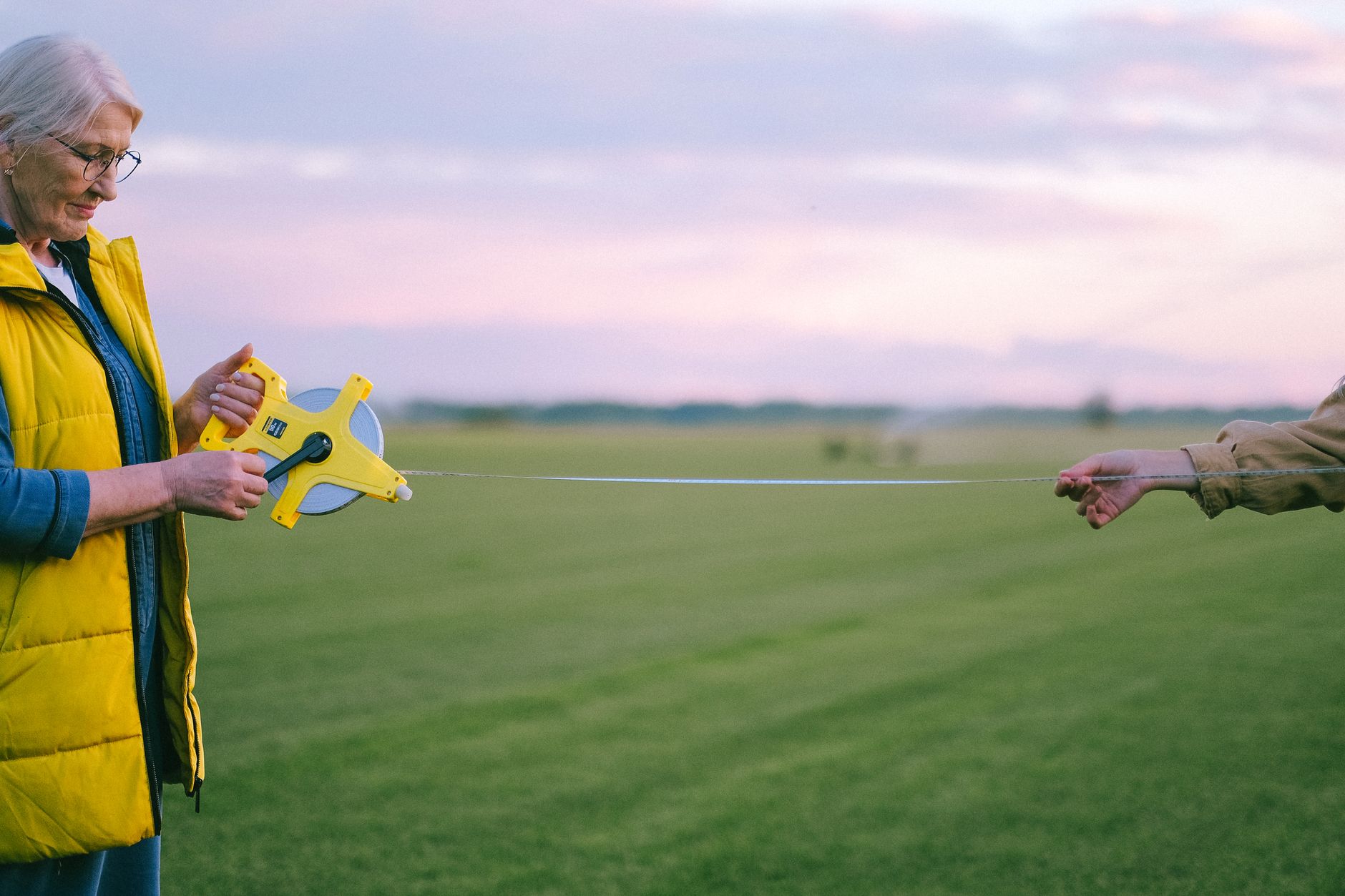
The first time Hatch’s crew drove onto our property, I was out by the old pump house checking the water line. I heard the truck before I saw it, a black F-350 with a company logo on the door, rolling slow along the fence line that my grandfather Tomas had built post by post in 1947. Two men got out with orange marking flags and started pushing them into the ground along what they seemed to think was a property boundary.
I walked over. Sixty-three years old, work boots, calloused hands. I have never been a man who walks fast to trouble. Tomas taught me that. You walk steady, you breathe steady, and you let the other person show you who they are before you say a word.
“Help you gentlemen?” I said.
The taller one looked me over. “Survey crew. Working for Hatch Development. You Morales?”
“I am.”
He pulled a folded paper from his vest pocket and handed it over. It was a map, a copy of something with a company letterhead I did not recognize. A surveyor’s stamp in the corner, dated four months prior. And there on the map, a line that cut across the corner of our land, the northeast corner, right where our old water well sits inside a concrete ring that Tomas poured himself. According to that line, the well and the corner acre it sits on belonged to Hatch Development.
I handed the paper back. “That line is wrong,” I said.
The tall one shrugged. “The survey says what it says. Our attorneys will be in touch.”
They drove off. I stood there in the afternoon sun looking at the orange flags in my fence line and I thought about my grandfather, who came up from Chihuahua in 1931 with nothing, who worked other men’s fields for twelve years before he saved enough to put a down payment on this forty acres. Who built every fence on this place with his own hands. Who dug that well by hand with a neighbor named Espinoza in the summer of 1946 and hit water at thirty-one feet. I thought about my father, who was born in the house we still live in, and about my mother, who is buried out back under the cottonwood.
I stood there a long time. The flags were orange plastic, the kind you buy at a farm supply store, and they had pushed them into the ground every eight feet or so along a line that cut diagonally across the corner of our property. There were fourteen of them. I counted them the way you count things when you are trying to stay calm. Fourteen flags on land that my family had owned for eighty years.
The truck was gone but I could still hear their radio playing from down the road.
I walked back to the pump house and I sat on the step and I looked at what they had given me, that folded map. I unfolded it again. The letterhead said Hatch Development, Phoenix, Arizona. The survey stamp bore the name of a firm I did not recognize, and the date was the previous spring. Someone had drawn a bold line in red on the map showing the boundary they were claiming, and that line ran eight to twelve feet inside what I knew to be our northeast corner.
The well was circled in red. Someone had written beside it: existing structure, to be assessed.
I folded the map back up and put it in my shirt pocket.
And I thought: not one inch.
—
My wife Rosalba heard me out that evening at the kitchen table. She is the calmer of the two of us on most things, but not land. Rosalba’s family lost forty acres in New Mexico to a paperwork dispute when she was twelve, and it marked her. She listened to everything I said and then she asked one question.
“Where is Tomas’s deed?”
I knew exactly where it was.
In the back bedroom closet, on the highest shelf, there is a metal lockbox my grandfather bought at a hardware store in 1943. Inside that box: his naturalization papers, his original deed to this property dated 1943, and a survey plat from 1944 that showed every boundary line of this forty acres in ink that was still crisp after eighty years. Tomas kept those papers the way other men keep gold. He told my father, and my father told me: the land is only yours if you can prove it. The paper is the proof.
I got down the box. I opened it at the kitchen table. Rosalba and I spread the deed flat under the lamp.
The legal description was clear. It named the northeast corner by reference to a section post and a bearing distance. Forty acres, fully described. The northeast corner of our property was not where Hatch’s new survey put it. It was eight feet and some inches further east, which put our well comfortably inside our boundary.
“We need someone who knows how to read this,” I said.
Rosalba said, “We need the original survey the county has on file. The one from before all these new surveys. If Tomas’s deed matches the county record from the forties, Hatch has nothing.”
She was right. She is usually right.
—
I did not hire an attorney right away. I could not afford to, not the kind of attorney who fights developers. Hatch Development was not a small operation. Their letterhead listed an address in Phoenix and they were building a subdivision on the land north and east of ours, two hundred and forty homes. That corner acre, with the well on it, sat right at the edge of a planned cul-de-sac. That was why they wanted it. A working well on a corner lot inside a subdivision is worth something. Our family water supply is worth everything.
The next morning I drove to the county assessor’s office before it opened and I sat in the parking lot thinking through what I knew. The Morales name had been on this land since 1943. We had paid property taxes on the full forty acres every year, which meant the county had always recognized our boundary. No easement dispute, no recorded encroachment, nothing on file that I knew of that challenged our corner. Hatch was not claiming the land had always been theirs. They were claiming a survey error had placed our boundary line incorrectly, and that the true line gave them that corner. That was a different thing. It meant the fight was not about who owned the land on paper but about where the line actually fell on the ground.
I understood what that meant. It meant the survey was the whole case.
I also drove past the Hatch construction site that morning. The new subdivision was coming up fast. There were already framed houses at the far north end of the parcel and a sales office trailer near the road with balloons out front and a sign that said VISTA RIDGE ESTATES, FROM THE MID-300s. I pulled over and sat there for a few minutes looking at it. Two hundred and forty homes. That was a lot of money. That was the kind of money that makes legal fees look like a rounding error. That was the kind of money that can bury a sixty-three-year-old farmer in a lawsuit until he can’t pay his taxes.
I called the county assessor’s office first. The woman there was polite but told me property line disputes were civil matters and I would need to talk to an attorney or the county clerk. I called the county clerk’s office and got transferred three times before reaching a voicemail.
I drove to the county seat. It is forty-two miles from our place, a drive I have made a hundred times for one errand or another. I went straight to the clerk’s office and asked to speak to whoever handled property records. They sent me to a back room where a woman named Cecelia ran the archives.
Cecelia was somewhere around fifty, gray-streaked hair pulled back, reading glasses on a lanyard. She had the look of someone who has spent a long time in a room with old paper and does not find it tedious. I liked her immediately.
I explained the situation. I told her I had an original deed from 1943 and I needed to find the county’s copy of the original survey for our parcel, the one recorded in the 1940s, to compare it against a new survey a developer was using.
Cecelia looked at me over her glasses. “How old is the deed?”
“1943. The survey plat I have at home was done in 1944. I need to see if the county has the original on file.”
She was quiet for a moment. Then she said, “Come with me.”
—
The archives room was cooler than the rest of the building and smelled of old paper in a way I found comforting. Cecelia led me past rows of metal shelves to a section she had to unlock with a key on her lanyard. She pulled a wide, shallow drawer and began paging through rolled and folded documents in labeled sleeves.
“Pre-1950 surveys are all original paper,” she said. “We digitized from 1970 forward. Before that, you get what was filed.”
She found our section. She found our parcel number, which matched what was on Tomas’s deed. And she drew out a folded document in a yellowed sleeve that said on the outside, in neat ink: Survey Plat, SE Quarter, Section 14, Township 12 South, Range 4 East, 1944.
She unfolded it on a light table.
I looked at it for a long time. The surveyor’s name was A.D. Castellano. The date was August 1944. The northeast corner of our forty acres was marked with a point and a legal description that matched, line for line, what was written in Tomas’s deed. The corner post was located by bearing and distance from a section monument that still exists, a iron pipe in concrete that the county road department had record of.
The corner Hatch was claiming was not our corner. It was not even close.
Cecelia looked at the document and then at me. “Do you have your deed with you?”
I had brought a copy. She laid it beside the survey plat. She compared the legal descriptions. She was quiet for a long time.
“These match,” she said.
“I know.”
She looked at me again. “Mr. Morales, if Hatch’s survey puts their line where you say it does, their surveyor made an error. Or someone commissioned a survey with a different starting point than what’s recorded here.”
I said, “That is what I believe.”
She said, “I can certify a copy of this plat for you. Official county copy, sealed. That’s your evidence.”
“How much?”
“Three dollars a page.”
I paid her nine dollars for three pages and walked out into the afternoon with the most important papers I had ever held, except for the deed itself.
—
The attorney I finally found was a woman named Patricia who worked in the county seat and had a reputation for not being afraid of developers. I could not pay her standard rate so we worked out an arrangement where she took the case on a reduced-fee basis with the understanding that if we prevailed and the court awarded any fees, she would recover them. She was direct with me in the first meeting.
“If the county record matches your deed and contradicts Hatch’s survey, you win,” she said. “The question is whether they push it to litigation or fold when they see what you have.”
“What do you think they’ll do?”
She looked at the certified copies of the 1944 plat and at Tomas’s deed, which I had brought in its original form, still in the envelope from the county recorder’s office in 1943. “I think when their attorneys see these, they’ll fold. Developers don’t like going to court over a survey error. Bad publicity, and they usually lose when the original records are clear.”
She wrote a letter to Hatch Development’s legal team. Attached to it were certified copies of the 1944 plat, the deed, and a statement from Cecelia about how the records were located and what they showed.
We waited three weeks.
—
Those three weeks were not easy. Hatch did not stop their work. They were grading land on the north parcel and the sound of machinery carried across the fields every morning, starting around seven and going until six in the evening. You could feel it faintly through the floor of the house when they were running the big equipment. The dust from the grading drifted south and settled on our truck and on the windshield of Rosalba’s car in the driveway.
A man in a white truck came and photographed our fence line from the road. He was there on a Wednesday morning, just sitting at the roadside with a camera on a long lens, pointed at our property. I watched him from the kitchen window for twenty minutes. I did not go out. I took photographs of him taking photographs, which Patricia had told me to do if anything like that happened. Patricia said document everything and keep your mouth shut until the attorneys have exchanged correspondence.
I tried. It was not easy.
The worst day in those three weeks was the day a Hatch attorney, a different one than had sent the original letter, called the house and spoke to Rosalba because I was out in the field. He was polite, she told me afterward, very polite, but the message was clear. He told her that Hatch was prepared to move forward with their survey findings and that if the matter went to litigation, it could take years and cost both parties significant money. He suggested that a reasonable resolution might involve Hatch purchasing the corner acre and the well rights at a fair market rate, and that this would save everyone a great deal of trouble.
Rosalba told him we had retained an attorney and he should contact Patricia.
When I came in for lunch and she told me, I stood in the kitchen for a minute without saying anything. Then I said, “You told him to call Patricia?”
“I told him you were not available and that he should speak to your attorney.”
“Good,” I said.
She looked at me. “Emilio. They’re trying to buy us out.”
“I know.”
“They’re only trying to buy us out because they know their survey is wrong.”
That was the thing about Rosalba. She sees through to the center of a thing faster than anyone I have ever known. If Hatch was confident in their survey, they would not have been calling the house to offer a purchase. They would have filed in court. The purchase offer was an admission, wrapped in politeness.
Rosalba held it together better than I did in those weeks. She planted the fall garden. She fixed a fence panel the horses had gotten into. She made dinner every night at six o’clock and we ate together and talked about things that were not the survey. I needed that. When you are waiting for something that matters this much, you can lose yourself in the waiting if you are not careful. Rosalba would not let me do that.
At night, though, I sat with Tomas’s lockbox on the kitchen table sometimes. Just sat with it. Not even opening it. Just knowing what was inside.
I thought about Tomas a lot in those weeks. He came to this country with nothing and he worked his way to this land and he held it. He held it through droughts and through years when cattle prices broke and through years when the bank looked at him differently than they looked at the Anglo farmers in the county. He held it because he understood that land is not just money. It is your name. It is your family’s presence in a place. It is the answer when someone asks where you are from. You point to the ground under your feet and you say: here. My family is from here.
Tomas died in 1981 when I was eighteen. I remember him as a big-shouldered man who smelled of cedar and wore the same brown hat every day of his life, a crease down the center of the crown that deepened every year. He was not a man who talked much. He expressed himself through work, through the straightness of a fence line, through the way he handled his tools. You could tell what Tomas thought of a man by watching how he treated tools he was lent. He returned things clean and sharp.
But he told me once, when I was young and complaining about something trivial, some slight from a kid at school that I have long since forgotten, he put his hand on my shoulder and said: “Emilio. A man who owns his land can always stand up straight.” He was looking at the well when he said it. The same well Hatch now wanted.
My father told me later what that meant to Tomas. When he was working other men’s fields in the thirties, before he bought his own land, he described it as a kind of permanent crouch. Not in the body, but in the spirit. You were always angled toward someone else’s wishes. You drove your truck off the road when a white man’s truck came from the other direction. You did not look the banker in the eye. You kept your voice down in the county office. You were present but apologetic about it. Owning the land changed that. Owning the land, with a deed in your hand and a county record to back it up, meant you could walk into any room in that county and stand level with any man in it, because you had the same thing they had. Ground under your feet and paper to prove it.
I sat with the lockbox and I thought: he gave me everything I needed to fight this. He knew there would be a fight like this someday. That is why he kept the papers.
—
Patricia called on a Thursday morning. Rosalba and I were both in the kitchen when the phone rang and I answered it and listened.
Hatch’s attorneys had reviewed the documentation. Their survey engineer had re-examined the original survey monuments in the field. Their engineer had found that his starting reference point, a secondary monument added to the plat in 1978, had been placed in error relative to the original 1944 section corner. The 1978 secondary monument was off. Not by much, eight feet and a few inches, but enough to shift their claimed line across our corner.
Hatch was withdrawing their claim to the northeast corner acre.
Patricia said it in her lawyer’s voice, clear and careful, but I heard what it meant. I said, “They’re dropping it?”
“They’re withdrawing the claim and their attorney has indicated they will bear the cost of re-monumenting the corner in accordance with the 1944 record plat.”
I set the phone on the table. Rosalba looked at my face and she knew before I said anything. She put her hand over her mouth and her eyes filled.
I picked the phone back up. “Patricia. Thank you.”
“Thank your grandfather,” she said. “I have never seen a deed and supporting survey that old in such good condition. He kept those papers like they were sacred.”
“He did,” I said. “They were.”
—
I drove out to the well that afternoon.
The orange flags were still there along the fence line, limp in the fall air. I pulled every one of them out of the ground and threw them in the back of the truck. Then I stood at the well and put my hand on the concrete ring and looked out at the land.
The forty acres runs east to west across a gentle slope. The grass was dry and gold in October. The cottonwood along the south fence had gone yellow. The mountains were faint in the west. I have seen this view my whole life and it never gets smaller.
I am a third-generation farmer on this land. My grandfather broke this ground. My father worked it and improved it and handed it to me. I have farmed it for thirty-five years and I intend to hand it to my kids, if any of them want it. One of them might. My youngest daughter has started asking questions about the property, about how the water system works and whether the land could support a larger operation. I am cautiously hopeful.
Hatch built their subdivision. It is there now, a half mile north of us, rows of new houses on what used to be open range. I do not resent it entirely. People need places to live. But they are going to build their houses on their land, not mine, not on the corner where my grandfather’s well still draws water at thirty-one feet.
—
A few months after the resolution, I drove back to the county archives and stopped in to see Cecelia. I brought her a tin of tamales that Rosalba had made, and I told her what happened. She listened to the whole thing and then she smiled in a way that was more satisfied than surprised.
“I see a lot of these disputes,” she said. “Developers come in and commission a new survey, sometimes they get a surveyor who’s cutting corners, sometimes there’s a genuine error in an intermediate monument like the one in your case. The original county records from the forties and fifties are usually cleaner than the later work because the county surveyors back then were meticulous. They had to be. Those were establishing surveys. Get it wrong and you’ve got a legal mess that lasts a hundred years.”
I asked her how often people came looking for records like those.
She shook her head. “Not often enough. Most people don’t know they can. Or they don’t know what their old deed says. They don’t keep the papers.”
I thought about that driving home. I thought about how many people are in that position, with old family land and no record of what was originally filed, because the papers were lost or thrown away or never carefully kept. How many times someone like Hatch comes along with a new survey and a lawyer’s letter and people fold because they don’t have the evidence to fight.
Tomas knew. He kept the papers. He put them in a metal box on a high shelf and he made sure my father knew what they were and what they meant, and my father told me. That chain of care across three generations is what saved us. Not any particular genius on my part. Not money. Not connections.
A metal box. A deed from 1943. A plat from 1944.
—
I have thought sometimes about what I would have done if the papers had not been there. If Tomas had not kept them, or if they had been lost in the years after his death. I think we would have fought anyway, because that is the kind of fight you do not walk away from. But it would have been much harder. We would have been asking the county to prove something that Hatch would have contested every step, and without the original documents in our hands, the case would have been longer and more expensive and less certain.
The papers were the fight. Once we had them, once Patricia sent those certified copies to Hatch’s attorneys, the fight was essentially over. You do not argue with 1944. You do not argue with a county seal on an original plat. The evidence predated everything Hatch had by eighty years.
I keep the lockbox in the same place Tomas kept it. Back bedroom closet, highest shelf. I have added some things to it over the years, current deeds, property tax records, the water rights documentation. I have made a list of what is in the box and where to find it, and that list is in the box and also in a file on my computer. My children know the box exists and what it holds.
Rosalba says I am obsessive about it. She is right, but she understands why.
Land is not just a thing you own. It is a place you come from. It is a name in the county records. It is your family’s word that you were here, that you stayed, that you built something. When someone tries to take that from you, they are not just taking property. They are trying to erase your presence. They are betting you will not fight, or if you fight, you will not have what you need to win.
Tomas did not let that happen. He left me what I needed.
I think about the morning Hatch’s crew came onto this land with their orange flags and their confident faces. I think about how they expected me to be another person without papers, without evidence, without recourse. I was sixty-three years old in work boots. Maybe I looked like someone who would sign something and walk away.
They did not know about the box.
—
The well still runs. We had a wet year last year and the water table is higher than it has been in a decade. I go out there sometimes in the morning before the day gets started, and I put my hand on the concrete ring the way Tomas put his hand on it, and I listen to what is underneath.
Water. Thirty-one feet down. Tomas hit it himself with a hand drill and an iron pipe and a neighbor named Espinoza who died in 1962. That water has been here since before any of us. It will be here after all of us.
The orange flags are long gone. There is no sign that anyone ever drove a truck along this fence line to challenge what is ours. The land holds its shape the same as it always did. The corners are where they were in 1944, marked now by a new monument that Hatch’s engineer set himself to correct his own error.
It is the same land Tomas stood on and said: this is mine, I worked for it, I paid for it, I proved it. The same land my father stood on when he said the same thing. The same land I stood on when Patricia called that Thursday morning and told me Hatch was withdrawing.
I am sixty-three years old and I intend to be buried on this land, under the cottonwood, beside my mother. The deed will pass to my children the same way it passed to me. The box will go with it.
Whatever comes next, they will have what they need.
Tomas made sure of that.
This story is a dramatization. Names, characters, and details are invented, and any resemblance to real people or events is coincidental.