The Church That Answered Our Prayer
My wife Katie was seven months pregnant with our first child the night I told her I had lost my job, and I have never in my life felt smaller than I did sitting across from her at our kitchen table with the overhead light buzzing between us, watching her hand go still over the swell of her stomach.
My name is Ben Carraway. I am thirty two years old, and until the second week of April I ran a CNC line at Halbrook Manufacturing on the edge of Chillicothe, Missouri, the same plant my father worked at for twenty six years before his knees gave out. I was good at that job. I trained three of the newer guys myself. And on a Tuesday morning with no warning at all, a corporate email went out to the whole floor announcing that Halbrook’s axle division was closing, effective in two weeks, the work moving to a plant in Mexico that could do it for less than half the labor cost. Forty one of us lost our jobs that morning, standing in a break room that still smelled like burnt coffee, reading the same three paragraphs on our phones at the same time.
I drove home that day taking the long way, out past the grain elevators and the old fairgrounds, because I did not know how to walk into my own house and tell my pregnant wife that the paycheck we had built our whole plan around was gone.
This is the story of what happened in the five months between that Tuesday and the Wednesday our daughter was born, and of the people who spent those five months quietly, faithfully, and almost invisibly making sure we never went under. It does not have a villain in it. Nobody in this story did anything cruel to us. It is only the truth of how frightened two people can get watching a due date get closer with no income behind it, and how a small congregation in a small Missouri town decided, without ever once making us feel like charity cases, that they were not going to let that fear win.
Katie and I had been married four years when we found out she was pregnant. We had waited on purpose, wanting to be steady first, wanting a real cushion in the bank before we brought a child into the world, and by the time we saw those two lines we believed we finally had that cushion. I had a good job with overtime most weeks. Katie worked part time as an aide at the elementary school and had just started cutting back her hours the way her doctor recommended once the pregnancy moved past the first trimester. We had a nursery half painted a soft yellow. We had a crib on layaway at the furniture store on Washington Street. We had, by every measure that matters to two people trying to do this responsibly, done it right.
Then the axle line closed, and every measure we had built our plan around went with it.
I want to be honest about what those first weeks looked like, because I think people who have never lived through a layoff assume there is some dignity to it, some orderly unemployment-office process that catches you before you fall very far. There is a process. It is slower than you would believe, and it is designed for a single person with no mortgage, not for a man five months from becoming a father with a wife who could not exactly go pick up extra shifts herself in her third trimester. My unemployment benefit came out to less than half of what I had been bringing home. Our mortgage on the little two bedroom house on Birch Street was eight hundred and ten dollars a month. Our health insurance, once my COBRA notice arrived, was six hundred and thirty dollars a month for a policy that barely covered what we actually needed covered, which was an entire pregnancy and delivery we had budgeted around my old employer plan.
I remember sitting at that kitchen table doing the math three or four different ways, hoping one of the ways would come out different, and it never did. We were going to run out of money before our daughter was born, unless something changed.
Fragments.
That is honestly the only word I have for how those weeks felt from the inside. Not one long slide downward, but a string of small, separate moments that each cut in a different place.
The morning I filled out my fourteenth job application before eight a.m. and got my third automated rejection by nine.
The afternoon Katie came home from her checkup and did not say anything about the bill until I asked twice, and then told me, quietly, that the ultrasound and the glucose test alone had run us four hundred and twelve dollars after insurance, and there were still two more checkups to go before the birth, plus the delivery itself, plus whatever the hospital stay would cost on top of that.
The night I sat in the truck in our own driveway for twenty minutes before I could make myself go inside, because I did not know how to walk through that door one more time and tell my wife I still had nothing.
There was a Thursday in June I still think about more than most of the others. Katie’s blood pressure had been running high at her checkups, high enough that her doctor sent us to a specialist in Kirksville for a closer look, worried about preeclampsia. We sat in that waiting room for an hour, Katie’s hand cold in mine despite the warm day outside, both of us doing the same silent math, wondering what a specialist visit on top of everything else was going to cost before insurance finished chewing through its share. The visit itself turned out fine. Her numbers had settled by the time they took them again. But I remember standing at the checkout counter afterward, filling out a payment plan form because I could not cover the visit in one payment, and feeling a particular kind of shame that had nothing to do with the actual dollar amount and everything to do with watching my wife pretend not to notice how long I stood there doing that math in front of the receptionist.
That same week I drove out to the county assistance office to ask about programs for expectant families, something Katie and I had never once needed before and did not know how to ask for gracefully. The woman behind the counter was kind, professional, entirely without judgment, and still I sat in my truck afterward in that parking lot for a long while before I could drive home, because some part of me had believed, foolishly, that needing that kind of help was a measure of a man, and I did not like what I thought it measured in me.
I am not a man who talks easily about feelings, and I want to say plainly that pride was a real part of what made those months so hard. I did not want help. I wanted to be the one who fixed it. Every time somebody from church asked how we were doing, I said fine, we’re managing, because saying anything else felt like admitting I had failed at the one job that mattered most, which was providing for my family.
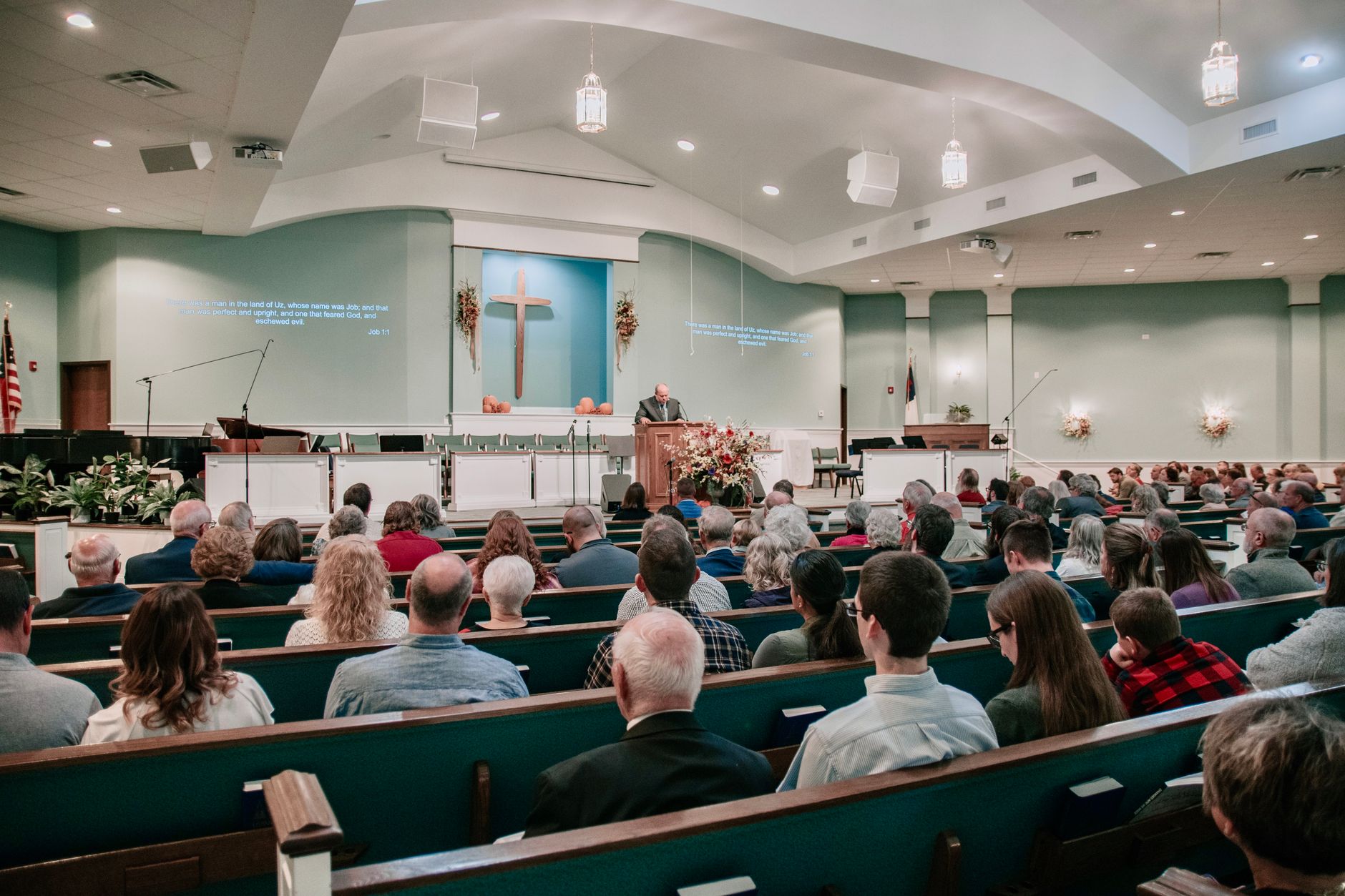
Katie and I have gone to Riverside Baptist Church here in Chillicothe since we got married, the same small brick church on Elm where her grandmother was baptized in 1958 and where Pastor Dave Holloway has led the congregation for going on eleven years now. It is not a large church. On a full Sunday we might run a hundred and thirty people, most of them people who have known each other, and known each other’s parents, their whole lives.
When Halbrook closed the axle line, word got around the way word always gets around in a town this size, not because we announced it, but because somebody’s cousin worked the line too and mentioned it at the feed store, and somebody else heard at the pharmacy counter, and by the following Sunday I could tell from the way a few people squeezed my shoulder a little longer than usual during the greeting time that they knew.
Pastor Dave pulled me aside after service that first Sunday, out in the gravel lot by his truck, and he did not offer me money and he did not offer me pity. He asked if he could pray with me, right there, and he did, a short plain prayer, nothing showy, just asking that Katie and I would have what we needed when we needed it and that I would find work that used the gifts I had. Then he said something I have thought about many times since. He said, “Ben, this congregation has carried harder things than this. Let us carry some of it with you. You don’t have to ask. Just don’t shut the door on us.”
I told him we were fine. I meant it as gently as I could, but I meant it, and I think he understood exactly what I meant underneath it, which was please do not make this a bigger thing than it already feels like inside my own chest.
What I did not know, and would not find out until months later, was that the prayer he prayed with me in that parking lot was not the last time my name came up at Riverside. It came up every single week after that, in the Wednesday night prayer meeting, in the women’s Bible study that met in the fellowship hall on Tuesday mornings, in the quiet list Pastor Dave kept in the back of his sermon notebook of families the church was watching over without announcing it from the pulpit.
The months moved the way months move when you are waiting on two things at once, a job and a due date, and neither one moves any faster for the waiting.
I applied everywhere within an hour’s drive. I dropped my resume at two other manufacturing plants, a distribution warehouse outside Kirksville, a farm equipment dealer, and a trucking company that needed a yard mechanic. I got two interviews and zero offers in the first two months. Katie kept working as long as her doctor would let her, though by her sixth month even standing for a full shift left her swollen and exhausted by four in the afternoon, and we both knew that income would stop entirely a few weeks before the birth and not restart for a while after.
We sold what we could sell. My grandfather’s old shotgun, which I regretted the moment the money hit my hand and regret to this day. A camper shell off my truck that we never used anyway. Katie’s grandmother’s dining set, the one with the claw feet, to a young couple who drove up from Columbia and did not know they were buying a piece of a family, only a piece of furniture, and I do not blame them for that, they got a fair price and we needed the money more than we needed the table.
By July, four months into it, our savings were close to gone. We were current on the mortgage, but only because I had let two credit cards go to minimum payments and let one lapse into a late fee I could not do anything about. The stack of mail on our kitchen counter grew a little every week, envelopes with windows in them, the hospital’s billing department, the specialist Katie had to see once for a blood pressure scare, the insurance company’s own increasingly insistent statements about what remained our responsibility.
I want to be honest about the particular kind of fear that settles into a man watching a due date get closer with no paycheck behind it. It is not the same as ordinary worry. It sits behind your ribs at three in the morning. It makes you snap at your wife over something small and then hate yourself for it thirty seconds later, because you both know the real argument is never actually about the dish left in the sink, it is about the number in the bank account that keeps getting smaller while the calendar keeps moving toward a date that will not wait for you to be ready.
Katie held up better than I did, in a lot of ways, though I know now she had her own version of the same fear, one she mostly kept from me the way I mostly kept mine from her, both of us trying to be strong for the other and neither of us doing either of us any favors by it.
We prayed together most nights, sitting on that same couch where the whole thing had started back in April, the coffee table in front of us usually holding whatever the newest stack of unpaid bills was that week. I am not going to pretend our prayers were eloquent. Some nights it was just Katie’s hand in mine and one of us saying, out loud, Lord, we don’t know how this works out, but we’re asking you to show us. Some nights it was quieter than that. Some nights it was just sitting there in the lamp light not saying anything at all, which I have come to believe is its own kind of prayer when two people are too tired and too scared to find the words.
We told ourselves, more than once, that we were not going to let this be the story of our daughter’s first months on earth, her parents scared and broke and fighting. We did not always manage that. But we kept trying, and I think the trying mattered, even on the nights it did not feel like it was working.
There was one night in late July I am not proud of. Katie asked me, gently, if we should call her mother about a loan, and I said something sharp back at her that had nothing to do with her mother and everything to do with how much I hated the position we were in. I walked out to the garage afterward and stood there a long time in the heat, ashamed of myself, and when I came back inside Katie did not bring it up again, she just made room for me on the couch and put my hand back on the small mound where our daughter was moving, like she knew that was the thing that would settle me faster than any apology I could put into words. We were, both of us, doing the best two frightened people can do, which is not always graceful, and I think that is worth saying honestly rather than pretending those five months were some steady march of quiet faith. Some of it was faith. Some of it was just two people holding on to each other because there was nothing else left to hold.
What I did not know, sitting on that couch in July with Katie’s hand in mine, was that Riverside’s Tuesday morning Bible study had quietly started something back in May that they never once mentioned to either of us.
I learned the full shape of it only afterward, piece by piece, mostly from Sharon Jennings herself and a little from Pastor Dave. It started small. One of the women in the study, an older widow named Sharon who has been a member at Riverside since before I was born, stood up one Tuesday and said she had been praying about the Carraways every night and felt like praying alone was not going to be enough this time. She asked if anyone else felt the same conviction. Every hand in that fellowship hall went up.
They did not take up a public collection. They did not put anything in the bulletin or say a word about it from the pulpit where I might hear it secondhand from a neighbor, the way the town had once heard about the layoff itself. Instead, over the following weeks, quietly, person by person, envelopes started going into a shoebox Sharon kept in her own front closet. Some weeks it was twenty dollars from a retired schoolteacher on a fixed income who could not have given much more and gave it anyway. Some weeks it was a hundred dollars from a farming family having a decent year who wanted to give without their name attached to it. Pastor Dave told me later that the deacon fund, a small account the church keeps for exactly this kind of quiet need, added to it as well, and that he personally called the billing office at the hospital in Chillicothe in early August, identified himself as our pastor, and asked what it would take to settle the account directly, all without either Katie or me knowing a single word of it was happening.
They were, in other words, building an answer to a prayer we had only ever said out loud in our own living room, months before we had any idea it was already underway.
By the last week of August, Katie was thirty eight weeks along, and I had reached the lowest point of the entire five months.
I had interviewed the week before for a maintenance lead position at a poultry processing plant forty minutes north, a job I did not love the sound of but would have taken gladly, and on that Monday I got the email telling me they had gone with an internal candidate. It was the eleventh rejection since April, and it landed on the same day the hospital sent a notice that our account balance, if not addressed within thirty days, would be sent to collections.
I did not tell Katie about the collections notice right away. I sat with it alone for most of that afternoon, out in the garage pretending to organize tools I had already organized twice that month, because I did not know how to hand my wife one more piece of bad news three weeks before she was due to give birth.
That night, after Katie had gone to bed, I sat alone on the couch in the dark and I did something I am not too proud to admit now. I put my head in my hands and I asked God, out loud, in an empty living room, whether He had forgotten us. I do not think I have ever felt further from an answer than I did in that exact moment.
I want to tell you plainly that the answer to that prayer was already on its way to our front door. I just did not know it yet, and neither did Katie, and the not knowing is a real part of this story, because it means the answer arrived at the precise moment we had the least evidence left to believe one was coming.
The knock came on a Wednesday evening in early September, four days before Katie’s due date, while I was standing at the stove trying to make something out of the thinning contents of our pantry and Katie was on the couch with her feet up, both of us worn down in the particular way that the last week of a pregnancy wears a person down when there is money worry stacked on top of it.
I opened the door and found Sharon Jennings standing on our porch step, seventy four years old, a covered casserole dish balanced in both hands and a canvas tote bag hanging off one wrist, her white hair pinned up the way it always was for church, though this was the middle of the week and she was standing on my porch in her garden shoes, not her Sunday ones.
“I know it’s not Sunday,” she said, smiling in that way she has, warm and a little apologetic at the same time, “but I couldn’t wait for Sunday. This congregation has had you and Katie on our hearts every single day since April, Ben, and we weren’t about to let this baby come without you knowing it.”
I stood in that doorway for a second not fully understanding what she meant, still half thinking this was simply a kind neighbor with a covered dish, which would have been generous enough on its own. Sharon stepped inside at Katie’s invitation, set the casserole on the counter, and then set the canvas tote bag down on our kitchen table, the same table where I had first told Katie I’d lost my job five months earlier, and she opened it.
Inside was an envelope, thick with the kind of weight that told you before you opened it that it held more than a card. There was a folded letter on top of it, signed by more names than I could count on both hands, most of them people I had known my entire life in this town. And there was a folder of receipts, because Sharon, being Sharon, wanted us to have the paperwork straight and not have to wonder.
The envelope held two thousand three hundred dollars in cash and checks, collected a little at a time out of that shoebox in her front closet since May. The folder of receipts showed that the hospital account, the one that had been thirty days from collections four days earlier, had already been paid in full three weeks prior, quietly, by the church’s deacon fund, without either of us ever receiving so much as a phone call about it. And underneath all of that, at the bottom of the tote bag, wrapped in tissue paper, was a small hand knit blanket in a soft yellow that matched, almost exactly, the color already drying on our nursery walls, stitched by the same Bible study women who had started the whole quiet effort back in May.
I do not have graceful words for what happened in me standing at that kitchen table. I have gone back over it in my mind many times since, trying to find the right way to describe it, and the closest I can come is this. For five months I had carried a very specific, very private fear that no one was coming, that I was going to have to be enough all by myself and that I was failing at it in real time, in front of the one person whose good opinion of me mattered more than anyone’s. And in the space of about ninety seconds, standing over an open canvas bag on my own kitchen table, that fear did not so much lift as it simply stopped making sense, the way a bad dream stops making sense the moment the light comes on.
I looked at Katie. She had come to stand beside me, one hand pressed to the small of her back the way she did constantly those last weeks, and I watched her face go through something I recognized immediately because I could feel my own face doing the same thing. First disbelief, plain and unguarded, the look of someone hearing a number that does not compute against five months of dread. Then something that was not quite relief yet, because relief takes a second to arrive when you have been braced against bad news for so long that good news does not immediately register as real. And then, all at once, both of us standing at that same table where this whole story had started, it did register, and I put my hand over my mouth and Katie put both hands over hers, and Sharon Jennings, seventy four years old, stood in my kitchen and cried right along with us, unashamed, the way I imagine she has cried with a hundred other families over sixty some years of belonging to that same small brick church on Elm.
“We didn’t do this so you’d feel like you owed anybody,” Sharon told us, once we could all speak again. “We did it because that’s what a church is supposed to be for. You’ve been carrying this alone in your own head for months, Ben, and you never had to.”
I asked her, once I trusted my voice, how long the church had known how bad things had actually gotten, the specifics I had never once said out loud to anyone outside our own living room. She told me, gently, that they had not known the specific numbers, not the exact dollar figures or the collections notice that had arrived that very same day. What they had known, every single week since April, was that a young family in their congregation was afraid, and that fear like that does not need a spreadsheet to be worth answering. They had simply decided, together, quietly, to keep showing up for us until the day we did not need it anymore, however long that took.
Our daughter, Nora Jean Carraway, was born four days later, on a Sunday morning, seven pounds two ounces, with a full head of dark hair neither Katie nor I expected given how blonde we both are, and a set of lungs that the delivery nurse said was the loudest she had heard all month.
I will tell you honestly that the money mattered. Two thousand three hundred dollars and a paid hospital account is real, practical help, and it bought us breathing room at the exact moment we had none left. But if I am telling this story true, the money was not actually the biggest thing Sharon Jennings carried into our kitchen that Wednesday evening. The biggest thing was the plain fact that we had not been alone in it, not for one single week of those five months, even on the nights I sat on that couch feeling like the loneliest man in Chillicothe, Missouri.
Pastor Dave came to visit us at the hospital the next morning, and he held Nora for a few minutes in that particular careful way older pastors hold newborns, like he has done it a thousand times because he has, and he told me something I have held onto since. He said that a congregation’s job is not to fix every hard season a family walks through. It is to make sure nobody walks through it by themselves. He said Riverside had not solved our problem in September. They had simply been faithful to us, unglamorously, one Tuesday morning prayer and one folded twenty dollar bill at a time, since April, long before either of us had any idea it was happening, and September was only the day the faithfulness finally became visible.
I found work six weeks after Nora was born, a maintenance technician position at a feed mill on the edge of town, steadier than Halbrook ever was and, as it happens, work I have come to like better than the job I lost. Katie went back to her aide position part time in the spring once Nora was old enough for the church’s own little nursery co-op, which, I should mention, is run in large part by the same Tuesday morning Bible study women who filled that shoebox in Sharon’s closet.
We paid the church back what we could, though Sharon would not hear of it being called that. She told us the only proper way to pay it back was to do the same thing for the next family Riverside quietly decided to carry, whenever that family came along, and to never let pride talk us out of letting them be carried. I have thought about that instruction more than almost anything else anyone has ever told me. Pride was the thing that nearly cost me five months of peace I did not have to lose. It kept me telling Pastor Dave we were fine on a gravel parking lot back in April when the truth was we were scared and sinking, and it very nearly kept me from ever learning that an entire church had been quietly praying our names every single week the whole time.
Nora is seven months old now as I write this. She has Katie’s eyes and, everyone tells me, my own stubborn set to her chin. She sleeps most nights in that hand knit yellow blanket, a little worn soft now from washing, and some evenings, rocking her before bed, I think back to that Wednesday in September, to Sharon Jennings standing in my kitchen with a casserole dish and a tote bag, telling me the church had had us on their hearts the whole time.
I do not know what the next hard season of our life will look like, because there is always another one somewhere ahead, that much I have learned by thirty two. But I know now, in a way I did not fully know before April of last year, that when I bow my head at Riverside Baptist Church on Elm Street on a Sunday morning, I am not one man praying alone in a room full of strangers. I am one thread in something a great deal larger and steadier than I am, and it was holding me long before I ever knew to look for it, and it will be there again, quietly, faithfully, a shoebox and a folded twenty at a time, whenever the next family in that little brick church needs to be carried through.
This story is a dramatization. Names, characters, and details are invented, and any resemblance to real people or events is coincidental.