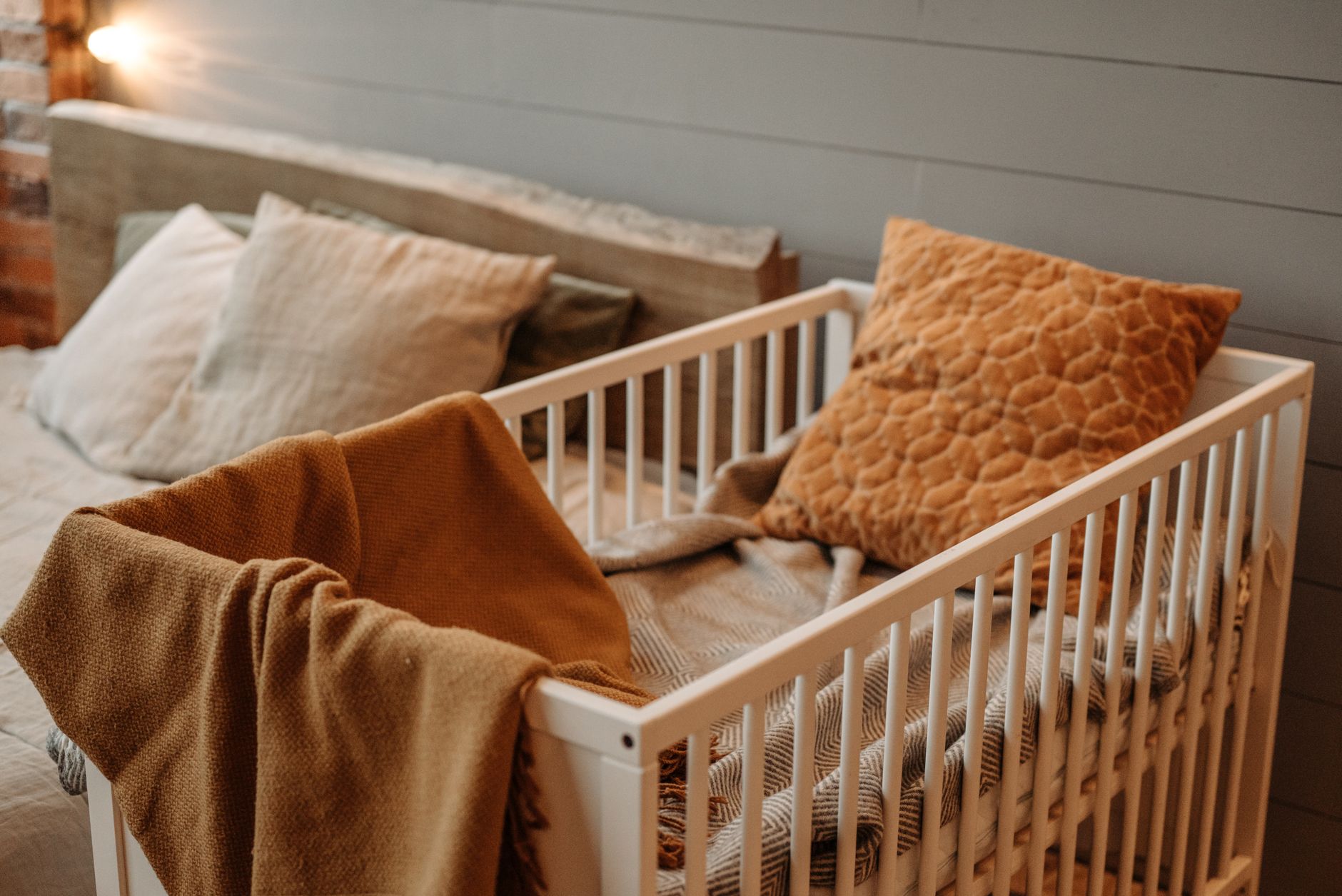
The Crib My Dying Father Built
The last thing my father ever made with his hands was a crib.
He was sixty-one years old, and the cancer had already taken most of the weight off his frame, so that when he stood in his garage sanding the old side rails, his flannel shirt hung on him like it belonged to a bigger man. I would bring him coffee and a folding chair, and I would tell him to sit, and he would wave me off the way he always had, like sitting was for people who had run out of things worth doing. He had maybe four months left. We both knew it. Neither of us said it out loud in that garage, because the crib was the thing we said instead.
My name is Yesenia. I was twenty-nine years old the summer my daughter was born, and I want to tell you about a crib, and about the woman who gave it away, and about what she said when she thought I could not hear her. I have told this story out loud exactly twice. I am going to tell it here the way it actually happened, without softening the parts that still make my hands shake, because I have learned that the softened version helps no one, least of all the version of me who was pregnant and grieving and did not yet know how much a person could take.
The crib was not new. That was the whole point of it. My grandfather, my father’s father, had built it in a little town in Zacatecas with tools he carried north when the family came, and my father had slept in it, and then I had slept in it, and it had spent twenty-nine years in pieces in a barn wrapped in a canvas tarp. When I told my father I was pregnant, the first thing he did, before he cried, before he hugged me so hard I felt his ribs, was say, “The crib. I have to fix the crib.” And he did. He spent his last good months of strength on it. He replaced the rails that had cracked. He steamed and reshaped the one leg that had warped. He sanded off sixty years of paint down to the honey-colored wood underneath, and he oiled it by hand, and he carved my daughter’s initials into the footboard even though we had not settled on her name yet, so he left the initials blank and carved a small bird instead, a little sparrow, because my mother used to call him her sparrow before she passed.
He finished it in March. He died in May. My daughter was due in August.
So you understand what that crib was. It was not furniture. It was the last conversation I got to have with my father that did not involve a hospice nurse. It was three generations of my family holding my child before my child had even arrived. When they lowered my father into the ground, the crib was already set up in the nursery of the little rental house my husband Diego and I had in a small town out in the heartland, a town of grain silos and a single stoplight and a diner where everybody knew everybody, and I could go into that nursery and put my hand on the rail he had sanded and feel like he was still, in some small way, holding on.
I need to tell you about my mother-in-law now. Her name is Sharon.
Diego’s mother was the kind of woman who arrived at your house and immediately began to improve it. She would walk in, and within ten minutes she would have opened your curtains, rearranged your throw pillows, and offered an opinion about your dish soap. She meant it as love. I believed that for a long time, and I want to be fair to the woman I believed she was, because it took me too long to see the other thing underneath it. Sharon had raised Diego alone after his father left, and she had done it hard and proud, and she had decided somewhere along the way that her taste was not just her taste but a kind of correctness, a standard the rest of us were failing to meet.
She did not like the crib. She said so the first time she saw it, in the way she said most cruel things, wrapped in a compliment so you could not object without seeming ungrateful.
“Well,” she said, running one finger along the rail like she was checking for dust, “isn’t that. Rustic.”
“My dad restored it,” I told her. “My grandfather built it.”
“Mmm,” she said. “You can tell it’s old. That’s the look now, I suppose. Distressed.” She said the word the way you would say a diagnosis.
I let it go. I was six months pregnant and grieving my father and I did not have it in me to fight about a rail. I told myself she just did not understand, that she came from a world of matching furniture sets bought new from a showroom, that she could not be expected to see what I saw when I looked at that little sparrow carved in the footboard. I told myself a lot of things that summer to keep the peace, and every single one of them was a small brick I was laying in the wall she would eventually walk right through.
The appointment was on a Thursday. I remember because Diego had a shift he could not move and Sharon had offered, so warmly, so generously, to come stay at the house while I went. It was a routine prenatal visit, thirty-six weeks, the kind where they check the baby’s position and measure your belly and send you home. Sharon said she would tidy up while I was gone. She said, “Go, go, take your time, I’ll hold down the fort.” She even packed me a little snack for the waiting room, orange slices in a bag, and I remember sitting in my car in the parking lot of that appointment eating my mother-in-law’s orange slices and thinking, with real gratitude, that maybe I had been too hard on her, that maybe grief had made me suspicious of a kind woman.
I was gone for two hours and forty minutes.
When I pulled back into the driveway, there was a truck I did not recognize parked at the curb, a big diesel pickup with the tailgate down. I did not think anything of it. I waddled up the walk with my paperwork and my empty bag of orange peels, and I heard voices in the nursery, and I opened the front door, and the first thing I saw was the box.
It was a brand-new crib, still half in its packaging, leaned against my living room wall. White. Sleek. The kind of thing with a little sticker on it that said convertible, four modes, grows with your child. There were Styrofoam corners on the carpet and a receipt on my coffee table.
“Yesenia,” Sharon called out, bright as anything, “you’re back early. Come see. Come see what I did for you.”
I walked into the nursery. My father’s crib was gone.
I want to describe the exact shape of that moment, because I have gone back to it so many times since. The room where the crib had stood had a rectangle of cleaner carpet where the legs had pressed for two months, four little dents, and in the middle of that rectangle there was nothing. The wall he had faced. The window we had positioned it under so the morning light would come across the sparrow. Empty. And standing in the doorway that led to the back porch was a man I half-recognized, Diego’s cousin’s husband, a big man in a work shirt, and behind him through the door I could see the tailgate of that diesel truck, and on the truck, tied down with a ratchet strap across its middle like something being taken to the dump, was my father’s crib.
I did not scream. People think you scream. I made a sound I did not know I could make, a kind of low sound, and I put my hand on the door frame.
“It was falling apart, honey,” Sharon said, and she was still smiling, she truly thought she was doing something wonderful, “and it wasn’t safe, those old ones aren’t up to code, the slats are too far apart, a baby can get their head through. I’ve been reading about it. I couldn’t let my grandbaby sleep in something like that. So I called Nina, Diego’s cousin, you remember Nina, she’s expecting too and they’ve got nothing, and I said come take this old junk off our hands, and I went and got you a proper one. A safe one. Look, it converts to a toddler bed, you’ll get years out of it.”
Old junk.
I heard those two words and something in my chest went very quiet and very cold. The diesel truck rumbled. The cousin’s husband would not look at me. And Sharon kept talking, kept explaining all the ways she had saved my baby’s life, and I understood, standing there at thirty-six weeks pregnant in the ruins of the last thing my father ever built, that she had planned this. She had waited for me to leave. She had packed me orange slices so I would go easy, so I would take my time, so she would have the two hours and forty minutes she needed to erase my father from my daughter’s room and replace him with a receipt.
“Where is it going,” I said. My voice did not sound like mine.
“Oh, don’t you worry about it, they’ll put it to good use, or if it’s really too far gone Nick can just haul it to the…”
“Where is it going, Sharon.”
She stopped. For just a second, the smile flickered, because I think she heard something in the way I said her name. But she recovered. She always recovered. “Yesenia, you’re emotional, that’s the hormones, this is exactly why I handled it while you were out. You’d have gotten worked up and we’d never have gotten anywhere. Someday you’ll thank me.”
I did not thank her. I walked past her, out the back door, toward the truck, one hand under my belly, and the cousin’s husband, Nick, finally looked at me, and I will be grateful to that man for the rest of my life for what he did next, which was nothing, which was to stop. He did not start the engine. He stood there by the tailgate with his hands in his pockets and he said, quiet, “Ma’am, I’m just doing what I was told. Nina’s inside, she can…”
“Nina’s here?” I said.
“In the kitchen. She didn’t. Ma’am, she didn’t know. About your dad.”
I went back inside. My legs were not working right. And in my kitchen, sitting at my table with a glass of water she had not touched, was a young woman about my age, visibly pregnant like me, and the moment she saw my face she stood up so fast her chair scraped, and she said, “Oh my God. Oh my God, what’s wrong, what happened.”
That was Nina.
Here is the thing you have to understand about Nina, the thing that changed everything. Sharon had told her a story. Sharon had called her and said her cousin’s wife had an old dangerous crib she wanted rid of and would Nina like it, they had nothing, they were struggling, take it, do them a favor. Nina had come out of kindness and out of need, because they truly had nothing, because her own truck was borrowed and her own husband worked doubles, and she had walked into my house believing she was accepting a hand-me-down nobody wanted. She did not know a dead man had carved a sparrow into the footboard. She did not know I had buried my father in May. She did not know any of it, because the woman who arranged the whole thing had made sure nobody in that room knew the truth except herself.
I told Nina. Standing in my kitchen at thirty-six weeks, holding the edge of the counter, I told her about Zacatecas and the tools carried north, about the flannel shirt that hung on my father like it belonged to a bigger man, about the four months and the sparrow and the initials he could not finish carving. I told her the crib on that truck was the last thing my father’s hands ever touched.
Nina put her own hand over her mouth. And then she started to cry, this stranger, this young pregnant woman I had met four minutes ago, she cried like it had happened to her, and she said, “Take it off the truck. Nick. Nick! Get it off the truck right now.”
But it was already coming off. Because through the kitchen window I could see Nick had heard the whole thing through the screen door, and he was already up in the truck bed working the ratchet strap loose, careful, so careful, cradling the rails like they were made of glass.
That should be the end. The crib comes back inside, and I carry my daughter home to it, and my father wins. And that does happen. I promise you it happens. But it is not the end, because I have not told you the part I overheard, and the part I overheard is the reason I can finally forgive some of it and never forgive the rest.
While Nick was untying the crib and Nina was helping me to a chair, Sharon had gone into the nursery. And I got up, because I could not sit, because my whole body was still humming, and I walked down the hall to tell her to leave my house, and I stopped outside the nursery door because she was on the phone. She did not know I was there. Her back was to the door and she was talking low, talking to her sister I think, and this is what I heard my mother-in-law say, word for word, and I have never forgotten a syllable of it.
“…I know, I know it’s just a crib. But she talks about her father constantly, Diane. Constantly. Rafael this, my dad that, the whole nursery is a shrine to him. And I just thought, once the baby comes, that baby is going to grow up staring at that man’s crib, hearing about that man, and where does that leave Diego’s side, where does that leave me. I’m the grandmother that’s living. I’m the one who’s here. And I’m going to be second to a dead man in that child’s whole life. So yes. Yes, I got rid of it. I’m not proud of the way but I’d do it again, because somebody in this family has to fight for the living.”
I stood in that hallway with my hand on my belly and I understood.
It was not about safety. It was never about the slats or the code or my baby’s head. Sharon had looked at that crib and she had not seen a hazard. She had seen a competitor. She had seen a dead man taking up room in a child’s heart that she wanted, and she could not fight a dead man, so she had loaded him onto a diesel truck while I ate orange slices in a parking lot. The cruelty of “old junk” was almost a kindness compared to the truth, because “old junk” was a lie she told to make it small, and the truth was that she knew exactly what it was, exactly what it meant to me, and she got rid of it because it meant that much. She was jealous of my father. She was jealous of a ghost.
I did not confront her with it. Not then. I was too far along and too tired and there was a crib coming back into the house that needed me more than Sharon needed to be shouted at. I walked into the nursery and I said, very quietly, “You need to go home now, Sharon.”
“Yesenia…”
“You need to go home.”
And she looked at me, and I think she saw in my face that I had heard something, though she could not have known how much, and for once in her life she did not have a bright thing to say. She picked up her purse. She left the new white crib against my living room wall, and she left the receipt on my coffee table, and she drove away, and I did not speak to my mother-in-law again for a long time.
Nina and Nick stayed. They carried my father’s crib back into the nursery, and Nick got down on the floor with a little screwdriver and reassembled it, and Nina held the rails steady, and I sat in the rocking chair and told them where each piece went because I had watched my father put it together a hundred times in my mind. We set it back in its place, under the window, facing the wall, in the four little dents in the carpet that were still there waiting for it. The morning it went back, the light came across the footboard and lit up the sparrow, and Nina, who had come to that house to take my father away and instead gave him back to me, put her hand on the rail and said, “He does good work.”
“He did,” I said.
“No,” she said. “He does. It’s still standing, isn’t it. It’s still here. That’s still him doing the work.”
I have never forgotten that either.
My daughter was born eleven days later, on a Tuesday, at four in the morning, seven pounds and one ounce, with a full head of dark hair and my father’s exact frown. We named her Rafaela. For him. And we brought her home from the hospital in the August heat, and Diego carried the car seat, and I walked ahead of him into the nursery, and I lifted my daughter out and I laid her down for the very first time in the crib her great-great-grandfather built in a town in Zacatecas, the crib her grandfather sanded down to honey with the last strength in his hands, under the sparrow he carved when he did not yet know her name.
She slept. First night home, she slept better in that old crib than she ever did in anything after. Diego stood in the doorway watching her and he said, “My grandfather would have loved him. Your dad.” And I said I thought so too.
Now I have to tell you about Diego, because you are wondering where he was in all of this, and it matters. Diego came home from his shift that Thursday to a story he could barely believe. He is a quiet man, my husband, slow to anger, loyal to his mother in the automatic way of a boy raised by a single mom who sacrificed everything. When I first told him what Sharon had done, he wanted to find the middle. He said things like “she thought she was helping” and “her heart was in the right place,” and I let him say them, because he had not been standing in that hallway. He had not heard the phone call.
So I told him. That night, after Rafaela was asleep in her great-grandfather’s crib, I told my husband exactly what I had overheard his mother say, word for word, about being second to a dead man, about fighting for the living, about how she would do it again. And I watched my husband’s face change. I watched the middle he had been trying to find just fall away, because there is no middle in “I’d do it again.”
Diego did not yell either. He is not a yeller. He went very still, the way I had gone still in the doorway, and he said, “She said that. About your dad. My mother said that.”
“She said that.”
He was quiet for a long time. And then he said the thing that saved our marriage, because I think a lesser man would have found a way to make it my fault, my hormones, my grief, my oversensitivity, the way Sharon had. Diego said, “I’m going to talk to my mother. And you’re not going to be in the room, because you shouldn’t have to defend your father to anybody. He already did the hard part. He built it. All you have to do is keep it.”
He did talk to her. I do not know everything that was said between them, because he asked me to let it be between a son and his mother, and I gave him that. But I know some of it, because Sharon herself told me later, in the apology that came almost a year afterward, that Diego had said one thing to her that broke something open. He had said, “Mom, you spent my whole childhood telling me that you did everything alone, that nobody helped you, that you had to be everything. And I believed you and I loved you for it. So how do you not understand what it means that Rafael got to be there for his grandchild before he died. You of all people. You know what it is to do it alone. He made sure Yesenia wouldn’t have to feel alone in that room. And you took it away because you couldn’t stand to share the credit.”
That is the sentence, I think, that eventually brought Sharon around. Not my anger. Not even Diego’s. Just the mirror.
Because here is what took me the longest to understand, and it is the reason I said this story is bittersweet and not simply a triumph. Sharon was not a monster. She was a frightened woman who had built her entire identity on being indispensable, on being the one who was there, the one who did the hard thing alone, and she had looked at my dead father and seen everything she had never had, a partner in the work of loving a child, and it had made her ugly with a jealousy she could not even name to herself, so she had dressed it up as safety and code violations and old junk. The cruelest thing she ever did came from the most human place there is. That does not excuse it. I want to be very clear that it does not excuse it. But it is the truth, and I have found that I cannot carry hatred and truth in the same hand.
The apology came the following June, around what would have been my father’s birthday, which I do not think was an accident. Sharon came to the house with no throw pillows to fix and no opinions about my dish soap. She sat down at my kitchen table, the same table where Nina had cried a year before, and she asked to hold Rafaela, and I let her, and she held my daughter and she looked at me and she said, “I heard you. In the hallway. I always knew you heard me on the phone. I’ve known for a year.”
I did not say anything.
“What I said was the worst thing I’ve ever said in my life,” Sharon said. “And I said it out loud, so I couldn’t pretend I didn’t mean it. I did mean it. I was jealous of your father. A grown woman, jealous of a dead man, because he got to love her the right way and I never learned how.” She looked down at Rafaela. “I gave away the last thing he made. I told a sweet girl it was junk so she’d take it without asking questions. And the only reason it came back is that Nina has a better heart than I do, and Nick has better ears. Not because of anything I did. I want you to know I know that.”
I asked her why she was telling me now.
“Because she’s going to grow up,” Sharon said, nodding down at my sleeping daughter, “and she’s going to ask about that crib someday, and about the sparrow, and about her grandfather Rafael. And I don’t want to be the woman who has to leave the room when that story gets told. I want to be able to sit here and say, your grandpa built you something so beautiful your great-grandmother’s sparrow flew on it, and I was too small once to see it, and your mama forgave me anyway.” She was crying by then. “If she forgives me anyway.”
I want to tell you I forgave her cleanly, all at once, the way it happens in the stories. I did not. Forgiveness for me came in pieces, the way my father took that crib apart to rebuild it, one warped joint at a time. But I told her she could stay for dinner. I told her Rafaela could call her Grandma. I told her the crib was staying in that nursery until my daughter outgrew it and then it was going up in the barn, wrapped in canvas, for the next baby in the next generation, the way it had waited for mine, and that Sharon was welcome to be there the day we took it back down. She said she would like that. She said it very quietly.
My daughter is a toddler now. The crib converted, in the end, into a little bed, the way things do, and she sleeps in it still, under a mobile Diego hung, and if you go into that room in the morning the light still comes across the footboard and lights up the sparrow. Rafaela has learned the word. She points at it and she says “bird,” and I say “yes, baby, that’s Great-grandma’s sparrow, your grandpa Rafael put it there for you before you were even born, before he even knew your name.” She does not understand yet. She will.
Sometimes I think about that Thursday. About the orange slices and the diesel truck and the four dents in the carpet. About how close I came to carrying my daughter home to a sleek white crib from a showroom with a receipt still warm from the printer, my father hauled off to a landfill or a barn somewhere with a stranger, the sparrow gone, the last conversation gone. About how the only things standing between my daughter and that emptiness were a young woman who cried for a stranger and a big quiet man who stopped his truck.
And I think about my father in that garage, hanging inside his own flannel shirt, spending strength he did not have on a piece of wood he would never see used, and I understand now that he was not building a crib. He was making sure I would not be alone in the room. He knew he could not be there. So he sent the next best thing. He sent something a jealous woman could give away and a kind stranger could give back and a stubborn daughter would move heaven and earth to keep, because that is what love does when it knows it is running out of time. It builds you something that outlives the builder. It carves a bird into the wood and it lets the morning light do the rest.
He does good work, Nina told me. Not did. Does.
She was right. He is still doing it. Every morning, when the light comes across that footboard and my daughter points and says “bird,” my father is still in the room, still holding on, still making sure his granddaughter never has to sleep anywhere that his hands have not blessed.
They tried to give him away as old junk while I was gone for two hours and forty minutes.
He came home. He is home still. And he is not going anywhere.
This story is a dramatization. Names, characters, and details are invented, and any resemblance to real people or events is coincidental.