The ATM Card My Brother Slid Back
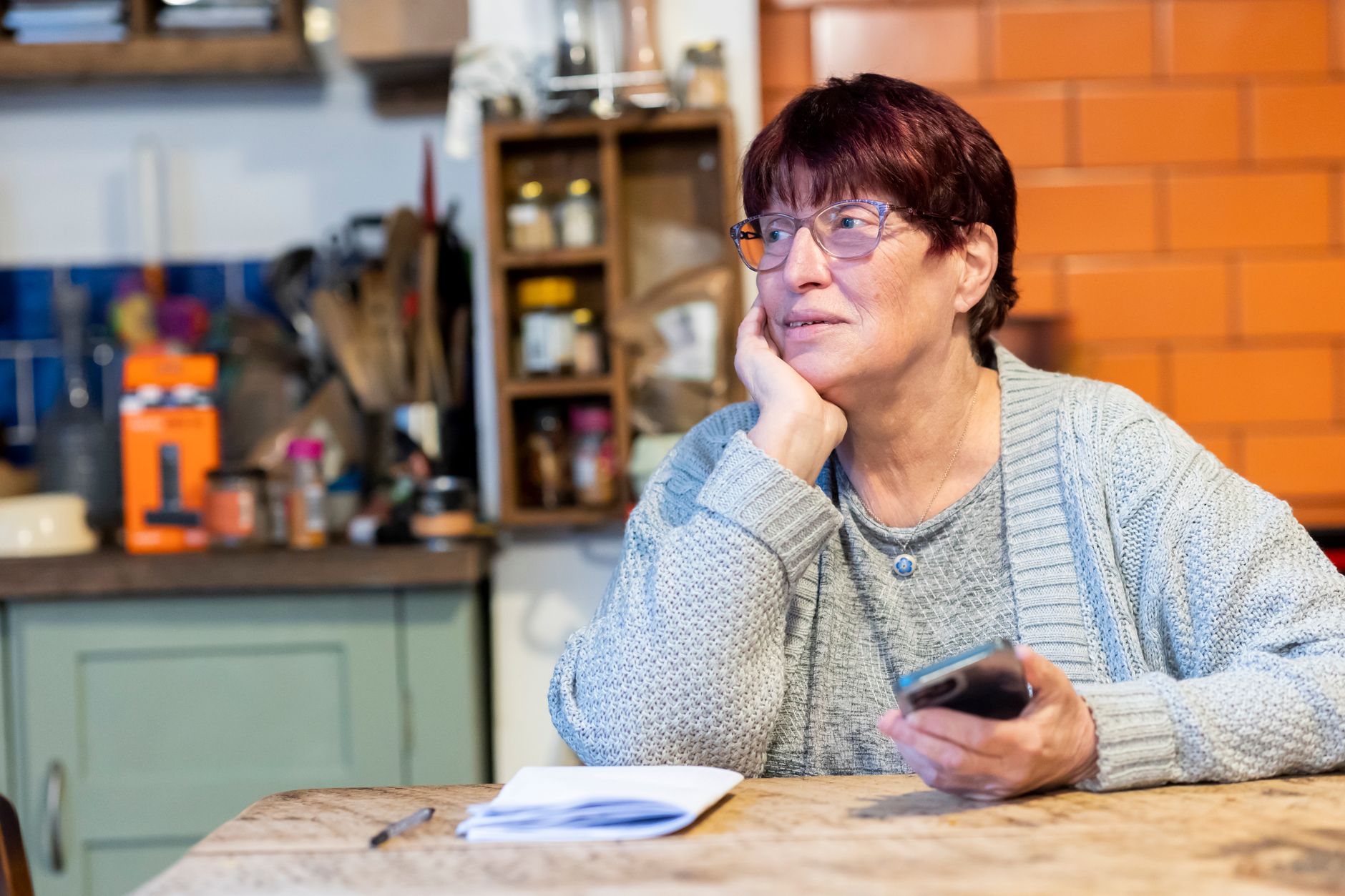
My brother Dorian slid our mother’s ATM card across her kitchen table like he was passing me the salt.
“Here,” he said. “You handle Mama’s money from here on out. I’ve got enough on my plate. Consider it a favor. I know how much you like being in control of things.”
I want you to sit with that sentence for a second, because it took me weeks to understand what he’d actually done to me in it. He made it sound like a gift. He made it sound like he was stepping aside so his controlling little sister could finally get what she wanted. And I picked up that plain gray card, still warm from his hand, and I thanked him. I actually thanked him, right there at Mama’s table, because I did not yet know that the account behind that card had thirty-eight dollars and change left in it, and that the fifty-some thousand dollars our father worked thirty-one years at the rail yard to leave behind for his wife’s old age had been walking out of ATMs from Cedarnook to Knoxville to a card room outside Chattanooga for the better part of a year and a half.
My name is Cormac Calder. I am forty-eight years old, I am a nurse at the clinic in Dellrose, twenty-six minutes down County Road 9 from Cedarnook, Tennessee, and I am going to tell you exactly how my brother emptied our mother’s care account and dared to call handing me the wreckage a kindness. And I am going to tell you how a three-ring binder, the kind you buy for two dollars at the drugstore, is the reason he is not sleeping in his own bed tonight.
Our mother is Coralind Calder. She is eighty-one. She has lived on the same eleven acres off County Road 9 since 1969, in the house our father Ashford built with money he saved cutting cross-ties for the L&N Railroad before there even was a Cedarnook exit off the highway. Daddy died three years ago this coming October, a heart that finally quit after seventy years of hard use, and he left Mama two things that mattered: the house, paid off free and clear, and a life insurance payout plus his railroad pension survivor benefit, which together came to just over sixty-one thousand dollars once it settled. Not a fortune. Enough, if it was managed with any care at all, to keep an old woman fed, warm, medicated, and looked after in her own home for the rest of her days without her ever once feeling like a burden to anybody.
Dorian and I set up what we called the Care Account together, at First Neighbors Bank on the square in Cedarnook, six weeks after the funeral. Both our names on it, both of us with cards, both of us able to see every dollar that moved. That was the whole idea. Two sets of eyes on Mama’s money so nobody, including either of us, ever had to wonder. I remember sitting across the desk from the branch manager, a woman named Driscoll who has been at that bank since before I graduated high school, and I remember Dorian putting his hand flat on the paperwork and saying, “This is Mama’s money and it stays Mama’s money. I don’t want either of us ever touching it for ourselves. Not one dollar.” I believed him because I had no reason not to. My brother has a way of saying a true-sounding thing with his whole chest, like he’s daring you to doubt him, and for forty-five years it had always worked on me.
I need to tell you who Dorian was before I tell you what he became, because a betrayal only cuts as deep as the trust it grew out of, and I trusted my brother with everything.
Dorian is two years older than me. Growing up on that place off County Road 9, he was the one who taught me to drive the old Ford in the hayfield when I was twelve, sitting beside me with his hand ready on the wheel, never once raising his voice when I ground the gears. He walked me down the aisle at my wedding when our father’s back gave out the week before and Daddy couldn’t stand for the whole ceremony. When my husband Beckwith lost his job at the plant eleven years ago and we came within a month of losing our own house, Dorian drove over unannounced with an envelope of cash he would not let me refuse, and he never once brought it up again, not one time, not even when he probably should have to needle me about it. That is the brother I carried in my chest for forty-five years. That is who I believed was sitting across from me at that bank desk, promising not to touch one dollar of our dying father’s insurance money.
But Dorian also has another side, one the whole family learned to talk around instead of talk about. He has never in his life been able to hold onto money. He ran a small engine repair shop in Cedarnook for nine years that went under twice from what our aunt used to call his “generous streak,” meaning he’d extend credit to every hard-luck story that walked in the door and never once collect on it, and meaning, we found out much later, that he had a taste for the card room outside Chattanooga that ran deeper than generosity ever could. Twice in the last decade he had come to me quiet, ashamed, asking to borrow a few hundred dollars to cover something he wouldn’t name, and twice I had given it to him without asking many questions, because that is what you do for your brother, and because I did not yet understand that a man who cannot say what the money is for is a man you should ask harder questions of, not fewer.
For the first year after we opened the Care Account, it worked exactly the way it was supposed to. Dorian lived twelve minutes from Mama’s place; I lived twenty-six. He started stopping by most days, running her to her doctor in Dellrose, picking up her blood pressure medication at the pharmacy on the square, paying the propane man when the tank needed filling in the winter. I was grateful. I told him so more than once. I was working full shifts at the clinic and Beckwith’s hours had never fully come back after the plant, and having Dorian carry the daily weight of Mama’s care felt like the family working the way a family is supposed to work, the way it had always worked, two people holding up what one person alone could not.
I want to be honest about something, because Dorian used it against me later and I have had to make my peace with it. There was a stretch of about eight months, roughly a year and a half ago, when I pulled back from checking in on the day-to-day of Mama’s account. Beckwith had a health scare of his own that spring, a heart procedure that turned out fine but scared us both half to death, and I was running the floor at Dellrose Regional most of that time and coming home too tired to do much beyond fall into bed. Dorian told me, more than once, gently, that he had it handled. “Go take care of your own house,” he’d say. “I’ve got Mama.” And God help me, I let him have Mama, and I stopped looking at the statements that came in the mail because Dorian was looking at them, because that was the whole point of a brother you trust.
I think back on that stretch now and I can name the exact texture of it: the particular gray exhaustion of a woman working twelve-hour floor shifts at Dellrose Regional and then driving home to sit up with a husband whose heart had just proven it could fail, all while telling herself that the one blessing in a hard season was that Mama, at least, was covered. I did not check the mail because Dorian said he was checking the mail. I did not call the pharmacy because Dorian said he’d handled the pharmacy. I want to be careful here, because I have heard myself, in low moments since, start sliding toward blaming my own tiredness for what my brother did, and I have had to catch myself every time, because Ackerly said something to me early on that I have carried since: a man who steals from his mother is not created by his sister’s exhaustion. He is only given a wider door to walk through. The exhaustion was real and it was mine to carry. The theft was his, and his alone, no matter how tired I was the year it happened.
That is the eight months the money left.
I did not know it yet on the day he slid that card across the table. I only knew that something in the gesture sat wrong with me the second I was alone in my truck in Mama’s driveway. A man who is doing you a favor does not usually need to tell you three times in one breath that it’s a favor. He does not smile with his mouth and not his eyes while he does it. I sat there with the engine off, turning that gray card over in my hand, and a feeling I could not yet name started low in my stomach and did not leave.
It took eleven days for the first hard evidence to reach me, and it reached me the way most true things reach a family, sideways, through somebody else’s mistake.
The propane company called Mama’s house on a Tuesday afternoon in late January, and Mama, who still answers her own phone and always will as long as she has breath, told them she’d have her daughter call back, because she didn’t understand what they were asking about a balance. I called them from the clinic parking lot on my lunch break. The tank at Mama’s house had gone unpaid for four months and was down to nine percent, in a Tennessee January, in a house with an eighty-one-year-old woman in it who has arthritis so bad in her hands some mornings she cannot turn a doorknob. Four months. Which meant it had gone unpaid well before Dorian ever slid me that card. Which meant it had been unpaid the entire time he told me he had it handled.
I paid it myself that afternoon out of my own account, three hundred and ten dollars, and I told myself there had to be an explanation, because that is what you tell yourself about a brother you have loved your whole life. Maybe the bill got lost in his truck. Maybe he meant to and forgot. People forget things. I wanted, so badly, for there to be an innocent version of this.
There was not an innocent version.
Three days after the propane call, I drove out to see Mama’s home health aide, a soft-spoken, sharp-eyed woman named Holloway who has been coming twice a week for two years to help with baths and meals and the housework Mama can’t manage anymore. I asked Holloway, as gently as I knew how, if everything was all right with her pay. She looked at me for a long moment before she answered, the way a person looks at you when they’ve been waiting for someone to finally ask the right question.
“Mrs. Calder,” she said, “I haven’t been paid since October. I kept coming because I love your mother and I wasn’t going to leave her sitting in a house with nobody, but I’m not able to keep doing that forever. I’ve been meaning to say something to somebody.”
October. Four months. My chest went cold in a way I still remember exactly.
I did not confront Dorian that week. I want to explain why, because it was not weakness, and I have had people ask me since if I regret waiting. I do not. I have watched enough families come apart in the ugliest, least useful way, all shouting and no proof, everybody’s word against everybody else’s, nothing settled, nothing recovered, the guilty party simply outlasting everyone’s outrage. I did not want a fight I could lose because I had no paper to stand on. I wanted the truth laid out in ink, in dates, in dollar amounts, in a form nobody, not even my own brother with his whole-chested certainty, could talk his way around.
So I went to First Neighbors Bank instead, and I sat down across from Driscoll, the branch manager, and I told her I was a joint owner on the Care Account and I needed full statements going back to the day it was opened.
It took her four minutes to pull them. It took me the rest of that afternoon, sitting in my truck in the bank parking lot with the heater running, to understand what I was looking at.
The withdrawals started small, fifty here, eighty there, easy to miss inside the normal churn of an old woman’s grocery money and medication copays. But they grew. By April of the year before, there were ATM withdrawals of two and three hundred dollars, sometimes twice in the same week, at machines nowhere near Cedarnook. A gas station on the Chattanooga side of the interstate. A strip mall ATM eleven miles from a card room I happen to know by reputation, because half of Cedarnook knows it by reputation. By August the withdrawals were running eight hundred to a thousand dollars some weeks. There was a twenty-two-hundred-dollar cashier’s check drawn against the account in September, made out to a used truck dealership in Dellrose, the same month Dorian showed up at Thanksgiving driving a truck two years newer than the one he’d had at the Fourth of July.
I bought a binder that same evening. Two dollars and forty-nine cents at the drugstore on the square, plain gray, the cheapest one on the shelf. I labeled twelve tabs, one for each month, and I started printing.
I am a nurse, not an accountant, but I know how to build a chart nobody can argue with, because that is half of what my job is, documenting a thing so plainly and so completely that six months later, in a courtroom or a review board or a family meeting, the record speaks for itself and nobody has to trust my memory. I did the same thing to my own brother that I do to a patient chart. Every withdrawal, dated, timed, and located. Every check, photographed front and back where the bank had images. A column for what the withdrawal was supposedly for, when Dorian had told me anything at all, next to a column for what the bank’s location data actually showed. A running total at the bottom of every tab, and a grand total on the inside cover, which by the time I finished cross-referencing fourteen months of statements came to forty-six thousand two hundred and eighty dollars and seventeen cents. Out of a sixty-one-thousand-dollar account meant to carry an old woman through the rest of her life.
I drove to see an elder law attorney in Dellrose, a careful, unhurried man named Ackerly who has an office above the hardware store and has been practicing in this county for thirty years. I set the binder on his desk and I did not say a word while he went through it, tab by tab, for forty minutes. When he finally looked up, he said, “Mrs. Calder, do you understand what you’re looking at? This isn’t a family disagreement about spending. This is financial exploitation of a vulnerable adult. In Tennessee that’s a felony, and depending on the total, it can be a Class B felony. What you’ve built here is better documented than half the cases I see come through Adult Protective Services.”
He was the one who told me to call Lockridge, the APS investigator who covers our county, before I ever said a word to Dorian. “You confront him first,” Ackerly said, “and he has time to cover it, or to talk your mother into saying she gave it to him freely, which frankly, given her age and how she trusts that boy, is exactly what he’ll try. You report it first. Then you confront him, if you still want to, from a position where the ground can’t move under you.”
I did exactly that. I called Lockridge that same week and handed over a copy of the binder. I sat with Mama, alone, on a quiet Sunday afternoon, and I asked her, as plainly as I could, gently, whether she had ever told Dorian he could take money from her account for himself. She looked at me with her whole clear mind, the mind that still does the crossword every morning and remembers every grandchild’s birthday, and she said, “Cormac, I never gave that boy one dollar of my own money that I knew was leaving this house. If he needed something he should have asked me to my face like a grown man, not gone behind my back with my own bank card.” That sentence, in her own voice, on my phone’s voice memo app with her permission, is Exhibit something-or-other now. I hated needing it. I was glad I had it.
I moved Mama’s remaining money, what little was left of it, into a new account that same week, one with my name and a professional fiduciary Ackerly recommended, one Dorian has no access to and never will again. I had the old Care Account closed outright. The gray card he had slid across the table to me, so proud of his own generosity, stopped working the following Monday, and I made sure of it myself, standing at Driscoll’s desk while she confirmed the closure on her screen.
Then I called Dorian and asked him to meet me at Mama’s kitchen table.
He came in loose and easy, the way he always does, dropped into Daddy’s old chair like he owned it, and before I said a single word he started in about how he’d been meaning to talk to me anyway, how being Mama’s main caretaker was wearing on him, how he hoped I appreciated everything he’d carried these fourteen months while I was, in his words, “off at the clinic living your own life.” I let him finish. I have learned that a person who is guilty of something will often talk longer than a person who isn’t, filling the silence before you’ve even asked them to.
When he ran out of breath, I set the binder on the table between us and I opened it to the total.
He looked at it for a long moment. Then he did what he always does, what he has done his whole life when he’s cornered, he reached for our mother. “She knew,” he said. “She told me to take what I needed, Cormac. You want to stand there and call our own mother a liar to make yourself feel better about not being here?”
That was the line. I want you to have it exact, because it is the coldest thing my brother has ever said to me, colder than any amount of shouting could have been, because he said it soft and reasonable, like he was doing me a kindness by explaining it slowly. He was willing to spend our dying father’s memory and our living mother’s good name, both at once, to keep forty-six thousand dollars.
I did not raise my voice. I want that understood, because I have thought about that moment a hundred times since and I am proud of exactly one thing about how I handled it, and it is that I stayed cold instead of going hot. Hot is what he wanted. Hot is a fight he could survive, a fight where I look unhinged and he looks calm, a fight the neighbors talk about for the wrong reasons. I did not give him that.
I reached into my coat pocket and I took out the old gray ATM card, the one he had slid across this same table fourteen days before, dead now, closed, worthless plastic, and I slid it back across to him, the exact same motion, the exact same table.
“Here,” I said. “Take it back. Consider it a favor. It’s not going to do either of us any good, but you dropped it in front of the wrong person, and I’d rather you have it in your pocket than think for one more day that I don’t know exactly where every dollar of it went.”
He picked it up. His hands were not steady. And I watched something in his face change, the whole-chested certainty draining out of it in real time, because he understood in that second, looking at a dead card and a two-dollar binder, that the favor he had done himself fourteen months of quiet withdrawals had already been undone by a two-dollar binder and a woman he’d underestimated his whole life.
I did not scream at him. I told him, in the same voice I use to tell a patient’s family the results of a test, that Adult Protective Services already had a full copy of everything on that table, that our mother had already given a recorded statement, and that whatever happened next was not going to be decided at this kitchen table, or by him, or, honestly, by me either. It was going to be decided by people whose whole job was deciding exactly this kind of thing.
He stood up so fast Daddy’s old chair scraped hard against the linoleum, and for a second I thought the cold was finally going to crack into something loud, the way it usually does with Dorian when he runs out of charm. It did not. He just stood there with the dead card in his fist, looking at the binder still open on the table between us, and he said, quieter than anything he’d said all afternoon, “You’ve been planning this.” I told him I had. I told him I had been planning it since a woman named Holloway told me she hadn’t been paid since October, and every single day of the planning, he could have stopped it himself with one honest phone call, and he never made that call, not once, in fourteen months. He did not have an answer for that. He picked up his keys off the table, careful not to look at Mama, who was sitting quiet in the front room the whole time with her hands folded in her lap, and he let himself out the same door he had walked through a thousand times as a boy.
He tried, for about a week, to talk his way around it. He called me twice, wounded and reasonable by turns, once even angry, saying I was destroying the family over money that was going to be his someday anyway. I did not argue with him on the phone. I let the binder do what a hot argument never could. Lockridge’s office opened a formal investigation. The district attorney’s office, once Ackerly walked the file over personally, assigned it to an assistant DA named Pennington, a patient, thorough woman who told me at our first meeting that she had rarely seen a financial exploitation case arrive this cleanly documented, every withdrawal dated and located, every gap between what Dorian told me and what the bank’s own records showed laid out side by side.
Dorian was charged under Tennessee’s elder financial exploitation statute. His attorney pushed hard for a straight dismissal on the theory that Mama had given informal permission, and that argument fell apart the moment Pennington played Mama’s recorded statement in the room, her voice, clear and unwavering, saying she never gave that boy one dollar of her own money that she knew was leaving the house. In the end Dorian took a plea rather than risk a trial and the felony record that would have followed a conviction. He pled to a lesser charge, a suspended sentence, five years of probation, and a court-ordered restitution schedule requiring him to pay back the full forty-six thousand two hundred and eighty dollars, plus interest, in monthly payments the court will be watching for the length of his probation. It is not fast money. Some months it has been three hundred dollars. But it arrives, because if it stops arriving, probation stops being a suspended sentence and starts being a served one, and Dorian, whatever else is true about him, understands that math now in a way he never understood a family’s trust.
We do not speak, not really, beyond what the restitution paperwork requires. He sends the payment through the court, not to me, and I am glad of that distance, because I do not know yet what I would say to him if he were sitting across a table from me with nothing between us but air. Maybe someday. Not yet.
What I have instead of my brother is my mother, warm and safe in the house our father built with cross-tie money, her propane tank full through two winters now because I check it myself the first of every month, Holloway back on the schedule and paid on time, paid ahead, in fact, because I built that into the new account before anything else. The ladies from Mama’s Sunday school class at Cedarnook Baptist started coming by on Wednesdays after word got around quietly, the way it does in a town this size, bringing casseroles nobody asked for and sitting with her over coffee so she is never alone as many afternoons as they can manage, and I have stopped trying to tell people not to fuss, because I have learned that a town taking care of its own is not fussing, it is the whole point of living somewhere like Cedarnook in the first place.
Mama asked me once, a few months after the plea, sitting at that same kitchen table with two cups of coffee between us, whether I thought Dorian ever really loved her, or whether it had all been an act toward an inheritance he decided not to wait for. I told her the truth, because she has earned the truth her whole life and I was not going to start managing her feelings for her now. I told her I believed he loved her, in whatever broken, self-serving way a man like that is capable of loving anybody, and that loving somebody and being willing to steal from them are not, sadly, opposites. Some people can hold both at once and never feel the contradiction. I told her that did not make what he did any less a theft, and it did not make her any less right to want the truth of it on the record instead of buried under his charm the way it always had been before.
She nodded slowly and looked out the window at the eleven acres Daddy left her, and she said, “Well. At least now there’s paper that says so. A person can argue with a memory. Nobody can argue with paper.”
I keep that binder in a fireproof box in my hall closet now, forty-six thousand two hundred and eighty dollars and seventeen cents worth of somebody else’s greed, laid out in twelve tabs a two-dollar drugstore binder was strong enough to hold. My brother handed me an empty account and called it a favor, certain I would never look closely enough to know the difference. I looked. And it turned out the plainest, cheapest thing in that whole ugly year, a gray binder with twelve labeled tabs, did more to protect my mother than every whole-chested promise my brother ever made her in his life.
This story is a dramatization. Names, characters, and details are invented, and any resemblance to real people or events is coincidental.