The Notice On My Own Front Door
At 6:47 that Tuesday morning, still in my bathrobe with a cup of coffee going cold in my hand, I opened my own front door to bring in the newspaper and found a single sheet of paper taped across the frame at eye level. NOTICE TO VACATE, it read in bold block type across the top, THIRTY (30) DAYS, and under that, in smaller print, a case number, a law firm’s letterhead, and my cousin Garrison Teel’s signature.
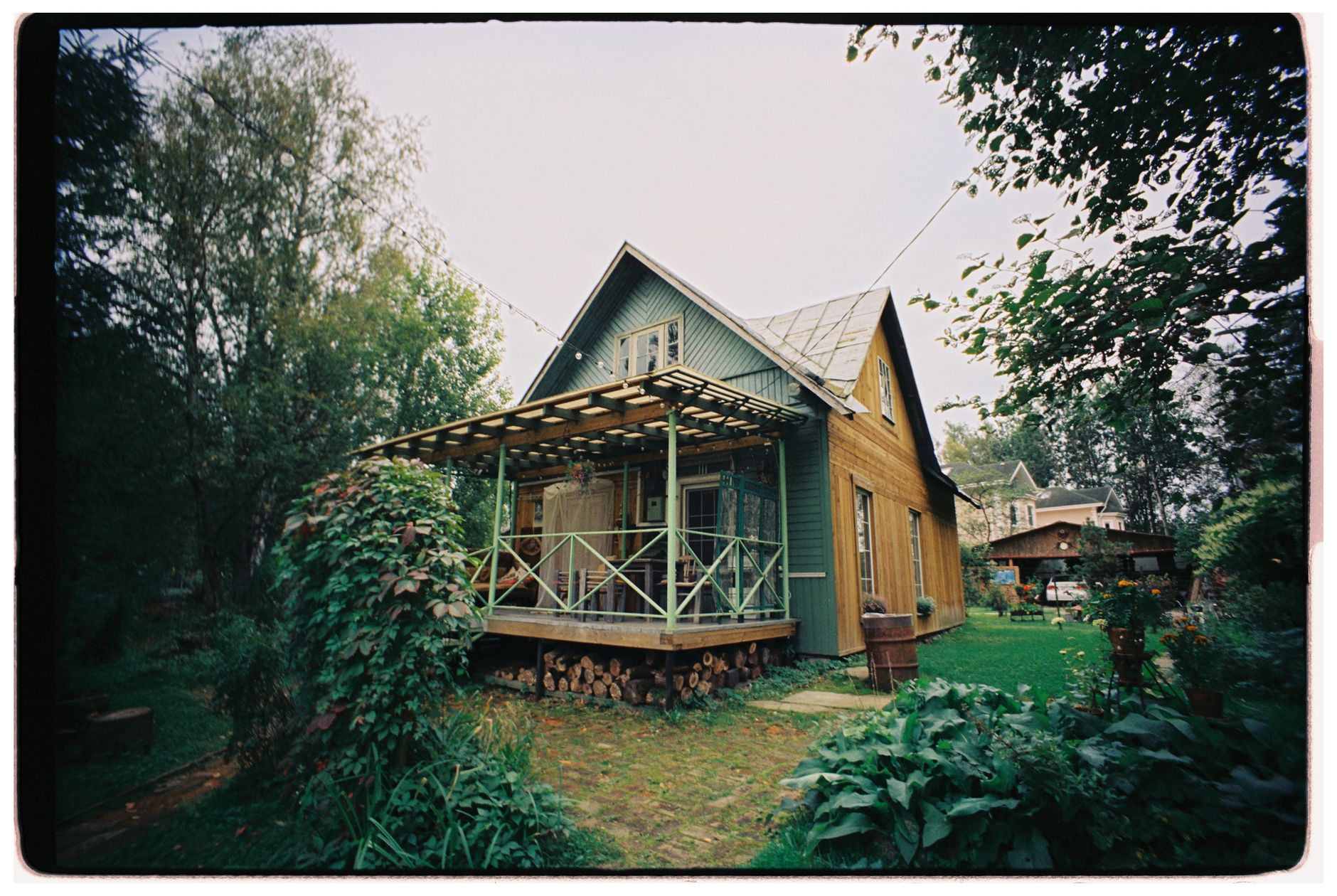
I stood there long enough for the coffee to stop steaming. Frost still silvered the porch boards under my bare feet, and somewhere behind me in the kitchen my dog Ranger was scratching at his empty bowl, oblivious, the way dogs are always oblivious to the exact morning your life changes. I read the notice twice before the words arranged themselves into something I could hold onto: I had thirty days to leave the only home I had lived in for eleven years, a cottage my own grandmother had once kept house in, a cottage my uncle Weldon Teel had promised me, more than once and in front of witnesses, that I would never have to leave.
I called Garrison from the cold porch step because I could not make myself go back inside and sit with the notice in my hand. He picked up on the second ring, and I remember thinking, absurdly, that he sounded like he had been waiting for the call.
“I know what Dad told you,” he said, before I had finished asking him what this was. “I believe he told you exactly that. But Dad is dead, Louise, and dead men do not hold title. I do. You have thirty days, and that is more generous than my lawyer wanted me to be.”
He hung up before I could answer him. I sat down on the top porch step in my bathrobe, in the frost, and looked out at the garden I had spent eleven years building along the spring behind the cottage, and I understood, with a coldness that had nothing to do with the morning air, that I was going to have to fight my own family for the only home that had ever fully belonged to me, even though no piece of paper anywhere said so.
*The cottage by the spring*
To understand how a thirty-day notice ended up taped to my front door, you have to understand the land it was taped to, and the family that has argued over it, quietly and then not so quietly, for three generations.
My grandfather, Holcomb Teel, bought the home place outside Coyle’s Fork, Kentucky, in 1958, a hundred and ten acres of creek bottom and hill pasture that he worked first in tobacco and later in hay and a small cow-calf herd. He built the main farmhouse on the rise above the spring the first summer he owned the land, and two years later, when his own mother came to live with the family, he built a smaller house down by the spring itself, a plain four-room cottage with a stone foundation and a tin roof, so she would have a place of her own close enough to call for help and far enough to keep her dignity. Everybody in the family always just called it the springhouse cottage, and after my great-grandmother passed, it sat empty for stretches, or housed a hired hand, or held tools and hay twine, depending on the decade.
My grandfather had two children. My mother, Delphine, was the older of the two, and she left Coyle’s Fork at nineteen for a nursing job in Lexington and never came back to live on the home place, though she visited every summer of my childhood and every one of mine after her. Her younger brother, my uncle Weldon, stayed. He farmed the home place his whole life, first alongside my grandfather and then alone after my grandfather’s stroke in 1979, and when my grandfather died in 1985, he left the entire hundred and ten acres, main house, cottage, barns, and all, to Weldon outright. That was simply how it was done in that generation: the child who stayed got the land, and the child who left got a smaller inheritance and the family silver, and nobody thought to argue about it, least of all my mother, who loved her brother and never once, in my hearing, resented the arrangement.
I grew up visiting the home place every summer the way my mother had, and I loved the springhouse cottage the way children love a place that feels like a secret, cool and dim inside even in July, with the sound of the spring running under the floorboards on the low side of the house. My mother died when I was twenty-six, too young, a cancer that moved fast once it was found, and Weldon became, in a way neither of us ever named out loud, the closest thing I had left to a parent. He walked me down the aisle at my wedding four years later. He was the first person I called, at eleven o’clock on a Tuesday night, when that marriage ended nineteen years after it began.
*The promise*
I left my husband, Grayson, in the spring of the year I turned forty-three, after nineteen years of a marriage that had gone quiet and cold in ways I am still not sure either of us could have named at the time. I had no real plan beyond getting out, a duffel bag of clothes, and a little over six thousand dollars in a savings account I had kept separate without ever quite admitting to myself why. I drove to the home place because it was the only place I could think to go, and I found Weldon on the back porch of the main house, seventy-one years old by then, still up past ten because his hip kept him from sleeping well.
He did not ask me many questions that night. He listened to what I told him, and when I was done, he said the thing that has shaped every year of my life since.
“That cottage has been sitting empty since old Dewitt moved on,” he told me. “Roof’s sound. Well’s sound. You go on down there and make it yours, Louise-girl. Stay as long as you need. Blood keeps blood off the road in this family, whatever a piece of paper does or does not say about it.”
I moved into the springhouse cottage that same week, and I stayed for eleven years. I want to be honest about what those eleven years actually looked like, because I think it matters to what came later. Nobody handed me a home that was already finished. The roof Weldon called sound in 1996 was, by the time I moved in, patched twice over and failing along the north slope, and in my third year there I paid nine thousand two hundred dollars of my own divorce settlement to have it torn off and replaced properly, metal instead of shingle, because I intended to be there long enough that it mattered. I replaced the well pump myself in year five after it burned out during a July drought, another eleven hundred dollars I did not have to spare and spent anyway. I built raised garden beds along the spring where my great-grandmother’s old kitchen garden had gone to weeds, and over eleven years I turned that ground into something that fed half the family most summers, tomatoes and squash and the particular strain of pole beans my mother’s mother had grown on that same spot sixty years earlier. I paid my own electric and propane every month without fail, paid for the internet line the phone company finally ran out that far in 2019, and every January, for eleven years, I handed Weldon four hundred dollars in cash toward the land taxes on the whole parcel, not because he asked me to, but because I did not want to feel like I was taking something for nothing.
Weldon never once, in eleven years, asked me for a lease. He waved off the one time I raised the subject myself, the autumn after the roof went on, sitting at his kitchen table with a legal pad between us where I had started, tentatively, to sketch out what a written agreement might even look like.
“I don’t need a paper to know what I mean, and neither do you,” he told me that day, and pushed the legal pad back across the table toward me, unsigned. “You put a nine-thousand-dollar roof on a house you don’t own on paper because you trust me. I’d be a poor excuse for a man if I let you do that and then made you sign something on top of it, like your word to me wasn’t worth as much as mine to you.”
He said some version of that same promise to me at least four more times over the following years that I can name specifically, including once at the family’s Fourth of July gathering in 2019, in front of a dozen people gathered around picnic tables in the yard, when he raised his glass of sweet tea and said, loud enough for the whole yard to hear, that the springhouse cottage was Louise’s for as long as she wanted it and that was the end of the discussion. I remember exactly how it felt to hear him say it in front of witnesses instead of just to me, the particular warmth of being claimed, out loud, by the one person in my family who had never once made me feel like a burden.
*The morning we buried him*
Weldon died in his sleep seven months before the notice appeared on my door, a heart that simply stopped somewhere in the small hours of a November night, at seventy-nine years old, on a farm he had worked for sixty of them. I found him myself the next morning when he did not answer his phone by nine, which he always did, and I have not fully found the words yet for what that morning cost me, so I will not try here beyond saying that I lost, in the space of a few hours, both an uncle and the closest thing I had left to a father.
His son, my cousin Garrison, came home from Lexington for the funeral, and I want to be fair to him here, because grief does strange things to people, and I told myself for weeks afterward that the coldness I felt from him at the visitation and the funeral and the two stiff, brief conversations we had in the following days was simply grief wearing an unfamiliar face. Garrison and I had never been close the way I was close to Weldon. He had left Coyle’s Fork for college at eighteen the way my own mother once had, built an insurance business in Lexington, and visited the home place perhaps three or four times a year, holidays mostly, with a wife and two teenage sons who barely knew the names of the pastures. He and I were cordial at family gatherings for thirty years without ever being warm, two cousins whose only real bond had run through his father.
Weldon’s will, drafted by a Coyle’s Fork attorney back in 1998 and never updated since, left “all real property owned by the testator at the time of his death” to Garrison outright, his only child. It did not mention the springhouse cottage separately, because the cottage had never been surveyed off or platted as its own parcel in sixty years of family ownership. It was simply part of the hundred and ten acres, the way it had always been, the way nobody had ever thought to formalize because formalizing it had never once seemed necessary between people who trusted each other.
I did not think, in those first weeks of grief, to worry about what that meant for me. I went to the visitation and stood in the receiving line and accepted condolences from people who had known Weldon fifty years, and I went home to the cottage every night and sat with Ranger in the quiet and grieved the man who had taken me in without a single condition attached, and it did not occur to me, not once in those first months, that his own son would eventually read that lack of a condition as an opportunity rather than a trust.
The warning signs, looking back, were there earlier than I let myself admit. A surveyor’s truck parked at the top of the drive in March, six months after the funeral, that Garrison explained away as routine when I asked. A conversation overheard, more than participated in, at a cousin’s graduation party in April, about a development company out of Lexington that built lake cabins and short-term rentals on creek-bottom land like ours. I told myself I was imagining tension where there was only a grieving son figuring out what to do with land he had never wanted to farm himself. I was wrong about that, and I have had a great deal of time since to sit with exactly how wrong.
*Thirty days*
After the notice, and after that first phone call on my cold porch step, I drove into Lexington the following afternoon and sat across a desk from Garrison in his insurance office, because I could not accept that the man who had known me my entire life would say what he had said to me on the phone and mean it the same way once he was looking at me.
He meant it the same way. He was calmer in person than he had been on the phone, which somehow made it worse, the flat, rehearsed patience of a man who had already had his lawyer walk him through every question I might ask.
“I had Bratton and Wray check every angle before this notice ever went out,” he told me, sliding a folder across the desk that I did not open. “There’s no lease anywhere with your name on it. There’s no deed, no easement, no recorded interest of any kind on that parcel that belongs to anybody but me. What you have, Louise, is a lot of memories of things my father said to you at picnic tables. I don’t doubt he said them. I remember him saying some of them myself. But memories aren’t title, and I’m the one holding title now.”
“He put a roof on that house with money out of my own pocket,” I told him. “Nine thousand dollars. He knew that. He told me himself I didn’t need a piece of paper to prove what he meant.”
“And I believe you spent that money,” Garrison said, and for just a moment something in his voice slipped, some smaller, less rehearsed version of him showing through before he caught it and put it away again. “I’m not saying you didn’t do right by that house, or by him. I’m saying the law doesn’t care how right you did by him. It cares what’s recorded at the courthouse, and what’s recorded at the courthouse has my name on the whole hundred and ten acres, cottage included, and nobody else’s. I’ve got a development contract with a deadline on it, and I am not going to lose that deadline waiting on a conversation that isn’t going to change what’s true. Thirty days. I’d take it as a kindness if you didn’t make me go to court to get you out.”
I left his office without another word, because I understood, sitting in that chair, that nothing I said to him was going to reach whatever part of him had already made this decision. What stayed with me the whole drive home, more than the coldness of it, was the particular, awful accuracy of what he had said. He was not wrong about the courthouse. He was not wrong about the deed. He was simply willing to let being technically right stand in for being decent, and I did not yet know, that afternoon, whether the law actually agreed with him as completely as he believed it did.
*Vivian Okafor and the word I had never heard*
A friend from church, a retired schoolteacher named Noreen Aldrich who had gone through her own bruising fight over her late husband’s estate two years earlier, gave me the name of an attorney in the county seat named Vivian Okafor. I called her office the morning after my conversation with Garrison, and I sat across her desk four days later with every piece of paper I could find that had anything to do with the cottage: propane bills, the electric company’s records going back eleven years, the receipt for the roof, a canceled check for the well pump, a handwritten note Weldon had once left on my kitchen table thanking me for a birthday cake that happened to mention, in passing, “your place down by the spring.”
Vivian listened to the whole story without interrupting, and when I finished, she told me something I had never heard before in my life, a phrase I have since turned over in my mind more times than I could count: promissory estoppel.
“Kentucky doesn’t require a written lease to protect a person in your position,” she told me, “if what you can show is a clear, definite promise, that you reasonably relied on that promise, and that the reliance cost you something real. You didn’t just live in that cottage for free out of your uncle’s kindness. You spent nine thousand dollars on a roof, over a thousand on a well pump, and eleven years of your own labor building a garden and a home, all because a man you trusted told you, more than once and in front of witnesses, that you would never have to leave. If we can prove that promise was clear and that you relied on it to your real, provable detriment, a court can enforce it, whatever the deed says. This isn’t a technicality working against you. It’s a technicality that can work for you, if we build the record right.”
She also raised, and then set aside, the question of adverse possession, the doctrine some of the old-timers around Coyle’s Fork still talk about at the feed store as though it settles every fence-line dispute in the county. Kentucky requires fifteen years of open, exclusive, continuous possession before that doctrine applies, and I was four years short. Vivian was plain with me about it: adverse possession was not going to save the cottage. Promissory estoppel, built carefully and corroborated by more than my own word, was our real path, and she told me, that first afternoon, exactly what it was going to take to make it work. We were going to need a witness who had heard Weldon make that promise directly, more than once, and who could testify to it under oath.
I thought immediately of one person.
*Milo Strand remembers everything*
Milo Strand had worked the home place alongside Weldon for the better part of forty years, first as a hired hand in his twenties and later, once his own knees gave out on daily field work, as the man who still came by twice a week to help with fence and equipment because he did not know how to spend a week not doing it. He was seventy-eight years old, sharper than most men half his age, and he had been at that Fourth of July gathering in 2019 when Weldon raised his glass of sweet tea in front of the whole yard.
I drove out to see him on a Saturday morning, and I told him, as plainly as I could, what Garrison had done and what Vivian had told me the case would need. Milo did not hesitate the way I had half expected him to, given that testifying against Weldon’s own son was not a small thing to ask of a man who still worked that land twice a week out of loyalty.
“I heard him say it more than the one time at the Fourth of July, if that’s what you’re asking,” Milo told me, sitting on his own porch with a coffee going cold between us, the same way mine had gone cold on my own porch step three weeks earlier. “Spring of 2021, we were up under the old Massey tractor trying to get the hydraulic line fixed before planting, and Weldon’s attorney called him about updating some paperwork, insurance or some such. I heard Weldon’s whole half of that call, laying on my back under the tractor not six feet from him. He told that lawyer, plain as I’m telling you, that whatever happened to the rest of the place after he was gone, the cottage was to stay with you, and he wanted that understood. I remember it because it struck me odd at the time that a man would say a thing that important laid out flat on his back fixing a hydraulic line instead of sitting at a proper desk, but that was Weldon. He never did save the important things for when it was convenient to say them.”
Milo agreed, without my having to ask twice, to give a sworn statement to Vivian and to testify if the case went that far. He told me one more thing before I left his porch that morning, something that has stayed with me since as much as the testimony itself.
“Garrison’s not a bad man, Louise, not down deep,” he said. “He’s a man in a hurry, and a man in a hurry stops being able to tell the difference between what he’s owed and what’s just easiest for him to take. I’ve watched it happen to better men than him. Doesn’t make it right. Just makes it explainable, which isn’t the same thing.”
*Served at the cafeteria line*
I have worked as the cafeteria manager at Coyle’s Fork Elementary for nineteen years, a job I love in ways that surprised me when I first took it, mostly because it puts me in a building full of children who do not know or care what a person’s legal troubles are, only whether the green beans are the good kind that day. On a Thursday in late April, eleven days into the thirty I had been given and while Vivian was still building the estoppel case, a process server walked into my cafeteria at eleven forty in the morning, in front of two hundred fourth and fifth graders standing in line with their trays, and asked for me by name loudly enough that half the room turned to look.
I signed for the papers because there was nothing else to do, a forcible detainer petition filed in Coyle County District Court, and I finished serving lunch with my hands not quite steady, because a room full of nine-year-olds does not stop needing their trays filled just because the adult filling them has had the worst morning of her year. One of my line cooks, a woman named Selah Fenimore who has worked beside me for eleven years, took the papers out of my hands without a word once the line thinned and put them in the office for me, and did not say anything else about it until the end of the shift, when she hugged me hard by the walk-in cooler and told me the whole kitchen staff had already started passing a card around.
Word travels fast in a town the size of Coyle’s Fork, and by that Sunday, the ladies of the Fellowship Baptist quilting circle, of which I have been a member for six years, had organized a spaghetti supper at the VFW hall to help with legal costs, without asking my permission first, the way small towns sometimes decide to take care of their own before you have finished being embarrassed enough to say yes. Ninety-one people came out on a Tuesday night in a town of four thousand, folding tables set end to end under the hall’s fluorescent lights, and by the time the last plate was cleared, the jar by the door held just over three thousand dollars, most of it in tens and twenties from people who had known me my whole life and some of it from people who had only ever known me as the woman who ran the school cafeteria. I stood at the back of that hall that night, watching a room full of neighbors eat spaghetti to help pay a lawyer to fight my own cousin, and understood something I had not fully let myself feel yet: whatever happened with the cottage, I was not fighting this alone, and I had not been, not really, since the first phone call I made to Vivian Okafor.
Garrison, for his part, escalated rather than softened once he learned the case was headed to mediation before it would ever reach a judge. He had the development company’s attorney send Vivian a letter noting a financing deadline that made any delay, in his lawyer’s words, “materially damaging” to his client. I understood that letter for what it was: not a legal argument, but pressure, meant to make me fold before the mediation table rather than at it. It did not work, mostly because Vivian had already told me, plainly, exactly how strong she believed our position was, and because Milo Strand’s sworn statement was already sitting in a file on her desk, specific and dated and impossible to wave away as a story I had told myself.
*The mediation table*
The mediation happened on a Wednesday morning in June, twenty-six days after I had been served in my own cafeteria line, in a conference room above the county clerk’s office that smelled faintly of the coffee urn in the corner. Garrison came with his attorney from Bratton and Wray. I came with Vivian and, at her request, with Milo Strand, who wore a pressed shirt for the occasion and looked, sitting stiffly in a conference chair that was not built for a seventy-eight-year-old man’s back, more nervous than I had ever seen him in the fifteen years I had known him.
Vivian laid the case out plainly for the mediator, a retired attorney named Ellis Radnor who had handled land disputes in that county for thirty years before he ever sat on the other side of a mediation table. She walked through the roof, the well pump, the eleven years of utility payments, the January cash toward the land taxes, and then she called on Milo, who told the story of the hydraulic line and the phone call exactly the way he had told it to me on his porch, unhurried, specific, unwilling to be rushed by Garrison’s attorney’s two attempts to interrupt him.
I watched something in Garrison’s face change while Milo talked, not all at once, but by degrees, the particular unraveling of a man who has been telling himself a clean story about being technically correct and is now hearing, from a man he has known his whole life, exactly how untechnical and how personal his father’s promise had actually been. Ellis Radnor, for his part, did not need Vivian to spell out the legal risk to Garrison; he laid it out himself, plainly, in a private session with Garrison and his attorney that ran nearly ninety minutes while Vivian, Milo, and I waited in the hallway with the coffee urn. A Kentucky court, Radnor told them, hearing testimony like Milo’s alongside eleven years of documented financial reliance, could very reasonably find in my favor on promissory estoppel and impose a life estate or an outright conveyance of the cottage parcel, a result that would cost Garrison not only the cottage acreage but months of delay on a development deadline he had already told his own attorney could not slip.
When the two sides came back together, Garrison’s attorney did the talking first, the careful, bloodless language of a settlement offer. Garrison himself did not say much until the very end, after the terms had mostly been worked out on paper: a survey to formally subdivide two and four-tenths acres around the springhouse cottage, including the spring itself and the garden, off the main parcel, and a quitclaim deed conveying that subdivided acreage to me outright, in exchange for a one-time payment of ten dollars and my written agreement not to contest any future sale of the remaining acreage.
“You could have just told me the truth six months ago,” I said to him, once the attorneys had stepped out to finalize the language. “That you needed the money more than you needed to honor what your father promised. I’d have understood that a lot better than a stranger’s notice taped to my door.”
He was quiet for a long moment before he answered me, and when he did, some of the rehearsed flatness was gone from his voice for the first time since the funeral.
“I told myself it wasn’t personal,” he said. “That it was just a deed and a deadline. It got a lot harder to believe that with Milo sitting across the table telling me things about my own father I’d half forgotten myself.” He did not apologize outright, not that day, and I did not ask him to. What he said instead, quieter, almost to himself, was that he had forgotten, somewhere in the last seven months, that his father had ever been a person who kept his word to anyone, and hearing Milo say it out loud had reminded him of a version of Weldon he had not let himself grieve properly yet.
*What the county recorder finally filed*
The survey took six weeks. I stood in the garden the day the surveyor set the final corner stake, close enough to the old spring house foundation that I could hear the water running underneath, the same sound I remembered from childhood summers before I ever imagined I would spend eleven years of my adult life fighting to keep that exact sound in my life permanently. The quitclaim deed was recorded at the Coyle County clerk’s office on a Thursday morning in August, two and four-tenths acres, cottage, garden, spring, and all, in my name alone, the first time in the sixty-seven-year history of that parcel that a single woman’s name has held clear title to any part of the home place.
I planted a seventh raised bed that same week, alongside the six I had already built over eleven years, dug into ground that finally, legally, unquestionably belongs to me. Milo Strand still comes by twice a week, not because he has to anymore, but because he told me plainly, the first time he stopped by after the deed was recorded, that he had spent forty years working that land for Weldon and did not intend to stop just because the parcel had gotten smaller and the last name on the mailbox had changed. He keeps two goats in the corner of my new fence line now, an arrangement neither of us has bothered to write down on paper, and neither of us has felt the need to.
Garrison and I are not close, and I do not expect that to change. He sold the remaining hundred and seven acres to the development company that autumn, and I understand there are cabins going up now on the hill pasture where I used to help Weldon move cattle as a girl, a version of the home place I have made my peace with not recognizing anymore. He called me once, in October, on a Sunday evening, and told me, in a voice with none of the flatness left in it, that he had found a box in his father’s shed full of photographs from that Fourth of July gathering in 2019, the one where Weldon raised his glass of sweet tea in front of the whole yard, and that he had sat with them longer than he meant to before he called me. He did not ask me for anything on that call. I think, in his own halting way, he was trying to tell me he finally understood what his father had actually promised, and to whom, and why it had mattered enough for a dying man’s oldest hired hand to remember it word for word.
I still wake most mornings before the sun is fully up, out of habit more than necessity now, and I still walk out onto the same porch where I once sat in my bathrobe and read a notice that told me I had thirty days to leave a home I had spent eleven years building with my own hands and my own money. The frost comes and goes with the seasons the way it always has. The spring still runs under the floorboards on the low side of the house, the same sound my great-grandmother must have fallen asleep to eighty years ago in the same four rooms. What is different now, the thing I could not have told you with any certainty on that cold Tuesday morning, is that the ground under my feet finally, legally, permanently belongs to the person who has actually done the work of loving it, and no notice taped to any door is ever going to change that again.
This story is a dramatization. Names, characters, and details are invented, and any resemblance to real people or events is coincidental.