The Dress I Wore and the Seat I Kept
“I love you, Mom, but I need you to be someone else for one day.”
My daughter said it at my kitchen table on the second Sunday in March, with a yellow legal pad set between the sugar bowl and the salt shaker. She had driven two hours and ten minutes down from Chicago to say it. She had written it out ahead of time, the way she used to practice her spelling words at that same table, and when she got to the hard part she looked at the pad instead of at me.
I want you to know she said it gently. Ashley does everything gently. She was a child who apologized to furniture when she bumped into it. That is part of what made it so hard to hear.
“It’s only one day,” she said. “Three things, and that’s all.”
I had a pot of coffee going and a pie cooling on the windowsill, and I remember thinking that I would never again smell cinnamon without hearing what came next.
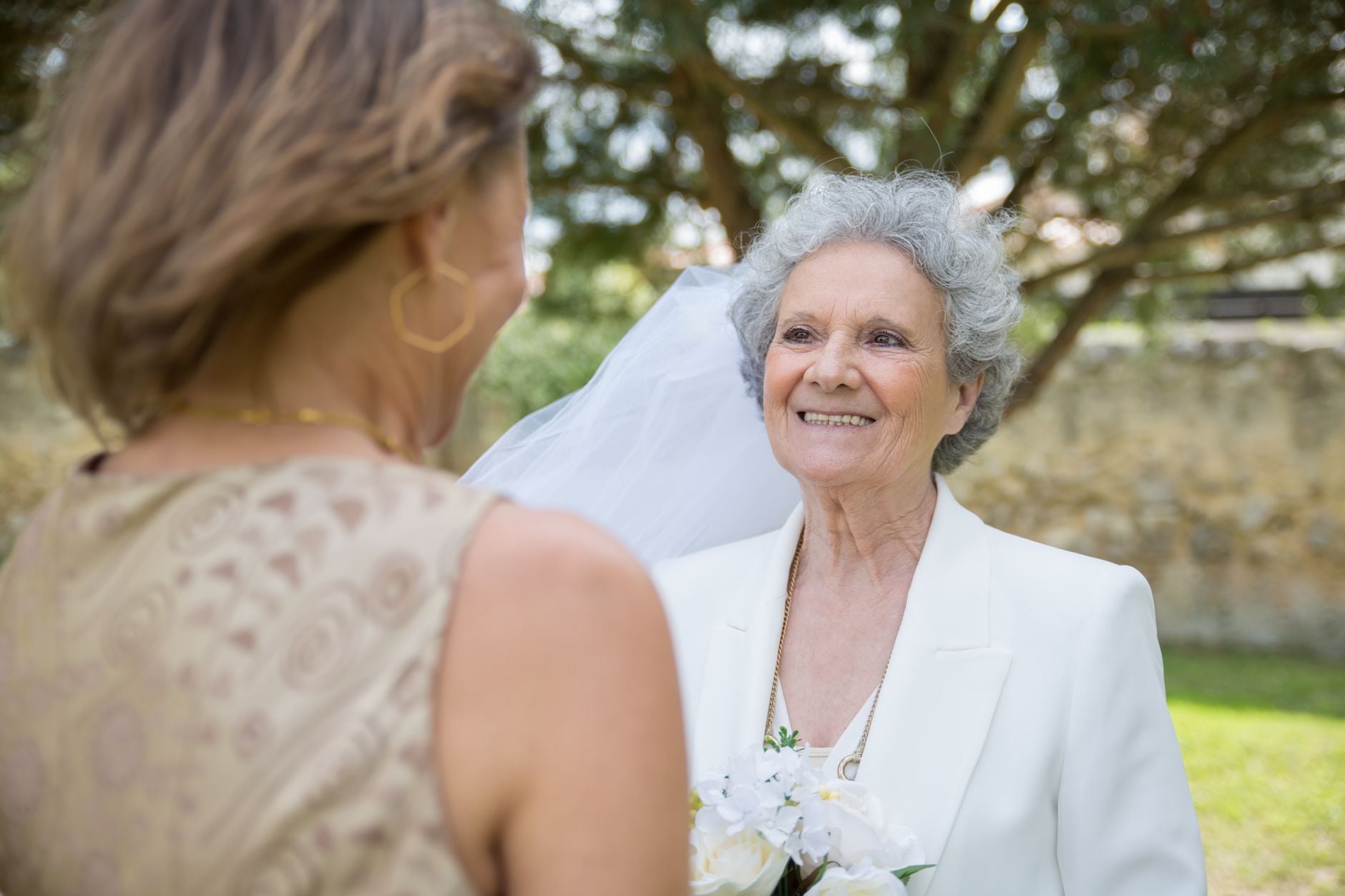
“One. Camille is going to do most of the mother-of-the-bride things, because she knows how this kind of event runs, and I don’t want anything to go sideways. She’ll stand first in the receiving line and you can stand next to her. Two. There’s a dress, and Camille found a shop where we can find you something. Something a little more, I don’t know. Polished.” She turned a page. “And three, and I need you to hear me on this one, Mom. Could you not bring up the farm?”
“Not bring up the farm,” I said.
“Spencer’s parents are wonderful people, but they’re, you know. They’re Glen Aldridge. They think a farm is, I don’t know, a lot of mud. And Bruce’s friends are going to be there, and a lot of Camille’s friends, and I just don’t want it to be the thing everybody is looking at. If someone asks what you do, you could say you’re in agriculture. Or just that you’re retired.”
“I am not retired, honey. I have three hundred and twenty acres of soybeans and corn that don’t know the word.”
“Mom.”
“I’m sorry. Go on.”
She went on. She said she wanted the day to be beautiful, and she said it with her whole face, and I believed her. She said there was no one on earth she would rather have in the mother of the bride’s seat. And then she looked up from the pad for the first time and said the sentence I started this story with, and her eyes filled, and she meant every word of it.
That is the thing I have to be honest about from the beginning. My daughter was not being cruel. She was ashamed, and she was sorry she was ashamed, and she asked me anyway. The shame had won the argument inside her before she ever got in the car.
I was sixty-three years old, and I had been a widow for six years. I had buried a husband and a mother-in-law out of the same farmhouse where my daughter was now explaining that I should say I was retired.
I poured her a cup of coffee. I cut her a slice of pie.
“I’ll think on it,” I said.
She cried a little and hugged me, and I held her, and over her shoulder I could see the old calendar from the Lindell co-op still hanging by the phone, with Gordon’s handwriting on the first of every month where he used to mark the rain.