The Dress I Wore and the Seat I Kept
The morning
I did not go to Camille’s salon. I got up at five, the way I have every day since 1984, and did my own hair in the bridal suite at the Aldridge House with the brush I brought from home.
I did not do it to be difficult. I had given up my say over the dress and my place in the line, but I was not going to give up my own head of hair. A woman needs to keep one thing.
At nine Ashley came in with her bridesmaids, six girls in champagne, all of them talking at once. She stopped when she saw me. I was standing at the window in the beige silk, with my hair brushed back and pinned the way I wear it to church.
I watched her take me in. I watched her not say anything about my hair.
“You look nice, Mom.”
“So do you, sweetheart.”
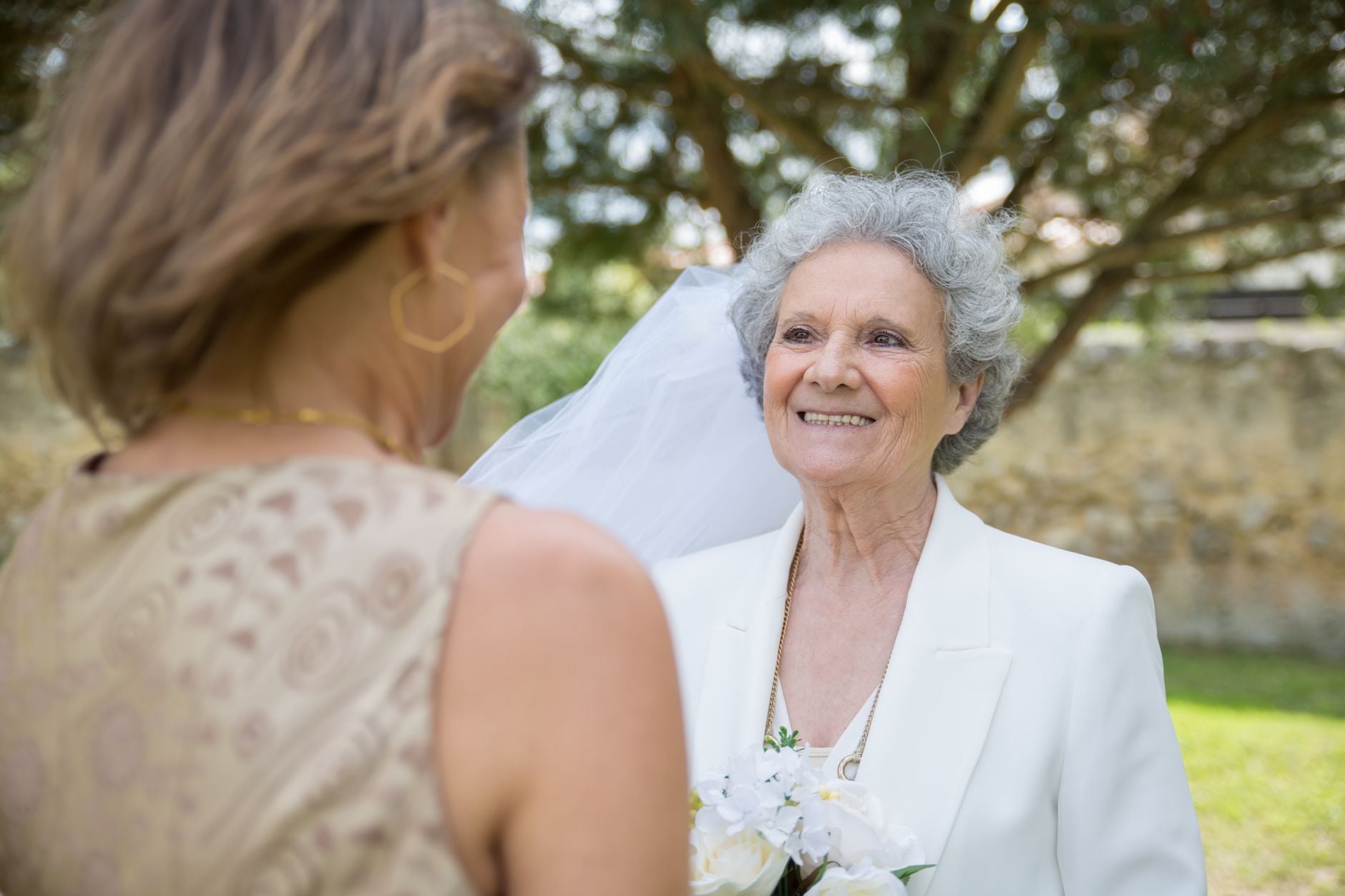
When the others had gone to find shoes, I stepped over and fixed her veil. It had slipped on one side. I put my fingers in her hair, which smelled like the shampoo she has used since sixth grade, and I got the comb back in where it belonged.
I reached into the pocket I had sewn into the silk myself, the only alteration I allowed, and took out a coin wrapped in a handkerchief.
“This was your daddy’s,” I said. “A silver dollar, 1964. His mother gave it to him the morning he went to take over the north quarter. He carried it in his boot the day we married. I thought you might put it in your shoe.”
She took it. She turned it over in her palm, and she did not say anything for a moment. Her lip was shaking.
“Mom.”
“You don’t have to say anything.”
“I just.”
“Not today. Today is yours.” I tucked the handkerchief into her hand. “Go on. Put it in your shoe. And look at your husband. Not at the people.”
That is all I said. I had decided in the truck that I would say only that. Then the bridesmaids came back in, loud, and the moment closed over like water.
Table nine
The ceremony was in the garden. It was beautiful. I will not take that from them. Ashley came down the aisle on the arm of her Uncle Dennis, Gordon’s brother, in a rented tux too short in the arms. Spencer cried at the first sight of her, openly, without wiping it, and I loved him again.
The tent had a chandelier in it. In a tent. There were round tables with white cloths and low flowers, and each place had a menu card with a name written in calligraphy, and mine said Donna Reinhart, Table 9.
Table nine was in the back corner, beside the swinging door where the caterers came and went.
I looked at the head table up front, with Ashley and Spencer in the center and Bruce and Camille at the end. I looked at the middle tables, where Camille’s friends were laughing in their silks. And I looked at my own table, which had six chairs, four of them empty, and one of them filled by an old man in a wheelchair with a blanket over his knees.
His name card said Walter Whitlow.
He was Bruce’s father, Spencer’s grandfather. I had met him once, at the engagement lunch, a small hunched man who stared out the window the whole meal and spoke to nobody. A young woman in blue scrubs sat beside him with a tote bag full of supplies. Her badge said Joanne.
“Mrs. Reinhart?” she said, standing. “Joanne. I’m Mr. Whitlow’s aide. Mrs. Whitlow asked if you wouldn’t mind sitting with us. She said it’d be quieter.”
“Quieter,” I said.
“Yes, ma’am.”
I looked at the card in my hand. I looked at the old man. And I understood, all at once, that Camille Whitlow had put me and her husband’s father at the back of the room by the kitchen door for exactly the same reason.
We were the two people she did not want to be looked at.
Then Walter Whitlow looked up at me from his chair. His eyes were pale blue and very wet and a long way off.
“Is it going to rain?” he said.
“No, sir,” I said, and sat down next to him. “I believe it’ll hold.”