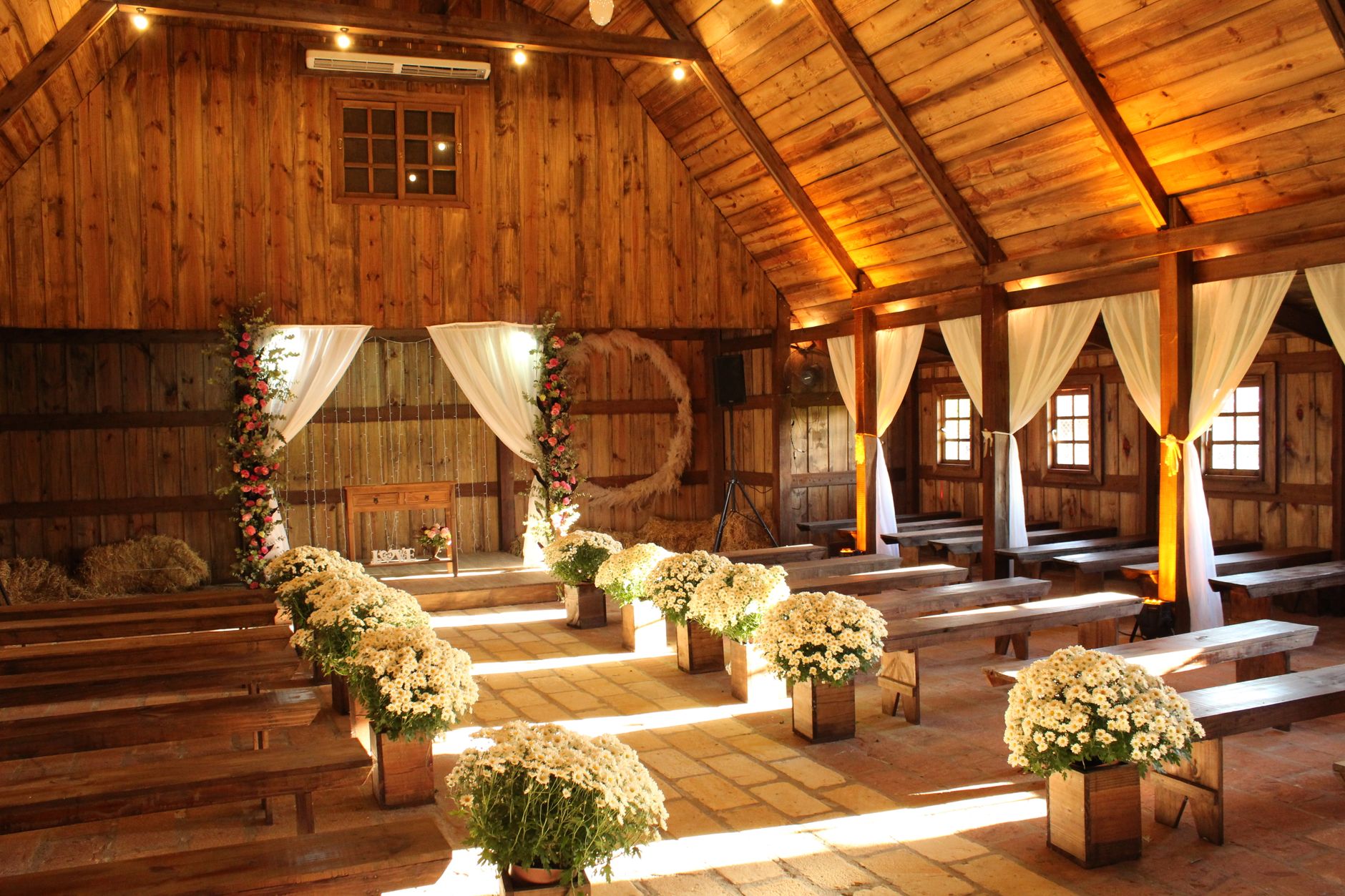
The Thirty Feet to the Altar
“I’m only saying what the pictures will say, honey. A wheelchair in the aisle is all anybody will look at.”
I was in the mudroom when Sheila Brenner said it. I had just come in from the machine shed, and I was sitting there in my chair with one boot off, knocking the mud from it into the boot tray.
The kitchen door was open about a foot. I could see the end of our table, the wedding binder Hannah carried everywhere, and Sheila’s hand resting flat on top of it like it belonged to her.
“Your uncle could do it,” Sheila went on. “Dale is tall. He’d look wonderful in the photos. Your father could be seated right up front, where everybody can see him. Nobody would think a thing of it.”
My daughter did not answer right away. I knew that silence. Hannah was twenty six years old and taught kindergarten in Tuscola, and when she went quiet like that it meant she was trying not to cry in front of somebody.
“He asked me first,” Hannah said finally. “I mean, I asked him. Back at Christmas. He said yes.”
“Of course he did. He loves you.” Sheila’s voice was soft, which was worse than if it had been sharp. “But think about the aisle shot, Hannah. That’s the picture that goes on the wall for fifty years. I’m paying for half of this wedding. I just want it to be beautiful for you.”
I put my boot down on the tray. I did it slow and quiet, the way you set something down in a barn when there’s a cow about to calve in the next pen.
The chair and the bin
My name is Roger Lindquist. I was fifty five that winter, and I had farmed eight hundred acres of corn and beans south of Champaign since I was nineteen. My grandfather bought the first eighty acres in 1938. The barn we were planning to hold the wedding in was his.
Three years before that January, in the October of a wet harvest, I climbed the outside ladder of our east bin to look at the roof hatch. The rungs were slick with rain. I was hurrying because the elevator in Tolono closed at six.
I don’t remember falling. I remember the ladder cage, and then I remember a helicopter. In between there were twenty two feet and a concrete pad, and a broken vertebra low in my back called L1.
The surgeon at Carle in Urbana used a word I had never heard used about a person before. He said my injury was incomplete. He meant the cord was bruised and crushed but not cut through. He said some of what I lost might come back, and some would not, and nobody could tell me which.
Some did come back. In the first year I got feeling in my thighs and a little push in my right leg. I could stand between the parallel bars at the clinic for a minute at a time, sweating like I’d baled hay all afternoon.
Then the insurance hit its limit on outpatient visits, and harvest came around again, and I watched my brother Dale run my combine from the kitchen window. Somewhere in there I quit. I told Karen the therapy wasn’t doing anything. The truth is I was tired of being the man who needed two people to stand up.
So for the next two years I was a man in a chair. I learned to drive my Silverado with hand controls. Dale and I worked out a deal on the ground. I kept the books and ran the grain marketing and fixed what I could reach from a seat. It was a life. I was not unhappy in it most days.
But I had been planning to walk my daughter down the aisle since the day she was born, and I had already made my peace with doing it sitting down. I thought.