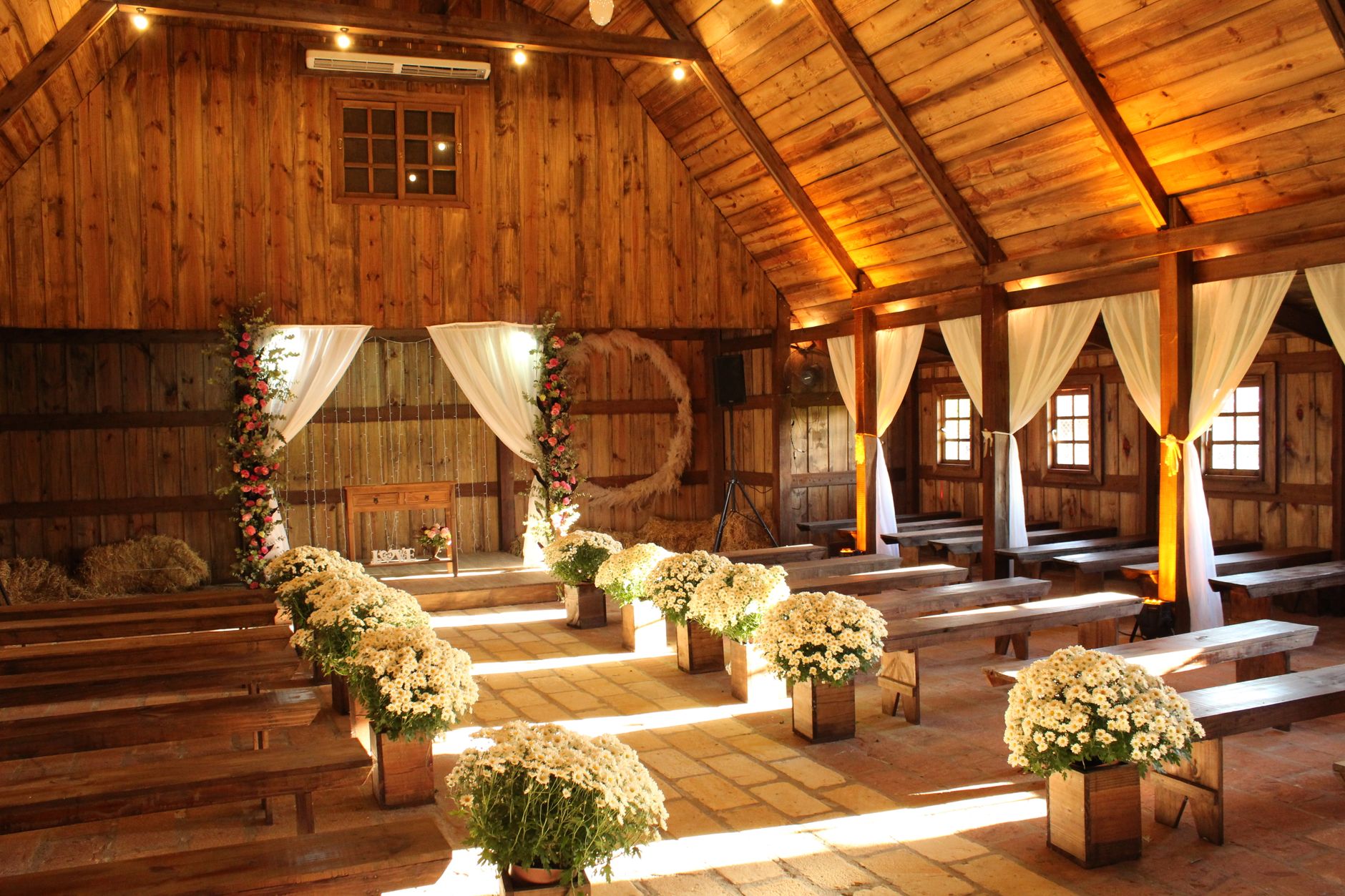
The Thirty Feet to the Altar
Thank you for telling me
I pushed the mudroom door open with my footplate and rolled into the kitchen.
Sheila Brenner turned around. She was fifty six, tall, with ash blond hair cut sharp at the chin, and she wore a quilted vest that cost more than my first truck. She sold real estate in Mahomet, and she was good at it, and she had a way of standing that made a room arrange itself around her.
She knew I’d heard. I watched her decide whether to pretend I hadn’t.
“Roger,” she said. “I didn’t know you were in.”
“I was in the mudroom,” I said. “I heard what you said about the aisle.”
Hannah’s face went red to the ears. She looked at me, and then at Sheila, and then down at the binder, and I saw my little girl standing in the middle of a road with a truck coming from each direction.
Karen was at the sink. She had her back to all of us, and her hands had gone still in the dishwater. My wife has a temper about as long as a match, and I could see it in her shoulders.
I had a lot of things I could have said. I’d thought of most of them in the mudroom. I could have told Sheila that I didn’t need her money and she could take her seventeen thousand dollars back to Mahomet. I could have told her that my chair had been in that family for three years and in hers for about forty minutes.
But that was the truth only on the outside. On the inside, the part I didn’t want to look at, Sheila had said something I’d been thinking for months. Every time I pictured that aisle, I pictured Hannah walking beside a chair and having to slow her steps to match my wheels. I pictured her bending down at the end to kiss my cheek instead of me kissing hers.
“Thank you for being honest with me, Sheila,” I said.
The kitchen went quiet. Even the dishwater went quiet.
Sheila blinked. “I’m not trying to be cruel, Roger.”
“I know you’re not,” I said. “You said what you think. Most folks don’t. I’ll give it some thought.”
She stayed another twenty minutes and talked about napkin colors. I sat at the end of the table and nodded at the napkins. When her Lexus finally pulled out past the grain bins, Karen turned around with a dish towel twisted in both hands.
“Roger Lindquist,” she said. “You thanked her.”
“I did.”
“I’m going to call her. I’m going to call her right now.”
“Don’t,” I said. “Please. Not yet.”