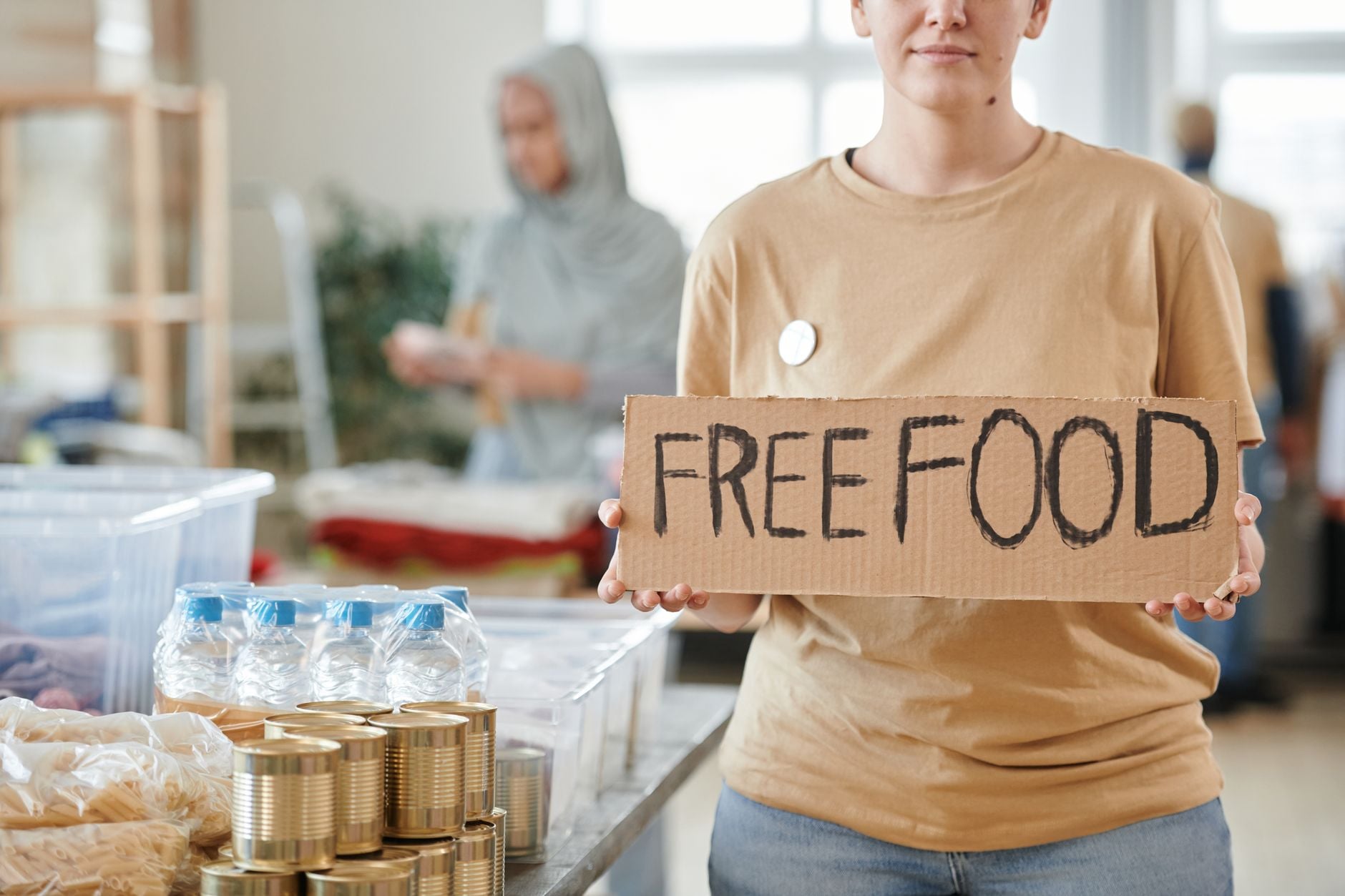
The Apron at the Pantry Table
Dena had her hand on my elbow before I ever got to the sign-in table. It was not a hard grip. It was the way you steer somebody out of a doorway at a funeral, gentle and firm, so nobody notices you are doing it.
“Come back here a minute, Amber,” she said. “Help me with something.”
I let her walk me past the folding tables and the line of people in barn coats, back to the little hallway by the stockroom. That is where the church keeps the Christmas pageant costumes on a rolling rack. It smelled like cardboard and percolator coffee.
She let go of my arm and looked at me the way she looks at a case of canned corn that came off the food bank truck with a crushed corner. Not angry. Just deciding.
“You can’t take a box,” she said.
I remember I laughed a little, because I was sure I had heard her wrong.
“Dena, Josh is laid off. All of them are. The plant let 140 people go on Friday.”
“I know that. Everybody in town knows that.” She lowered her voice, though there was nobody in that hallway but the two of us and a cardboard shepherd. “That’s exactly why. If family starts taking boxes, people talk. They’ll say I run this for my own.”
“Nobody is going to say that.”
“They will. You don’t know this town like I do.” She smoothed the front of her purple pantry sweatshirt. “This pantry is for people who really need it.”
I stood there with my empty canvas bag folded over my arm. Out in the basement I could hear the tape gun going and Pastor Mike asking a little boy if he wanted a cookie.
I want to tell you I said something sharp. I did not. I had known Dena my whole life. She held me at my baptism. She taught me to braid hair and drive a stick shift in her dad’s pickup on the gravel behind the elevator.
“Okay,” I said. “Thank you, Dena.”
She blinked. I think she had been ready for a fight, and I did not give her one.
“I’m not trying to be hard,” she said.
“I know you’re not.” I turned to go, and then I turned back. “You’re doing a good thing down here. I mean that.”
Then I walked out the side door into the wind and went home.
I should tell you who we are, so you understand what that walk felt like.
We live in a town of about 3,000 people in eastern Iowa. We have a Casey’s, a Fareway, a co-op elevator you can see from four miles out, and three churches. Most of the men I went to school with either farm, work at the co-op, or drove twenty minutes to the window plant.
Josh had been at the window plant twelve years. He ran a line on the glazing floor, where they set the glass into the frames. He kept a little notebook in his shirt pocket for every time a machine did something odd, and the maintenance guys came to him before they went to the manual.
On the last Friday in October they called the whole second shift into the break room and read a letter. One hundred and forty people. They got two weeks of pay and a folder about unemployment, and a man from corporate walked them out to the parking lot.