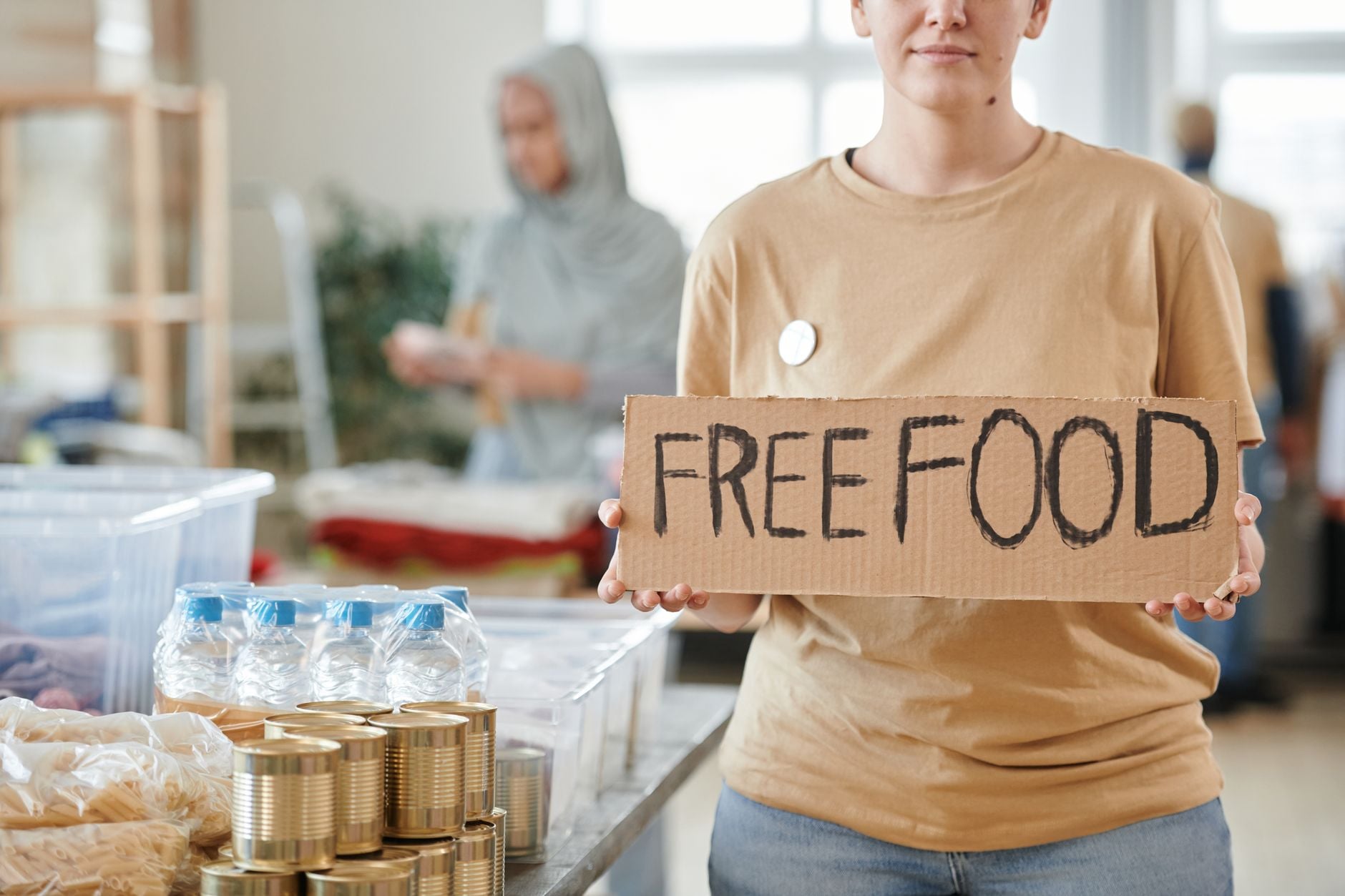
The Apron at the Pantry Table
“I always wondered,” Leon said, “what somebody did to you, to make you that scared of a box of groceries.”
So she told him. And that night, she told me.
When Dena was nine years old, in 1988, her daddy lost the home place. That was the tail end of the farm crisis, when land was worth half what the bank had loaned on it and half the families on their road went under.
Her dad sold the cattle, then the equipment, then the ground. They moved into town, into a rented house by the tracks. That winter, the Lutheran church brought them a box of groceries every week. The same church. The same basement.
“I didn’t mind the boxes,” Dena said. “The boxes were good. There were oranges at Christmas.”
She was quiet a minute, turning her coffee cup on my table.
“It was at the Fareway,” she said. “I was in line with Mom. There was a mother from my class behind us, talking to the checker, not very quiet. She said, ‘That’s one of the church box families.’ Like that. Like it was what we were.”
“Oh, Dena,” I said.
“I looked at the floor all the way home. Then her daughter said it on the playground Monday, and then everybody did, for two years.”
She looked up at me.
“I swore I would never be that girl again. And then I swore nobody I loved would be. That’s why I took over the pantry. So I’d be the one with the clipboard. So I could decide who saw who.”
She wiped her face with the back of her hand.
“I thought I was protecting you the only way I knew how, Amber. That’s the honest truth.”
She set the cup down.
“And then I sat in that stockroom and looked at your baby’s drawing. And I saw I’d done to your kids what that woman at the Fareway did to me. I made them a family who wasn’t allowed.”
But that was all later. I am getting ahead of myself.
Back in the basement, at a quarter to twelve on turkey Saturday, Dena did something I will remember the rest of my life.
She handed me the drawing to hold. Then she walked around behind my table, in front of everyone, and started packing a box.
She did not take one of the boxes already packed. She built one off the shelves along the wall. Two of everything: green beans, corn, peaches, the good spaghetti sauce, macaroni, a big bag of rice.
She added a jar of the peanut butter she had been saving under the table, and a sack of oranges somebody had donated that morning. Then she went into the stockroom and came out with a turkey in her arms, a big one, and set it on top.
The whole basement had gone quiet. Even the kids along the wall had stopped wiggling. You could hear the furnace ticking and the percolator going.
She took Maisie’s drawing out of my hand and laid it on top of the turkey, face up.
“Where’s Josh?” she asked me.
“Out in the lot. He brought the kids at noon to walk me home.”
“Then he can drive you,” Dena said.
She picked up that box. It must have weighed forty pounds, and she is not a big woman. She carried it the whole length of that basement, right down the middle of the room, past every family from the plant and every family from the farms.