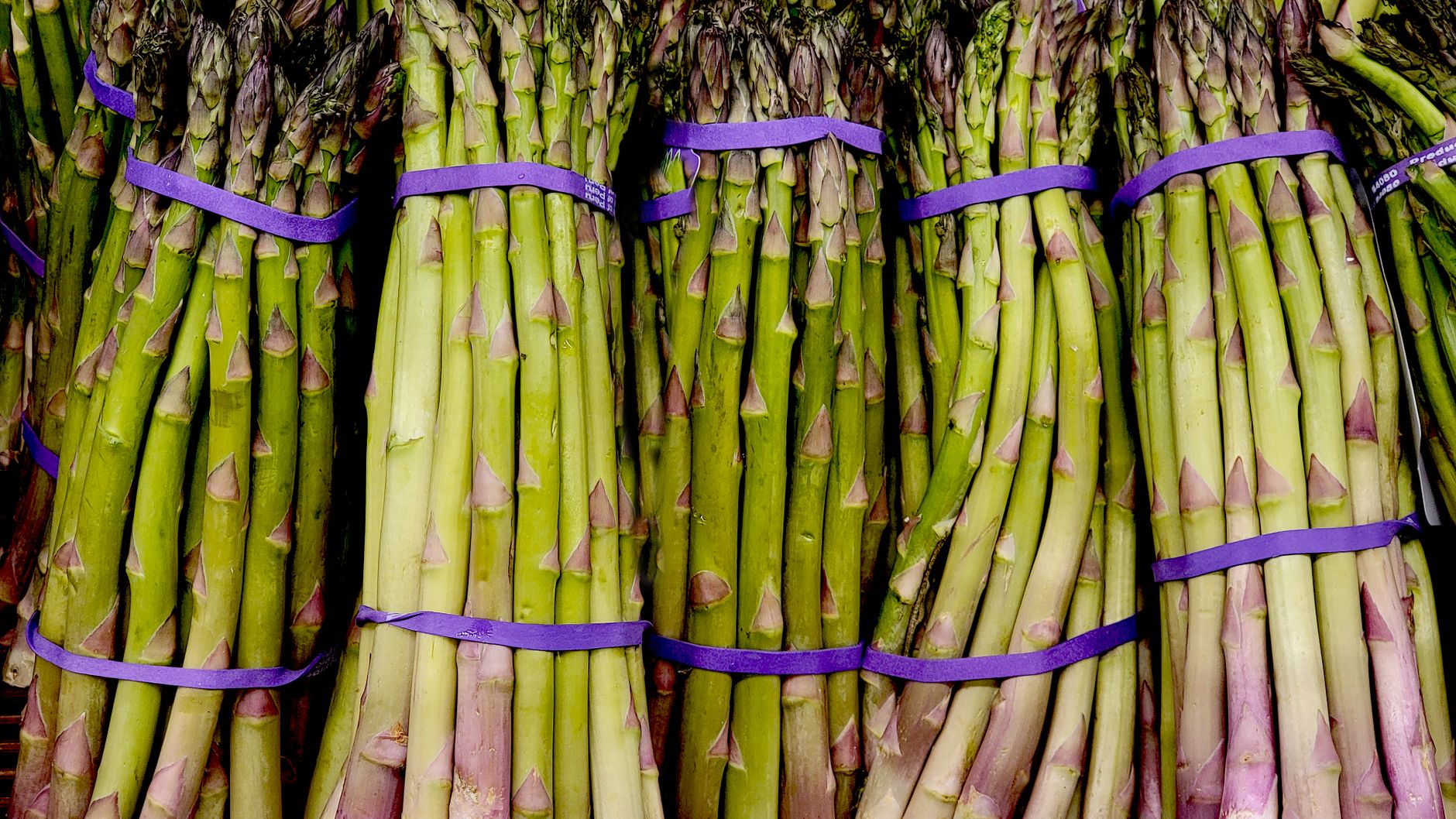
The Asparagus Along The Property Line
The tiller was still ticking when I pulled into my driveway.
An engine does that for a minute or two after it is shut off, a small hot tick, tick, tick, like a clock running down. I heard it through my open car window before I understood what I was looking at.
I had worked a twelve that day, seven to seven on the medical floor, and I drove home with the window down to blow the hospital out of my hair. It was the last week of April in west Michigan. The light was low and gold, and somebody up the road was burning brush.
My house and the house I grew up in sit side by side at the end of Maple Road, where the town quits and the cherry orchard starts. Forty feet of grass between them. You can stand at my kitchen sink and see straight into my mother’s back yard.
I still called it that. My mother’s back yard.
That evening there was a white pickup in it, with a trailer, and a man in a green cap. And behind him, where the bed had been, the ground was black.
Twenty feet of it, turned over like a field ready for seed. There were wooden stakes at the corners of a big rectangle, and pink string pulled tight between them.
I sat in the car with my hands on the wheel.
I am a nurse. I have stood in a great many doorways, and I know the difference between a thing that can still be stopped and a thing that is already over. You learn to see it before you are all the way into the room.
This was already over.
I got out. I did not slam the door. I walked across the grass in my scrubs and my hospital clogs, and the man looked up and smiled at me the way a person smiles when he has finished a job and it has gone fine.
“Evening,” he said. “You the sister? I’m Benny.”
He was coiling a tie-down strap around his elbow and his hand. He was about fifty, sunburned already in April. “We’ll be back at seven with the skid steer. Dig her out to eight inches, lay the stone, and she’ll have pavers going in by Thursday. Sixteen by twenty. It’ll be real nice.”
“What was in that ground?” I asked him.
He glanced back at it. “Nothing much. Sod, mostly. Then that old weed patch in the middle. Tough stuff, whatever it was. Roots like rope. I had to make four passes.”
Four passes.
“I broke it all up so the boys can shovel it clean in the morning,” he said. “Saves the machine tearing up her lawn.”
He was not wrong to call it what he called it. He was a man with a work order.
And in April, an asparagus bed looks like nothing at all.
That is the part I have had to live with. All summer the ferns stand five feet tall and feathery, and in the fall they go gold. Then in March you cut the dead stalks off at the ground and rake the bed clean, so the new spears can come up through bare soil.
I had done that myself, five weeks earlier, with my mother’s loppers and my mother’s rake, and stood back and admired how tidy it looked.
I had made it look like nothing.