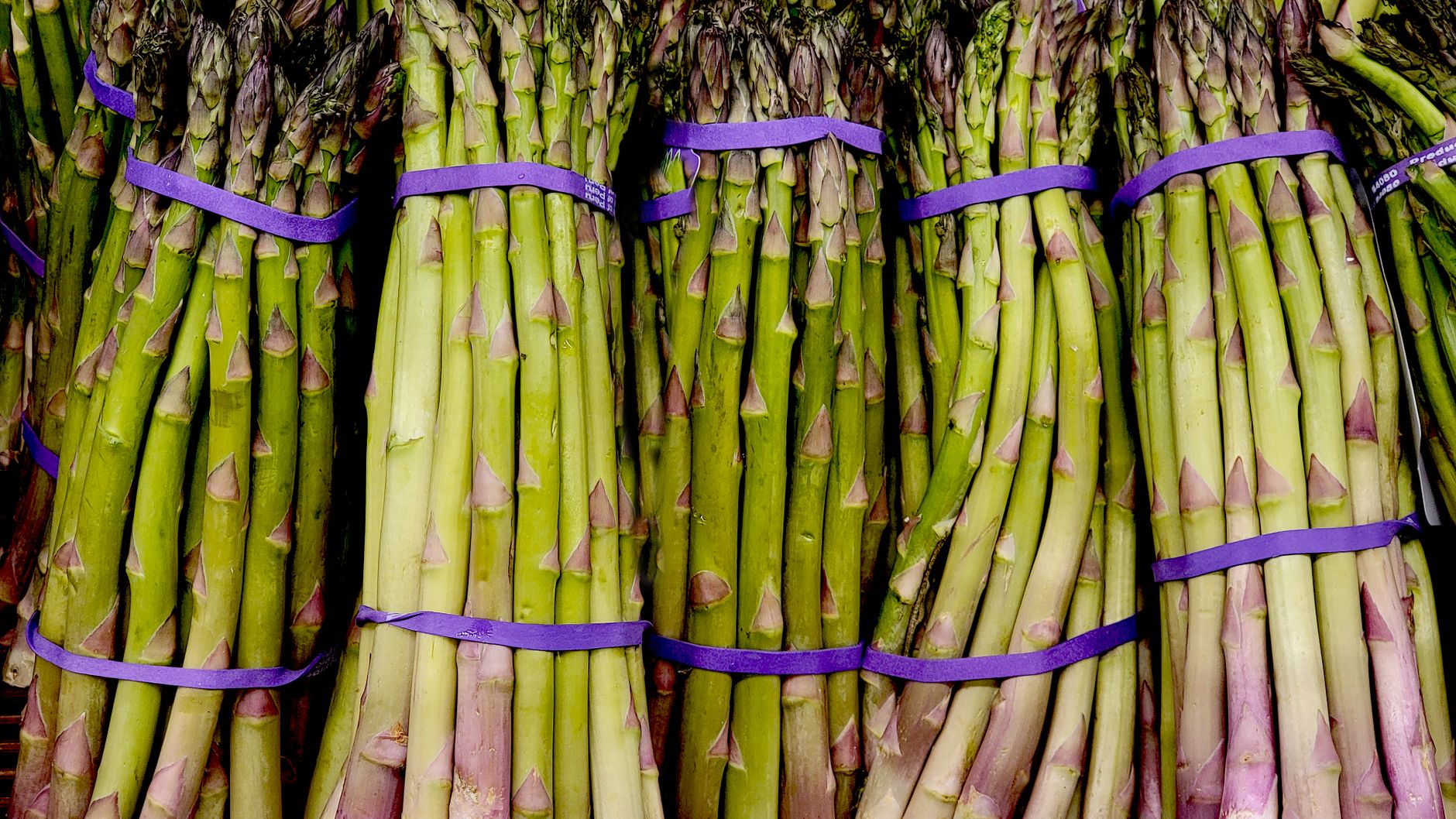
The Asparagus Along The Property Line
Chad told her to put it wherever she pleased, out back, as long as she stayed off the septic field. The septic field takes up the whole north side of that yard. The south side slopes. That leaves one flat, sunny piece of ground behind my mother’s house, and my father had found it forty years before she did.
Nobody told Kristin what was under it. Not Chad, who assumed she meant the spot by the garage. Not me, who assumed everybody alive knew. She walked out there with Benny and saw a rectangle of bare dirt with some dry stubble in it and a few dandelions, and she said, right there, that’s where the sun is.
And I was nineteen miles away with my phone in a locker, hanging a bag of antibiotics.
By the time anyone could have said one sensible sentence to anyone, Benny had made four passes.
I stood at the edge of the string and looked at the dirt.
It was beautiful dirt. That was the awful thing. Forty years of my mother’s compost, black as coffee grounds on top of our yellow sand. And sticking up out of it, everywhere, were roots.
Asparagus roots are pale and thick as a pencil and as long as your arm, and they grow out from the crown in every direction, like the legs of a spider. A crown that has been in the ground forty years is as big around as a dishpan. The tiller had gone through them like a mixer through dough. There were pieces of crown the size of my fist, turned up white side to the sky.
They looked like fingers. I am sorry, but they did.
“You’re hauling this off?” I asked Benny.
“Crew will load it in the morning. There’s a fella takes our fill dirt.”
“May I have what’s in it? The roots?”
He looked at me a second, a woman in scrubs with her badge still clipped on, asking for his trash.
“Ma’am,” he said, “take all you want. Saves me the weight.”
“Thank you,” I said.
And I meant it. He had given me the night.
He left the tiller where it stood, for the morning, and drove off with the trailer rattling.
I went home and changed my scrub pants for jeans. I did not bother with the top. I got two five-gallon buckets out of my garage, and the garden fork that had been my mother’s, the one with the split handle my father had wrapped in black tape.
Then I stepped across the pink string and got down on my knees.
It was a quarter to eight. I had maybe fifty minutes of light.
You cannot dig a tilled crown with a shovel. You will only cut it again. You go in with the fork from the side, and then you go in with your hands, and you feel for the hard knot of the crown itself, and you lift it and all its roots up through the loose soil the way you would lift a sleeping child’s head to slide a pillow under.
What you are looking for is buds. On the top of the crown there are little pointed nubs, pale and tight, no bigger than the tip of your smallest finger. Each one is a spear that has not happened yet. A piece of crown with buds and a hank of roots will live. A piece with no buds is only roots.
Buds, in the bucket. No buds, in a pile.
I had been on my feet since six that morning. The ground was cold and damp right through my jeans. I did not feel any of it. I was not sad yet, either, if I am honest. I was only working. It was the same place I go on the floor when things go wrong, a calm, narrow place where there is nothing but the next thing to do.