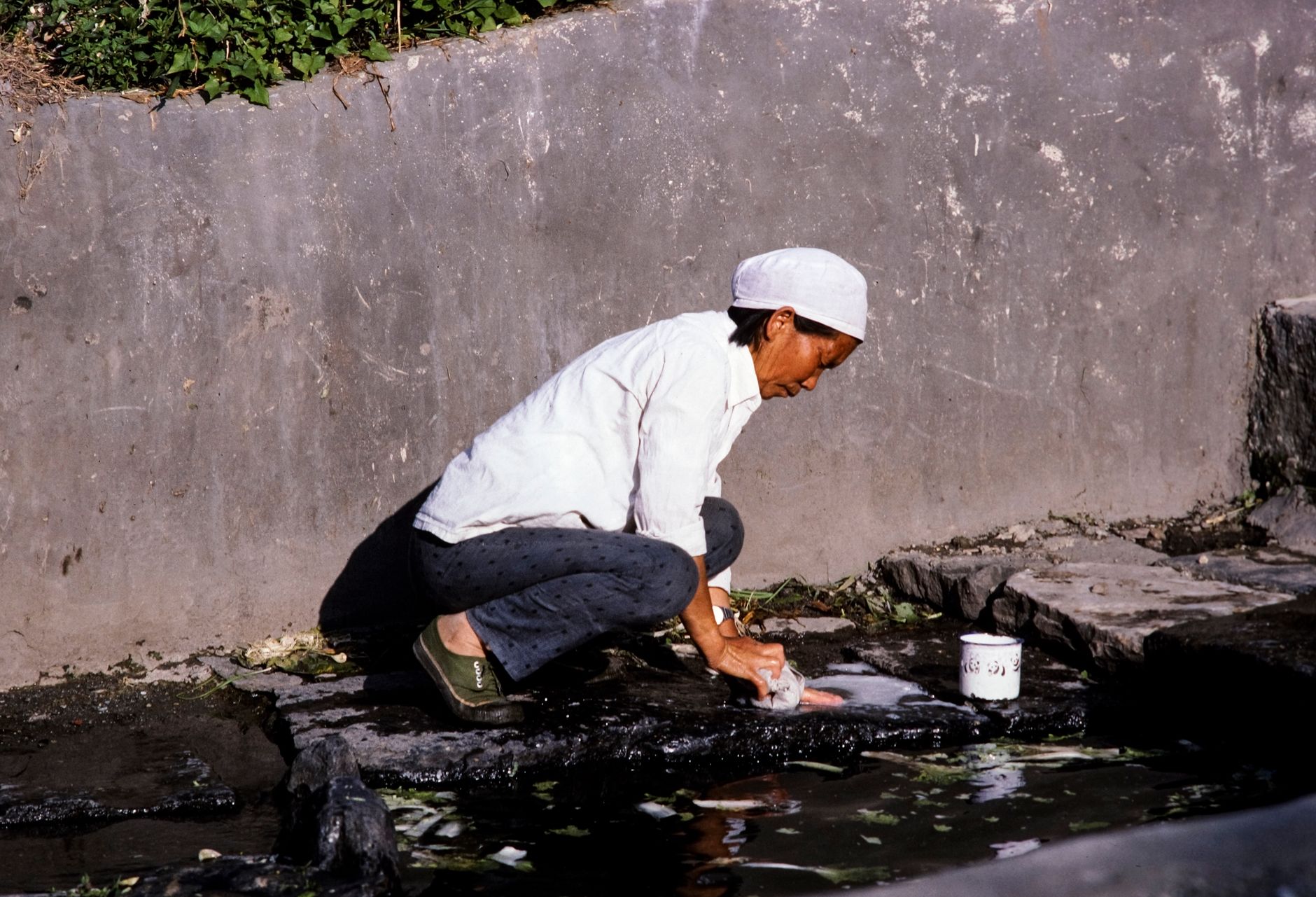
The Maid Out Back Was My Mother
“The maid’s out back.”
That was the whole sentence. He did not even look at me when he said it.
He had the front door open about a foot and a phone pressed to his ear, and he was wearing a pale pink golf shirt with a little crest on the pocket. He looked at my ball cap, my wrinkled airport clothes and the rolling suitcase behind me, and he decided what I was in about one second.
I had said, “Hi, I’m looking for Helen.”
That was all I had said. I had practiced a hundred versions of that moment on the flight from Abu Dhabi to Chicago and on the little plane from Chicago down to Springfield, and in every one of them it was my mother who opened the door.
It was not my mother. It was a man I had only ever seen in photographs.
“Around the side,” he said, and he pointed with two fingers, the way you point a delivery driver toward the garage. “Gate’s open. Tell her the ice needs to be in the coolers by noon. And she’s still got the windows.”
Then, into the phone, in a different voice altogether, “No, no, Gary, I’m here, go ahead.”
And he shut the door.
I stood on the front step of the house I had bought and looked at the brass knocker.
I had picked that knocker out myself. I picked it from a picture on a screen at two in the morning in a staff apartment in Riyadh, nine time zones away, because it was shaped like a little pineapple and my mother had always said a pineapple on a door meant company was welcome.
Four hundred and twelve thousand dollars. Four bedrooms, on the eleventh fairway of Stone Ridge, twelve miles outside Springfield, Missouri. Six years of contract nursing in places where the heat came up off the parking lot like an open oven. Six years of double shifts and night differentials and Christmases worked for the holiday pay.
I had bought it for a woman who cleaned other people’s houses for thirty one years.
The maid’s out back.
I knew who he was, of course. He was Trent. He was my sister Jessica’s husband. They had married four years earlier at a winery near Branson, and I had watched eleven minutes of it on a phone propped against a water glass before the connection dropped.
He did not know me because he had never once laid eyes on me in person, and because the Rachel in my mother’s picture frames was thirty years old with long hair and a tan, and the woman on his step was thirty six with a short haircut, no makeup, and two days of travel on her.
I could have knocked again. I could have said my name.
I have thought about why I did not, and the honest answer is that something cold and steady came over me, the same thing that comes over me when a monitor starts to alarm and everyone else in the room starts to talk too fast. I have been a nurse for fourteen years. When things go wrong, I get quiet and I look.
So I said, “Thank you,” to a closed door.
I left my suitcase standing on the step, and I walked around the side of the house.