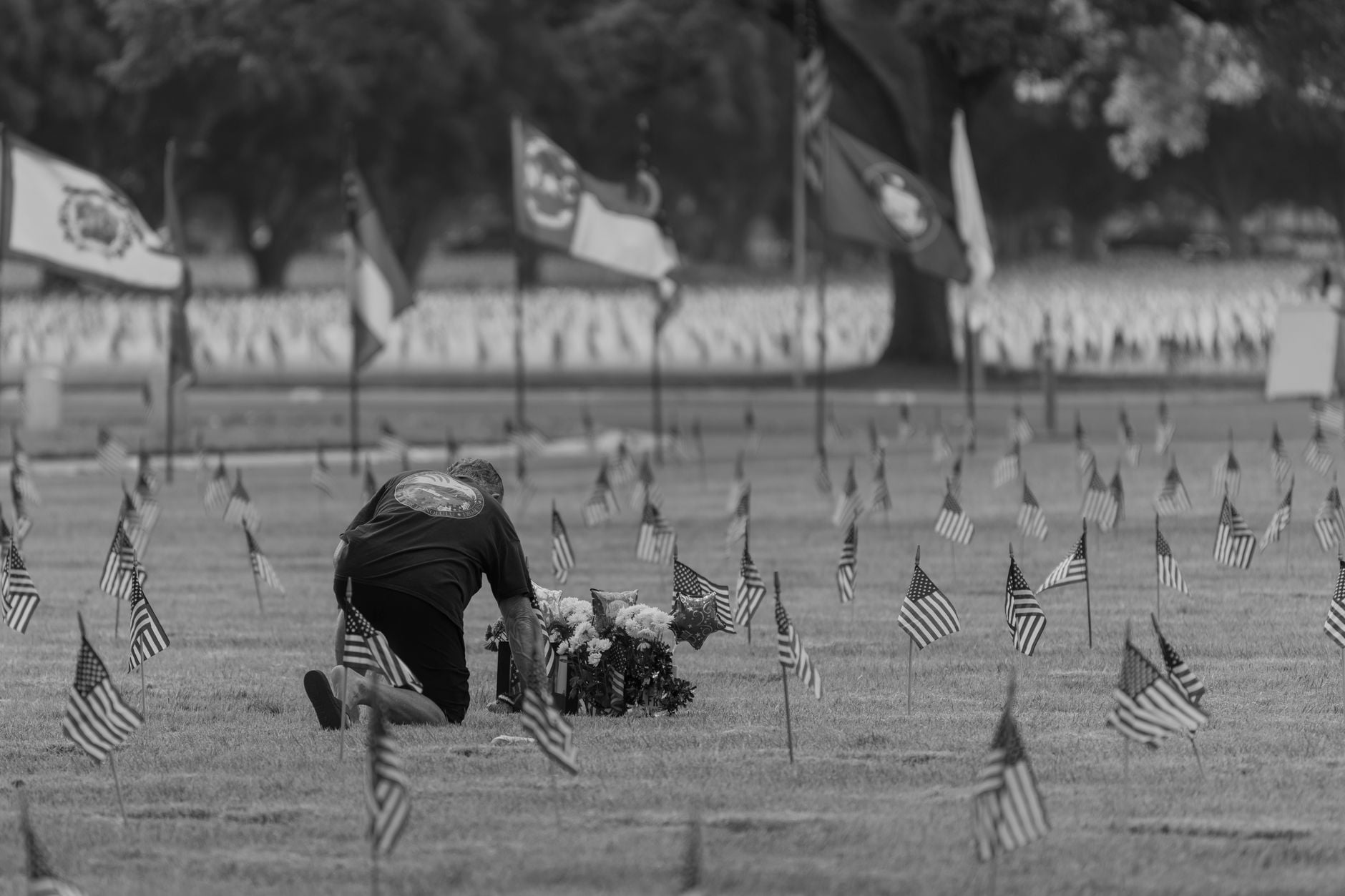
The Man Who Kept Corey’s Grave
The drawer
I made them come to my house for dinner. I had a ham in the freezer and green beans in jars.
It was nearly dark when they left. I stood on the porch and waved the gray truck out of sight. And then I walked back inside and went straight to the kitchen drawer under the dish towels.
I pulled it open.
There they were, four plain white envelopes, with the return address in Nashville that I had never been able to read twice. The first was seven years old. The paper had yellowed at the edges.
I sat down at the table, where the dinner plates still waited to be washed, and opened the oldest one.
Dear family of my donor, it began, in that careful square print.
I don’t know your names and you don’t know mine. But I wanted you to know that a man you have never met is alive because of what you gave. I was dying. I am not now. I walk every morning. I held my grandchild last week.
I know your loss is greater than my gain. I would trade nothing to take that away from you. But I promise you I will be worthy of the gift. I will be careful with it. I will try to use it to be the kind of man your son would be glad to have lived inside.
I do not want to take up your grief, he wrote. I want only to carry him well.
I put my head down on the kitchen table, on the letters, beside the sugar bowl.
Seven years I had kept those in a drawer. I had been too afraid of what they would say. Too afraid they would ask something of me I did not have.
They had asked nothing. They had only said thank you, four times, to a woman who was not listening.
What Corey told me
There was one more piece I owe you, since I promised I would come back to it. It is the thing I left out.
On the second morning at the hospital, the woman in the gray cardigan asked me whether I knew if my son had ever made a decision about donating his organs.
I said no. I said we had never talked about it. I said I was not ready to talk about it now.
She said, very gently, “Mrs. Lassiter, he did decide. He signed up when he renewed his driver’s license at nineteen. I have it in his file. It says yes.”
I did not believe her. I asked to see it. She showed me a photocopy of his license, and the little red heart in the corner, and his signature, the loopy scrawl he made when he was in a hurry.
I asked for until noon. I walked to the hospital chapel and sat alone and argued with God. At last I signed, because the license said it was what he wanted. But for seven years, I have wondered if I did the right thing, or if I was only a coward who let strangers have my child because it was easier than saying no.
It took a man in a feed-store cap, kneeling in the dew with a pair of taped-up shears, to answer me.
It took him saying, “I walk every morning.”
I knew then. Corey had not been taken. He had given. He had made a choice, at nineteen, in a line at a county clerk’s window, and had never mentioned it to me, because he knew what I would say. And his choice had added seven good years, so far, to the life of a man who, it turned out, would spend them kneeling at his grave.
I think Corey knew exactly what he was doing. I think he was always more generous than I.
Ohhhhhh my goodness 😇 This one blew up every single feeling inside me. It is Amazing😇 I Love it so very much ❤ ❤❤❤❤❤❤❤❤❤❤❤❤❤