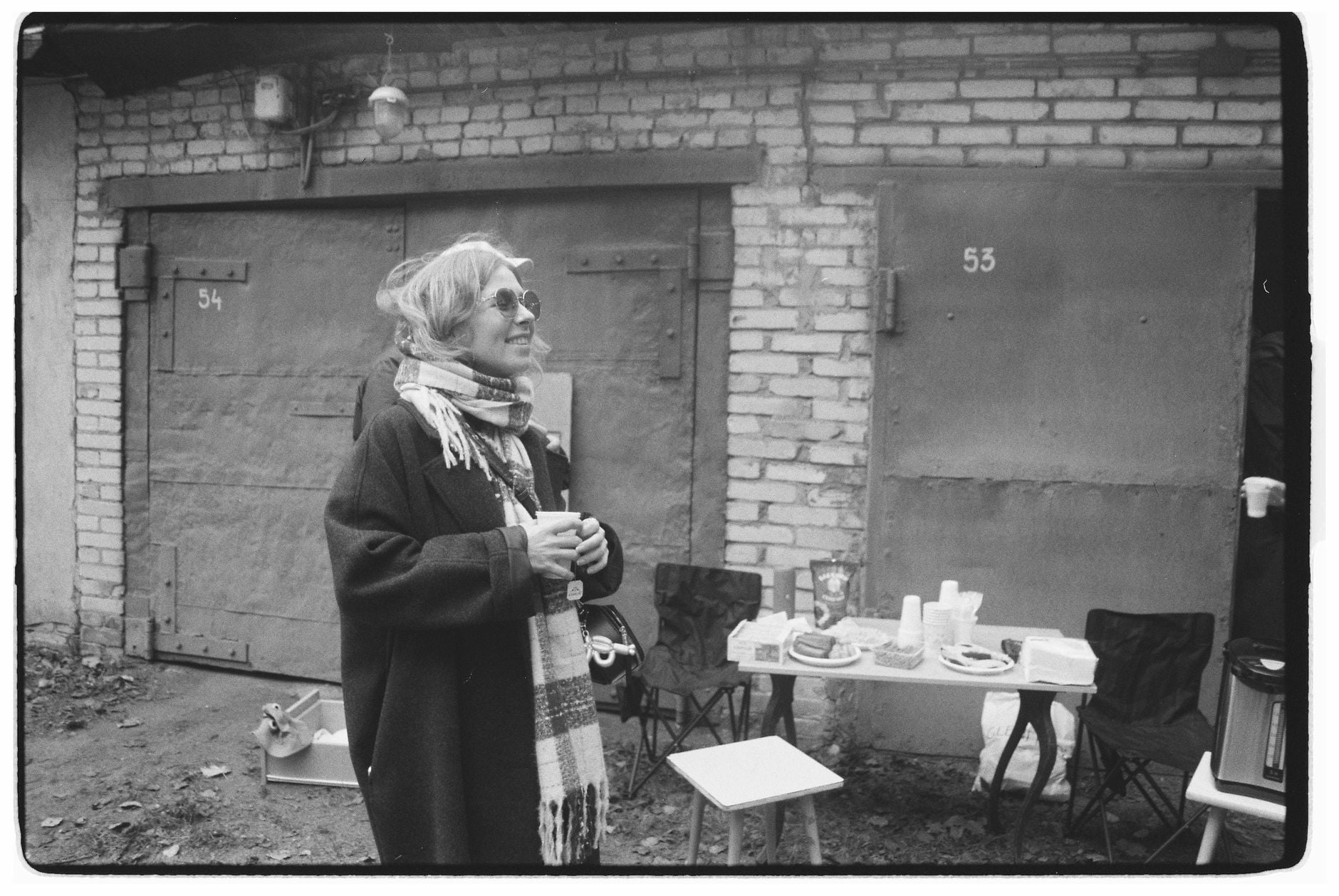
The Little House Next Door
Three weeks
I will tell the truth about those three weeks, because I am not the hero of them.
Curt and I were polite to each other. We were more polite than we had ever been. He said please pass the salt and I said here you go, and we talked about the weather and the harvest and whether the Johnson boy would get his beans off before the rain, and we did not say one word about his mother fifty feet away.
He did not go to her house. Not once. She asked for him every day. She would stand at her kitchen window in the morning and look at our driveway, and if his truck was still there she would say to me, “Is Curt sick? Tell him I made date bars.”
I took the date bars home. I put them on the counter. He ate them at night when he thought I was asleep. I could hear the foil.
Some nights I lay awake and wondered if I had done the right thing. I had not taken a dollar. I had kept every receipt. But I had taken something from my husband, a hope, a way out, and I had done it without telling him first.
Being right about the money did not make me right about everything.
Then, in the second week of October, the realtor called. Curt took the call on the porch.
Through the window I could see him standing in the cold in his quarter-zip with his hand on the back of his neck.
He came inside and sat down at the kitchen table.
“Lake lot sold,” he said. “Couple from the Cities. Cash.”
“I’m sorry,” I said, and I was.
“It’s fine,” he said, which meant it was not fine. Then he went and lay down on the couch at four in the afternoon with his boots still on, which I had never seen him do in his life.
That was the consequence. Nobody had to hand it to him. He lost the lot he had wanted for thirty years, and he lost his sleep, and for three weeks he lost most of his wife, because I could not reach him and he would not let me try.
I did not gloat. There was nothing to gloat about. I went into the bedroom and sat on the edge of the bed next to that little green light and listened to his mother hum while she washed her supper dish, and I prayed the same thing I had prayed every night that month.
I prayed, Lord, don’t let me have broken him to save her.
Two-ten in the morning
It was a Thursday night, near the end of October. The first hard frost had come and gone, and the leaves were mostly down, and the furnace ran all night.
I woke up because the monitor crackled. It does that when the sound kicks on, a little hiss and a click. I looked at the clock. It said 2:10.
When I rolled over, Curt was standing in the bedroom doorway in his t-shirt and his sweatpants. His hair was flat on one side from the couch cushion.
He had heard it from the living room. I do not know how. Maybe he had been lying awake listening for it every night for three weeks.
“Turn it up,” he said.
His voice was not his. It was rough and young, like something had scraped it.
I reached for the little dial on the side of the monitor. He crossed the room in three steps and got there first.
He turned it all the way up and sat down on the edge of the bed, on my side, holding that little white screen in both of his big hands.
On the screen I could see Helen sitting up in bed in the dark. The camera made her gray and grainy.
Her white hair was standing up on one side. She was holding her pillow in her lap the way you hold a baby.
And she was singing.
It was quiet and thin and a little off key, and it was in Swedish. I did not know the words. I knew the tune.
Every Lutheran in Minnesota knows that tune. It was “Children of the Heavenly Father,” the old hymn, the one they sing at baptisms and funerals both.
Helen sang it slow, rocking the pillow, and when she got to the end of the verse she started over.