Seventy Regulars Came to My Wedding
When the song ended, Bud pressed something into my palm. It was a quarter. A 1964 quarter, the last year they made them out of silver.
“Last one,” he said. “For the can.”
Then he let go and went back to his table, and before I could even wipe my face, Dale Fisher was standing there with his hand out.
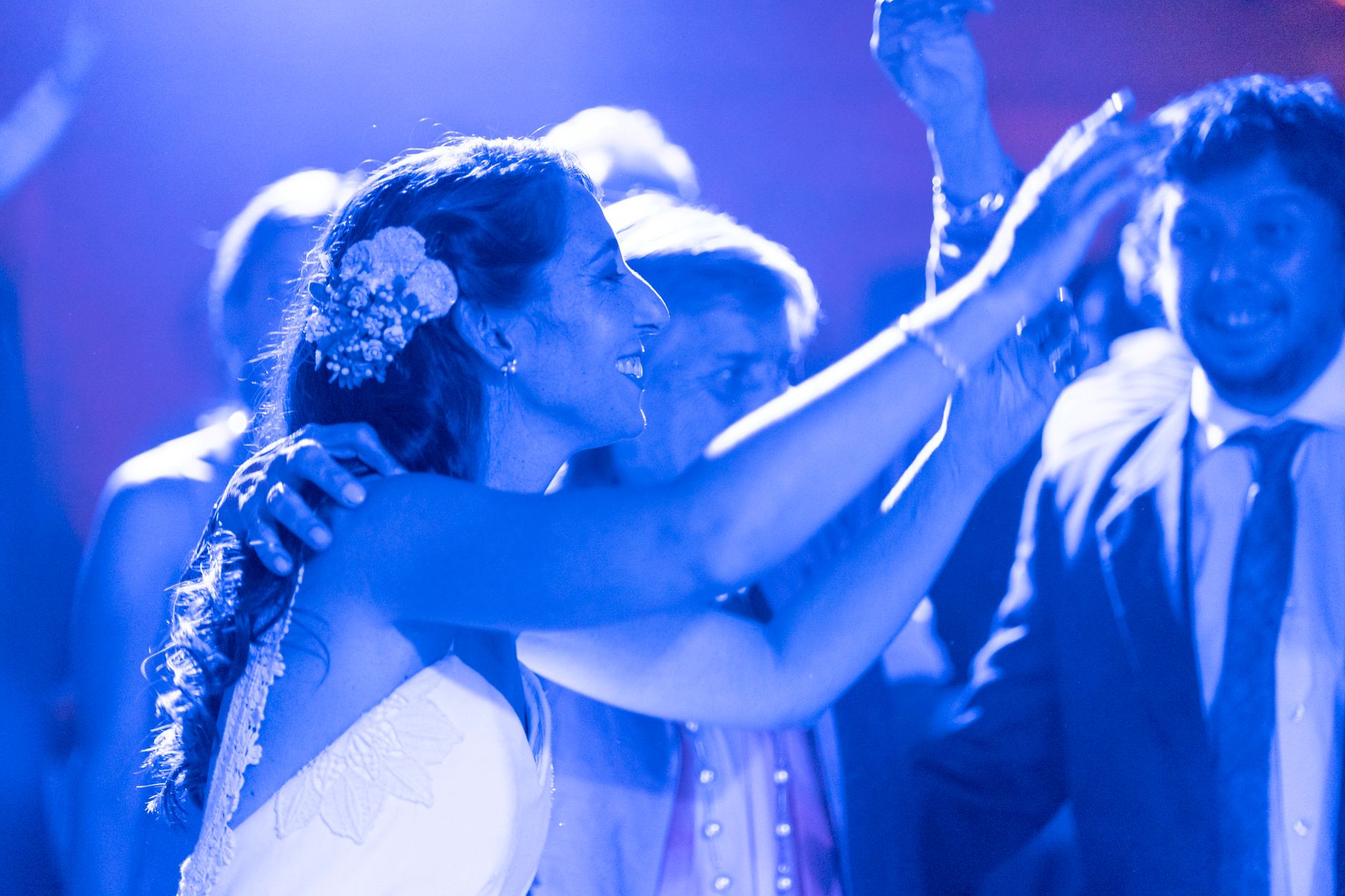
After Dale came Wes Brandt, who danced like he was still driving a bus, all wide careful turns. After Wes came both Bauer twins at once, because neither of them would let the other go first, so I danced with both of them in a sort of three-person shuffle while the whole room laughed.
Tyler stood at the edge of the floor in his gray vest, laughing so hard he had to hold onto a chair.
Every time one of the old men handed me off to the next one, he raised his cup of punch to them.
They kept lining up. Men who had pulled stools up to the liars’ table. Men from the fish crowd, with their wives watching and shouting advice from the tables.
Somebody’s hearing aid whistled during a slow song and nobody cared at all.
It got dark slowly, the way it does in June out there, the sky going pink and then purple over the wheat.
The string lights got brighter as the windows got dimmer. By a little before nine, the kids were running in circles in the corner and the old folks were on their second pot of coffee, and Bud had come back and asked for one more dance.
“I’m eighty-two,” he said. “I get two.”
So that is where I was, out in the middle of the floor with Bud Hoffman, when the door at the end of the hall opened and let in the last of the evening light.
Vern Atchison stood in the doorway.
He still had his white apron on. It was tied under his dark zip jacket like he’d pulled the jacket on in the car and forgotten what was underneath it.
In one hand he was holding a big manila envelope. In the other he had a pie, balanced flat on his palm like a waiter’s tray.
The room didn’t go silent all at once. It went quiet table by table, starting near the door and rolling toward the back, until all you could hear was the song and the kids and the coffee maker gurgling in the kitchen.
Bud stopped dancing. He didn’t let go of my hand.
I saw Tyler start to move, and I saw my dad put a hand on his arm, and Tyler stopped.
Vern looked at the liars’ table. Then he looked at me. Then he walked across the floor of that community building, past a hall full of people who had all eaten at his counter, with his apron strings hanging down behind his jacket.
He stopped in front of me and Bud. Up close, he looked older than I had ever seen him. His eyes were red at the rims.
“Kaylee,” he said.
“Hi, Vern.”
He held out the envelope. It was one of the manila envelopes from the safe, with my name on it in his square printing, the same as the calendar.
I could see where it had been opened and folded shut again.
“Six hundred and forty,” he said. “Arlene counted it twice. She wouldn’t let me out of the house until she had.”