Seventy Regulars Came to My Wedding
The chicken-fried steak was breaded and ready in the cooler. Vern had called in his nephew from Concordia to run the fryer.
Nobody came in.
Not the farm families. Not the fish crowd. Not the liars’ table. The nephew told somebody, who told somebody, who told me, that at six o’clock Vern was standing at the front window with his arms crossed, looking down Main Street at the cars parked four deep in front of the community building.
I did not know that yet. And I am glad I didn’t, because I think it would have spoiled something.
We ate brisket and scalloped potatoes and too many lemon bars. The Bauer twins’ wives cut their sheet cakes side by side, and the room voted, and it was a tie, which is the only right answer in a town that size.
Wes Brandt’s wife’s pickled beets went untouched except by Wes Brandt.
My dad gave a toast that was three sentences long. He said he had never been prouder of me than the week I didn’t do the easy thing.
Then he sat down, and my mom cried, and he pretended not to see.
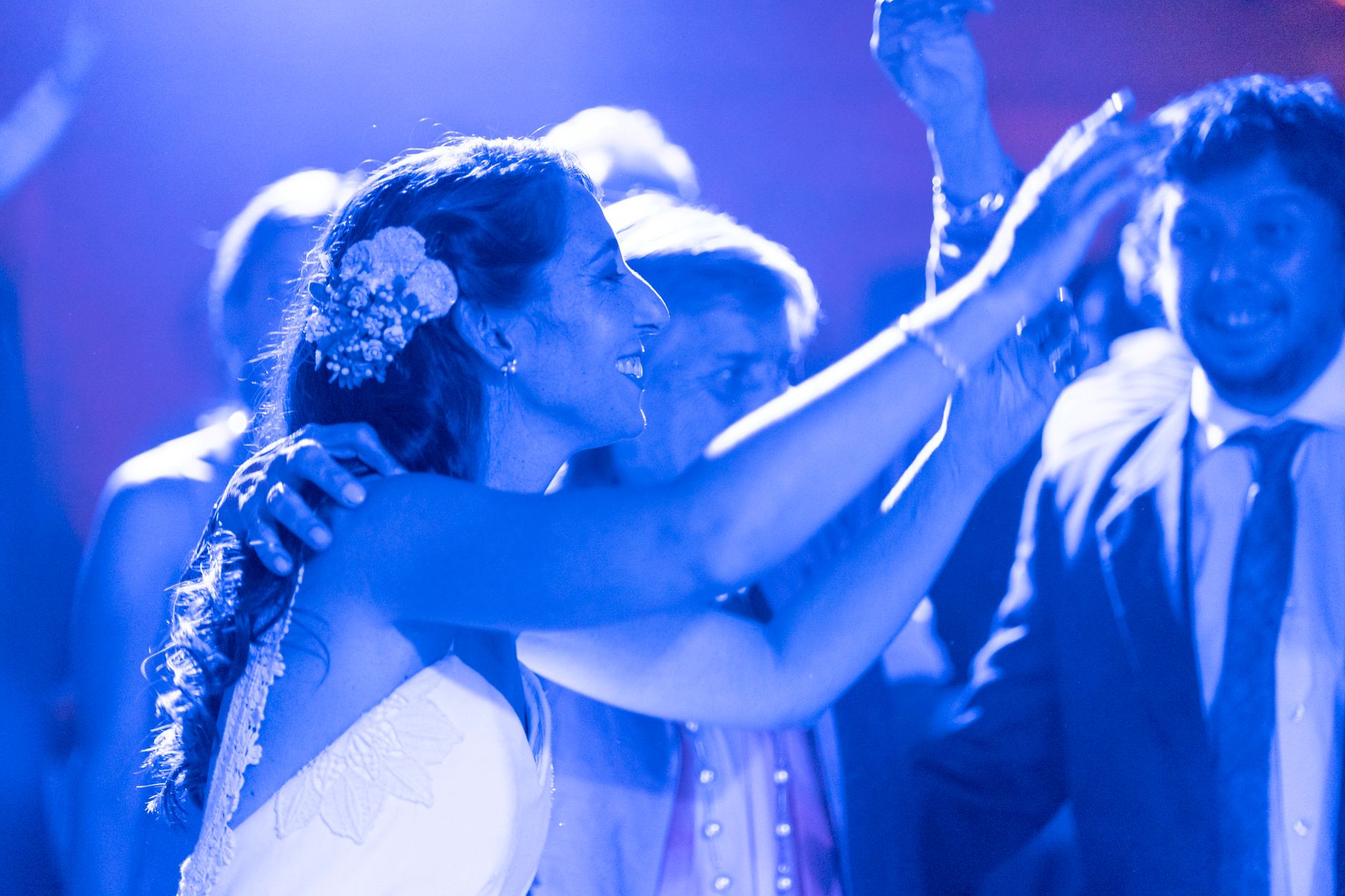
Tyler and I had our first dance to an old George Strait song. Then my dad danced with me. He stepped on my foot twice, which is two fewer than he managed at my cousin’s wedding.
When the song ended and my dad walked me back toward the edge of the floor, I heard chairs scraping at the liars’ table.
Bud Hoffman was on his feet. He stood there with one hand on the back of a chair, getting his balance, the string lights shining on his bolo tie.
Then he walked across that floor, slow and straight, and he stopped in front of me and held out his hand.
“I’ve been waiting nine years to ask you this, Miss Kaylee,” he said. “May I have this dance?”
I took his hand. His fingers were dry and thin and stronger than I expected, a farmer’s hand even at eighty-two. My cousin’s husband from Belleville, who was running the music, had the sense to put on a slow one.
We barely moved. Bud mostly shifted his weight from one foot to the other and I followed. He smelled like Old Spice and coffee, the same as he had every morning for nine years.
“Marlene and I danced to this one at our wedding,” he said into my ear. “Nineteen sixty-four. In this same building, before they put the new floor in.”
His wife had passed four years before. I remembered the week it happened. He didn’t come in to the cafe for six days, and on the third day Arlene sent me to his house with a plate of biscuits and gravy and a thermos of coffee.
He met me at the door in his socks and took the plate and couldn’t say anything at all.
“You remember those biscuits?” he said now, like he’d read my mind.
“I remember,” I said.
“I never thanked you for that,” he said. “I couldn’t. I’ve thought about it every morning since. You never once let my cup go empty. Not one time in nine years.”
That was when I lost it. I put my forehead on that old man’s shoulder and cried into his western shirt, right there in front of the whole hall, and he just kept swaying and patting my back with his flat farmer’s hand.