The Two Miles I Pushed My Son
A boy who never goes anywhere. That was the thing Chad had said, standing in my driveway, about a boy who had spent two weeks becoming a Frenchman so he could stand still in a gym and wait to be brought to life.
I did not sleep much. I lay there and I did the arithmetic of it. No bus. No van. No Dave. The shop closed until Tuesday. A neighbor’s car cannot take the chair and cannot take Eli, who does not transfer easy for anybody but me, and it was going to be first light before I could even knock on a door.
And under all of it, quiet and hard, the sentence. He won’t miss it.
My boy was going to miss things. The chair had already decided that for him, a hundred small ways, and I had made my peace with the chair because I had to. But I had not made my peace with a grown man deciding for my son which things he was allowed to miss.
Somewhere before morning I quit doing arithmetic.
He had school. We had no van. So we would go to school.
Monday morning
I got Eli up at six. I made him oatmeal and I did not tell him anything was wrong, because a child reads your face before he reads your words.
“Is Dad fixing the van today,” he asked. He had heard the grinding Sunday. Children hear everything.
“Dad’s in Texas, bud. The van’s got a hurt lift. We’re going to do something different today.”
“Am I staying home?”
“No sir. You’ve got a museum to be in.”
I dressed him warm because the mornings had turned. A sweatshirt, his good jacket, the knit cap his grandma Judy had made him. I set the oatmeal can diving tank across the arms of his chair where he could hold it, and I put his backpack on his lap with the speech folded in the front pocket.
Then I wheeled him out onto the porch and down the ramp Dave had built, and I pointed him at the road.
“Where’s the van,” Eli said.
“We’re walking,” I said. “I’m walking. You’re riding. It’s two miles. You game?”
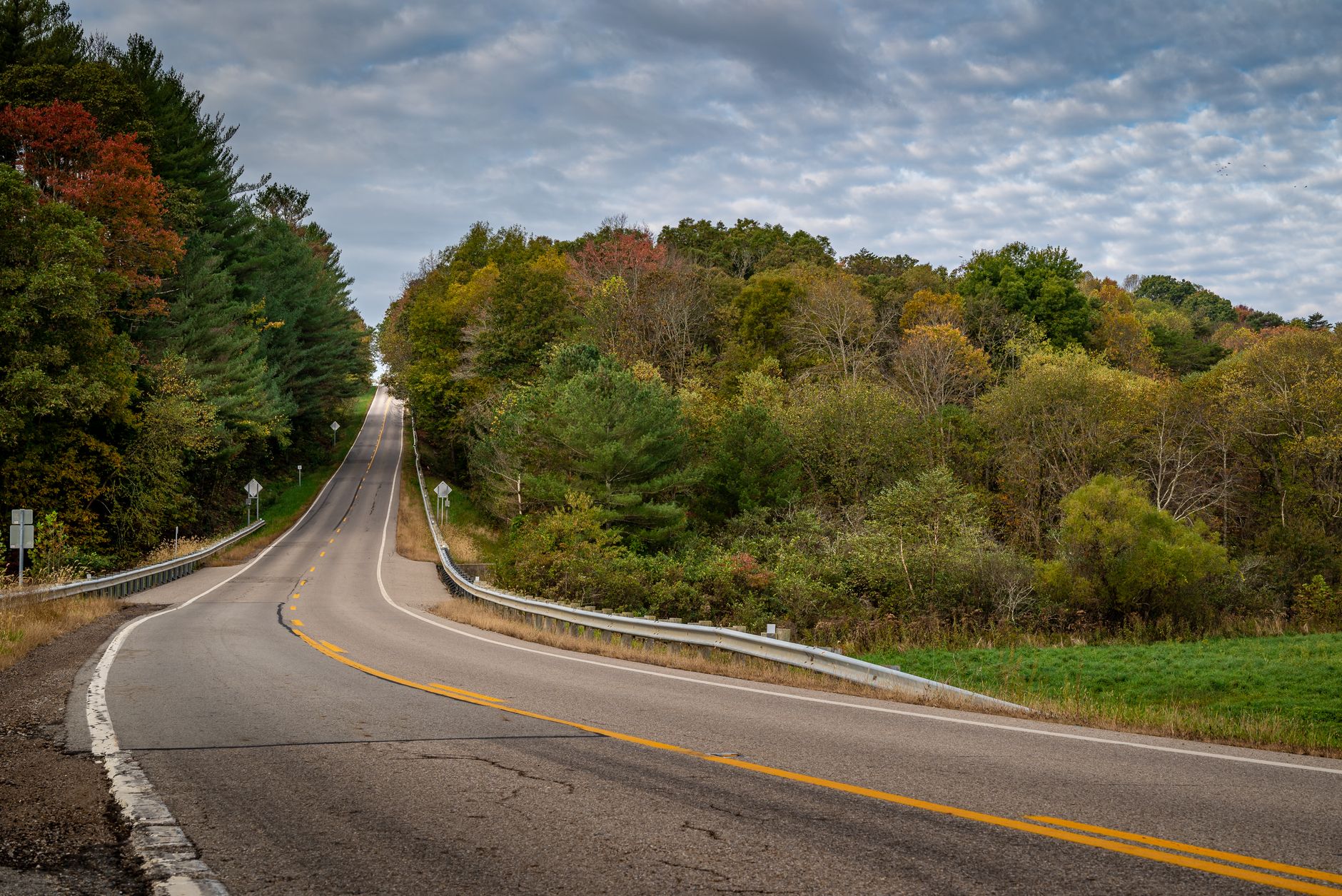
He looked up the long gravel of our drive to where it met the blacktop of the county road, and then he looked at the blacktop running off toward town, flat and straight between the bean fields, the fog still lying in the low spots.
“Two miles,” he said.
“A little under.”
“On the road.”
“On the side of the road. The shoulder. I’ll be right behind you the whole way.”
He was quiet a second. He is a smart boy, and smart boys know when a thing is not normal.
“People are going to see,” he said.
And there it was, the thing I had not let myself think about. My boy was not worried about the distance or the cold. He was worried about being looked at.
I knelt down by the arm of his chair so we were eye to eye.
“Eli,” I said. “You are going to school. That is the only part that matters. Let them look.”