The Quilt I Made for Rosie
Rosie
“Do you want to hold her?” Kayla asked.
I said I did. Then I said, “Let me wash my hands,” because twenty-nine years in a school kitchen is not something you set down. When I came back out on the porch my knees were shaking like a newborn calf’s.
Kayla set the carrier on the swing. She unbuckled the straps and lifted her out, quilt and all, and put her in my arms.
I had not held a baby in thirty-four years. I thought my arms would remember, and they did, all at once. I tucked her head into the crook of my elbow before I even thought about it, and my hand went to the soft back of her neck.
She was heavier than I expected, with a round, warm weight like a loaf of bread just out of the oven. She smelled like milk and baby shampoo and the cold from the car. She had a fuzz of dark hair and gray-blue eyes, and she looked at me with that serious face babies make when they are deciding about someone new.
“Hello, Rosie,” I said. My voice cracked in half. “I’m your grandma Eunice.”
She looked at me. Then she looked at my glasses. She was five months old and a person of firm opinions, and she reached up with her whole fist and grabbed them, and pulled them crooked on my face.
Kayla clapped her hand over her mouth. Trevor made a noise that was half a laugh and half something else.
“She’s got a grip,” Trevor said, coming up the steps at last, his eyes red.
“She gets that from her grandfather,” I said. “He could open any jar in the county.”
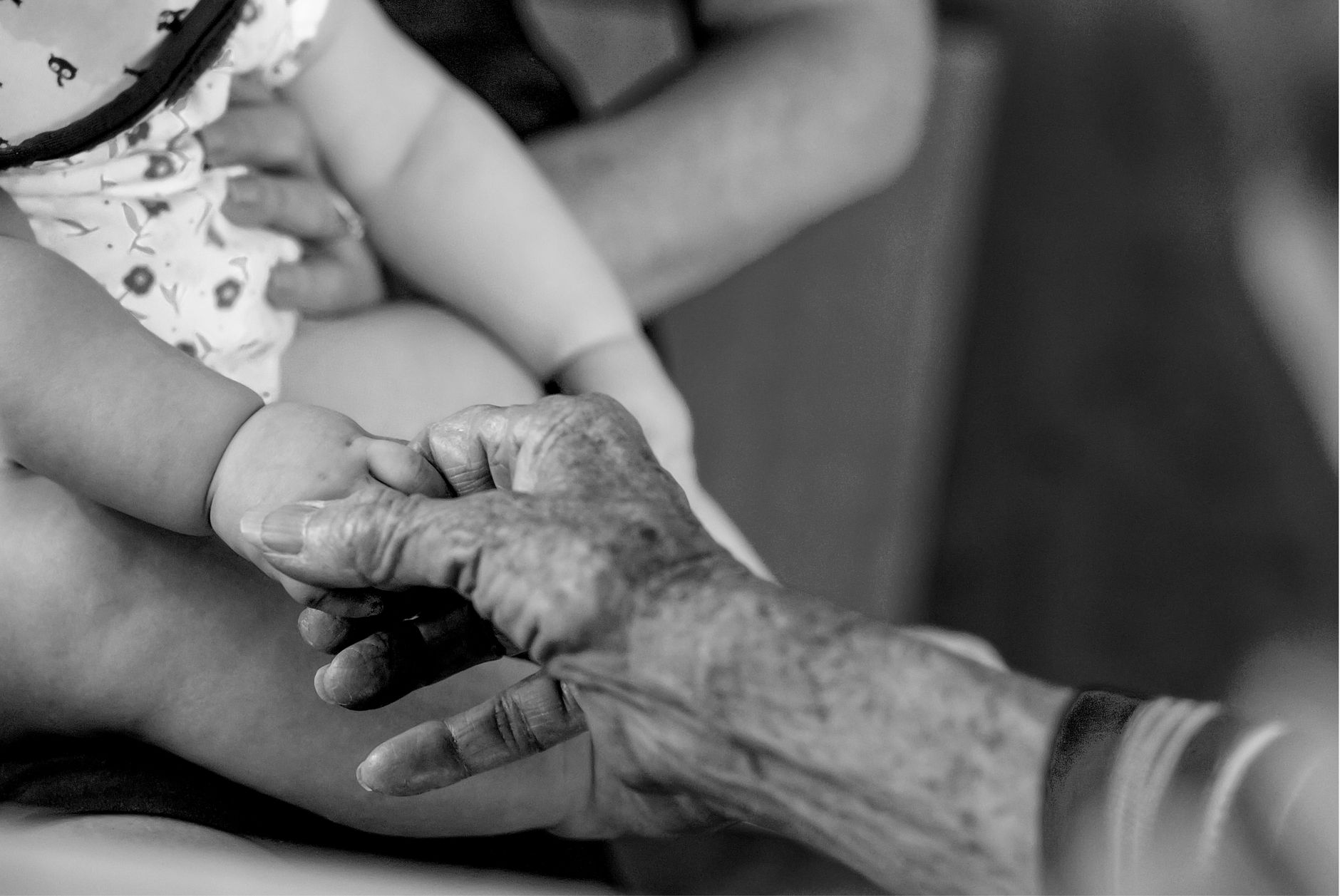
Then Rosie let go of my glasses and took hold of my finger instead, and held it hard, the way a person holds a railing on a staircase. And something in my chest that had been tight since the third Saturday in March let go all at once.
I sat down on the porch swing with her. I did not trust my legs. I said, “Your grandpa Walt would have given you his whole elevator,” and then I could not say another thing.
Nobody spoke for a long time. A breeze moved the dead zinnias, and the corner of the blue flannel showed at the edge of the quilt where Kayla had turned it up.
“She’s slept under it every day since it came,” Kayla said quietly. “She won’t nap without it. Mom says it smells like Trevor. I mean, like his old blankets. Like something that was already hers.”
“It was always hers,” I said.
The rest of the afternoon
We went inside, and I put the kettle on and an apple pie from the freezer in the oven. Kayla sat at my kitchen table and told me about the night Rosie was born. Trevor, it turned out, had gone down cold in the hallway at the sight of the epidural needle and been brought around with a paper cup of ginger ale.
“I did not,” Trevor said.
“You did,” said Kayla. “A nurse stepped over you.”
I laughed until I had to put the knife down.
Later I carried Rosie to the window and showed her the bird feeder. Cardinal. Chickadee. Junco. I told her that her grandpa Walt hung that feeder and fed those birds for forty years, and that she was welcome to feed them too.
Kayla watched me from the table with her chin in her hand.
“I’d like you to have Thursdays,” she said. “If you want. Mom already said Thursdays should be yours, before I could even ask. I’d bring her out here at eight, and Trevor can get her after school lets out.”
I turned around so fast Rosie startled. “I’ll take any day you give me.”
“And Sundays,” Kayla said. “After church. We’ll alternate, one week at Mom’s, one week here. I think you and Mom are going to have to learn to share the end of a table.”
“We’ve already begun,” I said. “She was very kind to me over coffee.”
“She told me I was a stubborn fool,” Kayla said, “and that it was Gene’s side of the family. She’s right about both.”
I looked at that young woman at my table, with her hair coming loose and her planner sticking out of her purse, and I thought, here is someone who was hurt and held on too long, and who turned around when she could have gone on. I thought, here is a daughter.
“Thank you,” I said. It was not enough. But it was the true word, and I let it stand.