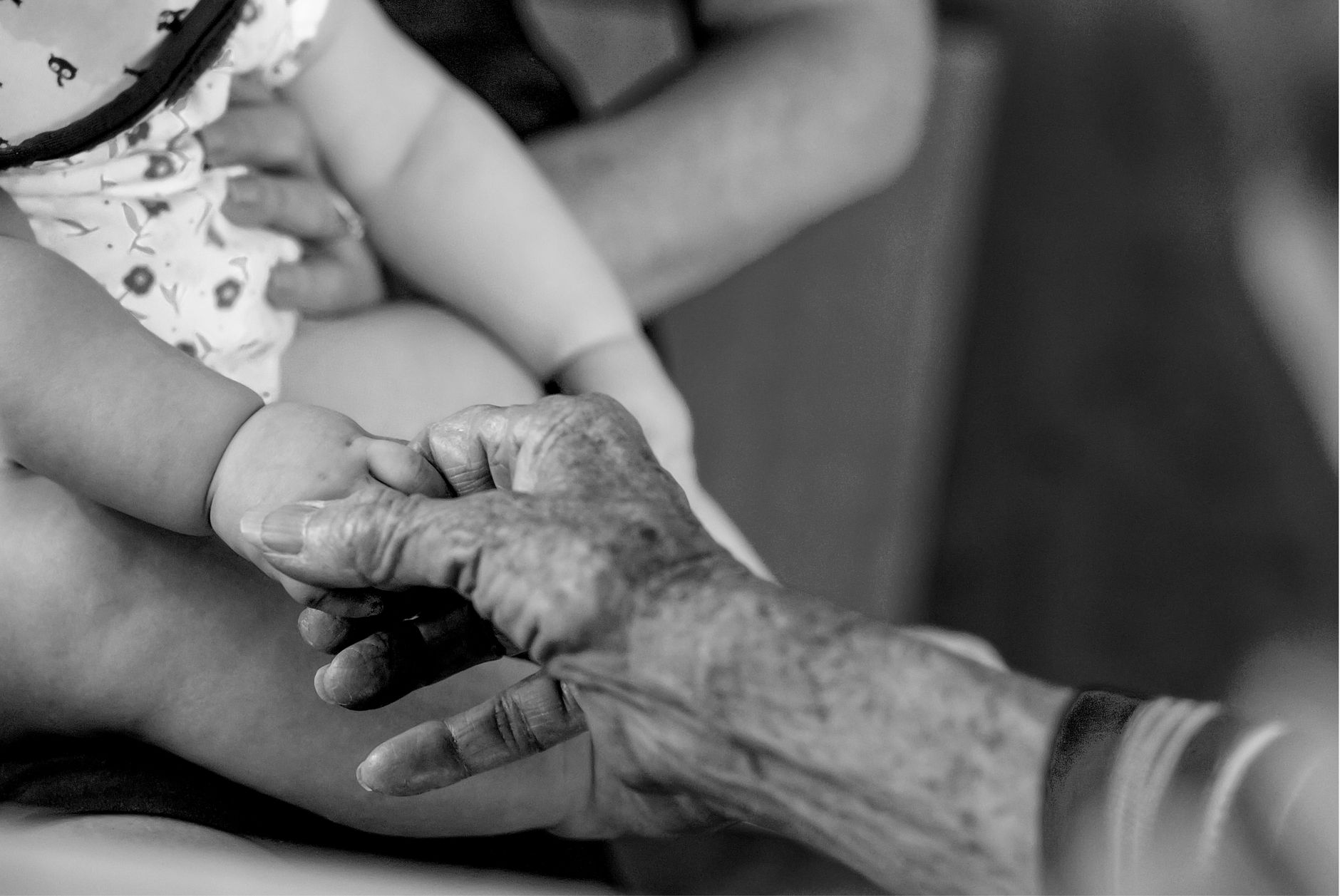
The Quilt I Made for Rosie
The kitchen
She asked me to step into the church kitchen, and she shut the swinging door behind us.
“Trevor told you,” she said. It was not a question.
“Honey, I’m so sorry. Lois asked me right out, and I just said it.”
“I asked him not to tell anyone.” Her voice was shaking. “I planned that for two months. I had Nana’s picture on the table by the cake. I was going to stand up at the end, in front of my mother, and say it. It was the one thing I could give her this year. Do you understand? One hour. You couldn’t wait one hour.”
I did understand. And I said, “I’m sorry, Kayla. I truly am.”
That was the right thing to say. If I had stopped there, I would have a different story to tell you.
But she said, quieter, “He’s your son, and he told you. But I’m his wife.”
And something in me, some old, proud, tired thing that had been waiting its turn for three years, stood up and said, “It’s a name, Kayla. It isn’t a state secret. I would think a baby’s grandmother might be allowed to be glad.”
The kitchen got very quiet. A faucet went on dripping.
“Maybe you should go home,” Kayla said.
So I went. I walked out through the fellowship hall past the cake I had not been given a slice of, and I got in my car, and I sat in the church lot with my hands on the wheel for a quarter of an hour.
I told myself she had been unkind. And she had. But I had been unkind too, and a fair part of me knew it before I turned the key.
The silence
I mailed a card that Monday. I wrote that I was sorry I had spoiled her surprise and that I loved her. She did not answer.
I mailed another two weeks later. Nothing came back but a thumbs-up on a text from Trevor, which was my son’s way of saying, “Mom, I saw it, and I don’t know what to do.”
Trevor is a good man. I will say that as many times as it takes. He teaches shop at the high school in Marston Grove, and he is the kind who fixes your gutter before you ask. But he would rather wade through a flood than stand in the middle of a quarrel between two women he loves.
“Give her a few weeks, Mom,” he said. “She’s just sore. She’s seven months along, she’s tired. It’ll blow over.”
I said, “Of course.”
It did not blow over.
The baby came on the fourteenth of May, three weeks early, and Trevor called me at ten past five in the morning from the hospital hallway. He was crying, a thing I had not heard from him since his father’s funeral.
“She’s here, Mom,” he said. “Seven pounds, two ounces. Rose Ann. Her hair is dark.”
“Is Kayla all right?” I asked, and I meant it.
“She’s tired. She’s good. They’re both good.”
I thanked the Lord out loud in my kitchen in my nightgown. Then I packed a casserole, and that is where the text found me.
Why I didn’t just drive over
People ask me this, and I asked myself that Thursday for a good four hours. Why didn’t I get in the car with the pan and show up at the door? I was her grandmother.
But I had already used the grandmother line once, in a church kitchen, and it had cost me. I could hear what I would sound like on the porch of a new mother just home from the hospital, with stitches and a baby and a husband who could not decide which way to face.
Walt used to say you cannot pry a door open from the outside without breaking the frame. He said it about stuck barn doors, but he meant it about people too.
And I thought about that baby. I did not want the first thing Rosie learned of her grandmother to be an argument on a doorstep.
So I typed back, “Congratulations to you both. I love you. I’ll be right here whenever you want me.” I deleted it twice and sent it the third time.
Trevor sent a thumbs-up. Kayla sent nothing.