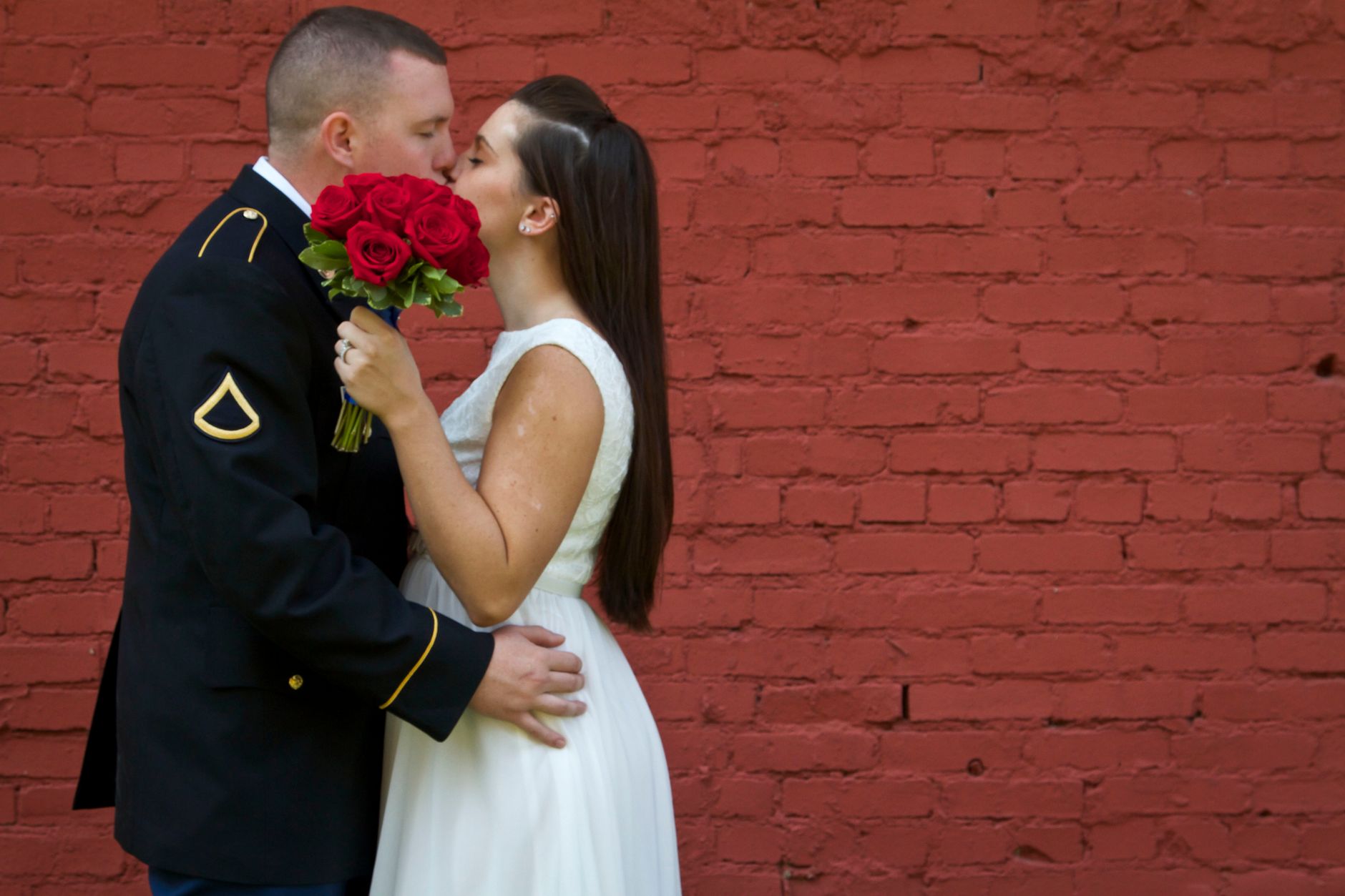
The Soldier Bride Who Asked Mom for a Dish
She married Daddy at eighteen and moved into his grandmother’s house, the one she still lives in.
The kitchen in that house had not been touched since about 1974. The oven door stayed shut with a bungee cord for the last six years Daddy was alive.
Daddy always said he would redo it. Every spring he said it.
He drove a grain truck and worked for a farm supply store, and there was always something that came first, a transmission, my braces, his mother’s medicine.
Then four years ago he had a heart attack in the parking lot of the feed store, and he was gone before the ambulance got out of town.
He was fifty-one. I was twenty-three and already in the Reserve.
Mom went back to work at the deli counter at the grocery store on the bypass.
She slices ham for people she went to high school with. She never once complained about it out loud.
So when I sat in my truck that day, part of me already understood how it happened.
Six money orders, sitting in a drawer, in a house where the oven door was held shut with a cord. I understood it. I just could not forgive it yet.
Cody was the one who said it first.
We were driving back from his mother’s place that Sunday, past the VFW post on the edge of town with the old tank parked out front, and he slowed the truck down.
“Your daddy was a member there, wasn’t he?” he said.
“Twenty years,” I said. “He was in the Gulf. He went over in ninety. He used to march in the Memorial Day parade with them every year until his knees quit.”
Cody pulled into the gravel lot and turned off the engine. “That hall holds a lot of people,” he said. “And I bet it doesn’t cost what a barn does.”
My daddy had served in Kuwait in 1991. I had come home from Kuwait that March.
I sat in Cody’s truck in that parking lot and something in my chest got very still and very clear.
“I’ll wear my uniform,” I said.
Cody turned and looked at me. “Yeah?”
“I’ll wear my blues. You wear a suit. We’ll do it right here. We’ll make it a potluck, like a fish fry, like a funeral dinner, like every good thing that ever happened in this town.”
He grinned slow. “Your mama said a soldier can get married at the courthouse.”
“She’s right,” I said. “A soldier can. But this one isn’t going to.”
The post commander was a man named Walt Ferris.
He was fifty-nine, a retired mail carrier, and he had served in the same division as my daddy in the Gulf, though they did not meet until they both came home.
He was the one who stood up at Daddy’s funeral and read the poem.
He was the one who folded the flag with the honor guard and knelt in front of Mom and said the words about a grateful nation.
I went to see him at the hall on a Tuesday afternoon. “Morgan Tate,” he said, standing up. “Look at you. Welcome home, soldier.”
He shook my hand, and then he hugged me, and he smelled like coffee and Old Spice the way all of them did.