The Pecans Grandma Sold in Her Own Name
Sherry’s face crumpled. She put one hand flat on Dale’s counter like she needed it to stand up. For a second I thought she was going to cry right there in front of all of us, in front of Dale and Travis and my eleven-year-old son.
But she did not. She took her hand off the counter. She nodded once, at nobody, at the floor. And she turned around and walked out the door, and it swung shut behind her, and we heard her car start in the lot.
Nobody moved for a long moment.
Then Dale took his reading glasses off and let them hang on the cord. “Miss Opal,” he said. “I owe you an apology.”
“You don’t owe me anything, Dale.”
“I do. She brought me Walter’s pecans two years running and said they were hers to sell, and I should have asked more questions than I did. I’ve known you my whole life. I should have picked up the phone.”
Grandma looked at him for a moment. Then she folded the check in half and put it in the inside pocket of her red coat. “You know what, Dale? You paid a fair price both times. That’s all I ever asked of this station.”
He walked her back out to the truck and helped her in himself.
On the drive home, nobody said anything for the first few miles. Then Hunter, from the back seat, said, “Is Aunt Sherry in trouble?”
I opened my mouth to answer and did not know what to say.
Grandma turned halfway around in the front seat. “No, honey,” she said. “Aunt Sherry is sad. That’s different.”
“Because she took your pecans?”
“Because she took them and she knows it.” Grandma faced the windshield again. “Knowing it is its own kind of trouble. Most of the time it’s enough.”
Hunter thought about that. “Are we still picking next weekend?”
“There’s thirteen trees left,” Grandma said. “Of course we’re picking.”
The third Saturday, we pulled into the drive at eight like before. The wind had laid down overnight and the sky was clear and the grove was a carpet of yellow leaves from one end to the other.
There was already a car in the drive.
Sherry was standing beside it in a pair of old jeans and a barn jacket that I think had been Grandpa’s. She had a five-gallon bucket in each hand. She did not look at me when I got out of the truck. She looked at the porch, where Grandma was coming out the screen door with her blanket.
Grandma stopped at the top of the steps.
“I thought I’d help,” Sherry said. Her voice was very small. “If that’s all right.”
My grandmother looked at her daughter for a long time. Then she came down the steps, slow, one hand on the rail.
“The Stuart by the creek is the biggest one left,” she said. “Nobody’s touched it yet. Your daddy always said that tree didn’t like to be rushed.”
Sherry nodded. She swallowed. “I remember.”
“Well,” Grandma said. “Go on, then.”
Travis carried the lawn chair down to the creek tree without a word, and Grandma settled into it, and for the first time in two years the whole family was under those trees at once.
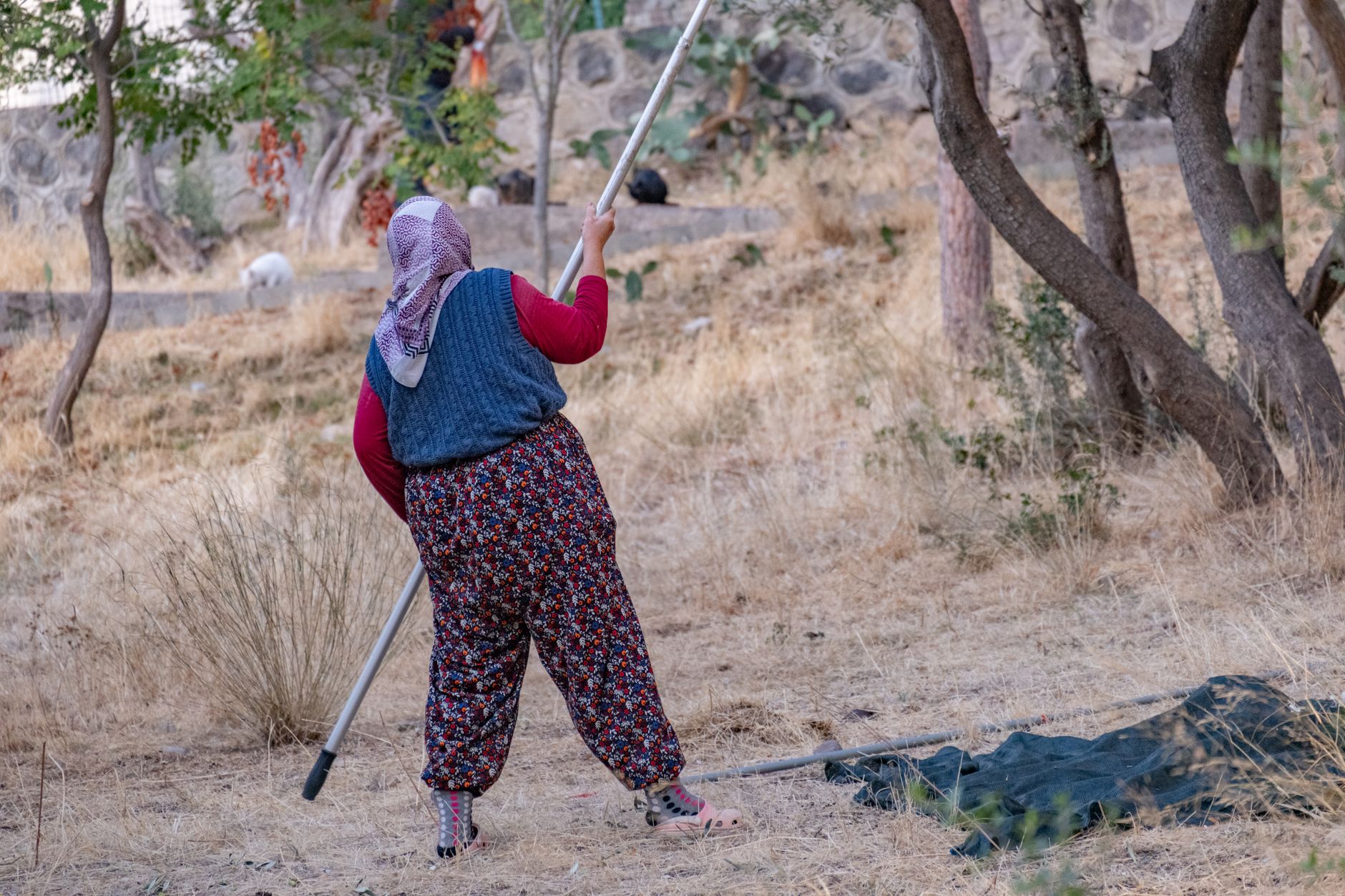
Sherry picked like she had something to prove. She worked on her knees in the leaves, feeling for the nuts the roller missed, filling buckets faster than anybody. She did not talk. Hunter and Macy stayed clear of her at first, the way children do when they can feel weather coming, but by midmorning Macy had drifted over to her side of the tree.