The Buyer at the Machine Shed Door
I froze with the dish towel in my hand and asked him why. He shrugged. “I don’t know. Savannah said it’s hard on you, having it all sitting around.”
“Did she,” I said, and I kept drying the same plate.
“She worries about you.” He picked at the label on his pop can. “She’s not good at saying it. But she does.”
Meanwhile, Karen’s phone kept lighting up. Karen would forward me the screenshots at work, and I would read them at my desk between patients.
On Friday night I went out to the shed by myself with a flashlight.
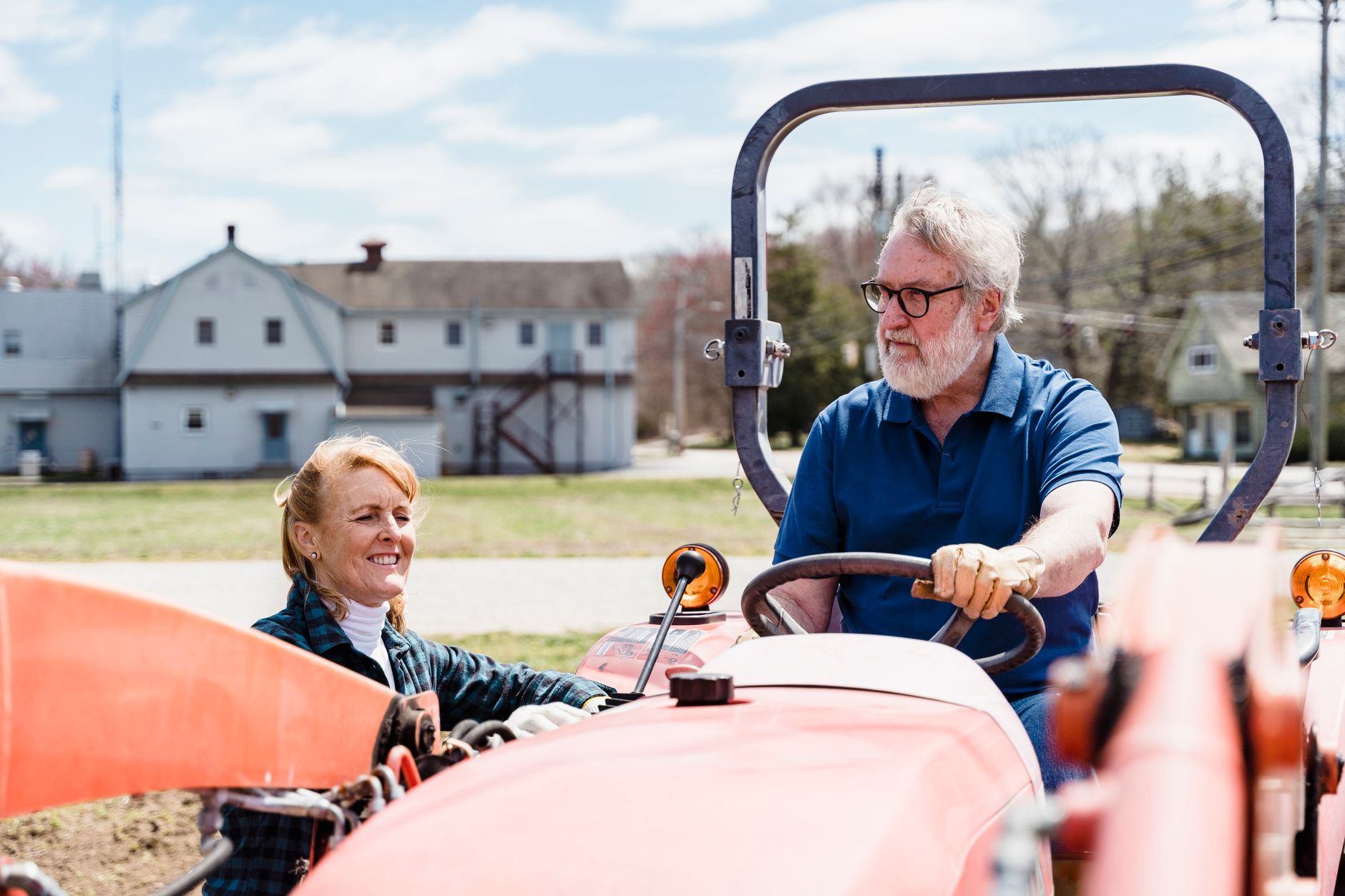
The tractor was parked where it always is, off to one side under the rafters. Savannah had washed it so well the paint looked wet under the light. She had even wiped down the seat.
I walked around it slowly, the way Arlo used to walk around it, with one hand on the hood.
On the inside of the left rear fender, down low, where you would only see it if you crouched, there is a handprint. A man’s handprint, in old black grease.
Arlo put it there the night he finally got the engine to turn over. He came running into the house at eleven o’clock at night yelling for me to come listen, and he had grabbed the fender to steady himself climbing down.
I asked him to clean it off later. He said no. He said every restored tractor ought to have one honest mark on it somewhere.
I crouched down with my flashlight. It was still there. She had washed everything, but she had not found that.
I sat on the cold concrete floor next to the big back tire and cried for a while. Then I went inside and laid out my clothes for Saturday.
Saturday morning there was a funeral at church. Mel Haugen, ninety one, who had farmed north of us his whole life and who used to stop by and argue with Arlo about hydraulic fluid.
I had signed up to help serve the lunch weeks before. Ham buns, scalloped potatoes, three kinds of bars and that green salad with the marshmallows that every funeral in this county has to have.
I put on my navy dress and my navy wool coat and went. I served two hundred and some people. I poured coffee for Mel’s grandsons. I did not think about the tractor for almost an hour, which was a gift.
Karen picked me up from church at a quarter to two. She had insisted on driving, because she said she did not trust me to drive and think at the same time, which is fair.
“Do you want to change first?” she asked. I looked down at myself. Church dress, good coat, the flat shoes I wear for serving.
“No,” I said. “I think I’ll go just like this.” I don’t know why. It felt like the clothes for it.
She dropped me at the end of our driveway at five to two and pulled her car off onto the field approach to wait.
“Text me if you need the bat,” she said. I said her name the way our mother used to say it, and she held up both hands and said she was only mentioning that it was in the trunk.
I walked up the gravel. It was one of those gray October afternoons where the sky is the color of dishwater and the trees in the grove are bare and everything smells like leaves and the elevator in town.