Six Cribs in My Living Room
“You taught me that,” I said. “When Owen started with you. You showed me your notebook and said a mother should know every bottle her baby had when she wasn’t there.”
Pam put her hand on the back of my grandmother’s rocking chair and held on to it.
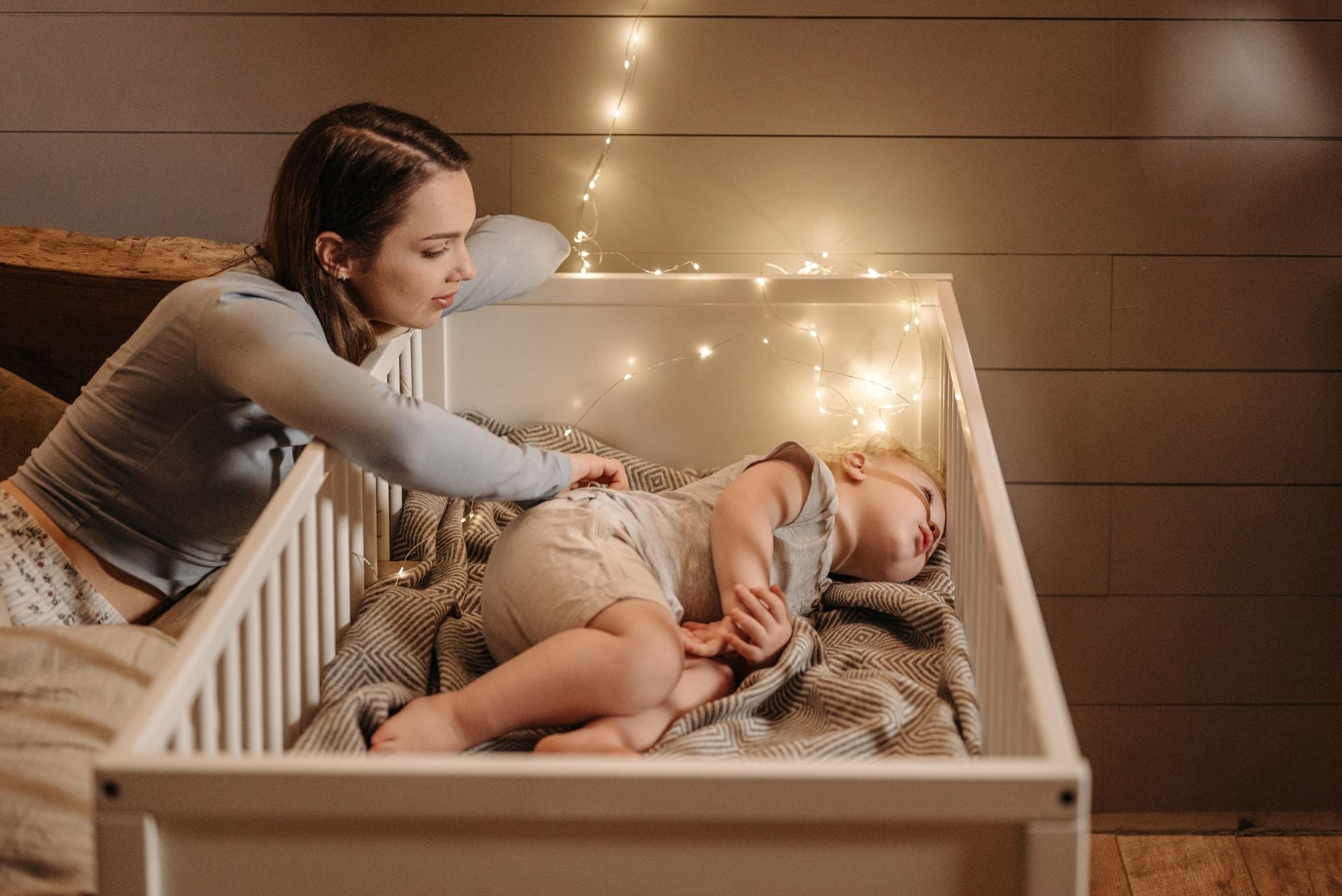
Stephanie laid Mia down next to Owen in his crib. She had been fussing in the playpen corner, rubbing her eyes. As soon as she was down, Mia rolled toward Owen the way she always did, and put her hand on his arm, and he put his hand on hers without waking up.
Pam stood by that crib and looked at her granddaughter asleep with her hand on my son’s arm, and she did not say anything.
She just stood there, in her stocking feet, crying without making any noise at all. Stephanie went into the kitchen to give her room.
“They’ve been doing that since December,” I said quietly. “Since the first week. She wouldn’t sleep anywhere else. They knew each other from your baby room. They’d been next to each other since they were tiny.”
“I know,” Pam said. “I put them next to each other. The day Mia started. I thought she’d like to have a friend.” She covered her mouth with her hand. “Oh, Jenna. I put them next to each other.”
I let her stand there as long as she needed to. Then I went into the kitchen, opened the notebook to a blank page, and wrote Pam on the Thursday line, and drew a box next to it the way we drew boxes for everybody.
“Thursdays,” I said, when she came into the kitchen. “Eight to two. You do bottles and naps. You write everything down. Stephanie’s on with you, so you won’t be by yourself.”
She looked at the notebook for a long time. “Thank you,” she said.
“Don’t thank me,” I said. “Thank Kristy. She’s the one who walked up those steps first.”
Pam nodded. She went out to the truck and told Dale he could go on home, she would need a ride at two. Dale looked up at the house for a while.
Then he drove off down our narrow street, slow, and Pam came back up my four steps and closed the door behind her.
I handed out the checks myself that week. Fourteen families. Some of them cried. One dad from Belleville just put his check in his shirt pocket, shook my hand, and said, “Well, I’ll be.”
Kristy did not cash hers. She framed it and hung it in her kitchen.
Pam came every Thursday after that. She never missed one. She did bottles and naps and wrote every single thing in the notebook in her round handwriting.
She never talked about the daycare, and none of us asked. She sang to the babies, old hymns mostly, very quietly, while they went down.
She came back to church in April, on Easter Sunday. She and Dale sat in the third pew, on the end, where they always had.
A few people looked. Most did not. After the service, Kristy walked over with Mia on her hip and sat down next to her mother, and that was that.
Sometimes I think about that first morning, standing at Pam’s door with the lunch menu flapping in the wind and my car running behind me.
I thought it was the end of something. It was. It just was not the end I thought it was.
Six cribs, three moms, one Monday.