The Seat I Saved Every Saturday
The last Saturday
I woke up in an empty bed and made eggs badly and ate them standing up. It was sixty-eight degrees in the middle of October, which in Ohio is a gift. I put the coat over my arm, the way I do, and took the thermos and went.
I got to the field at noon. The lot was half empty. Kenny Mast was at the gate with his hands in his pockets, and he looked at me, and then he looked quickly at his shoes. I thought he had a cold.
I climbed up to row seven and laid the coat on the aisle seat. I smoothed the sleeves. I poured the two cups. It was the tenth time.
Josh and Hannah Brill were in their lawn chairs. The baby waved at me. Hannah waved too.
When I looked to my right, Orville was already in his seat.
This was unusual. Orville has arrived at ten till one on every home Saturday since the Nixon administration, and I have set my watch by him. And here he was at noon, with both hands on his cane and his back straight, looking at the gate.
“You’re early,” I said.
“Was up,” he said.
He kept turning around to glance at the top of the stands, and then at the gate, and then at his watch. When I looked where he was looking, there was nothing there but Kenny Mast and a line of folks coming in with their lawn chairs.
I figured he was watching the cheerleaders. He is eighty-one. A man is allowed.
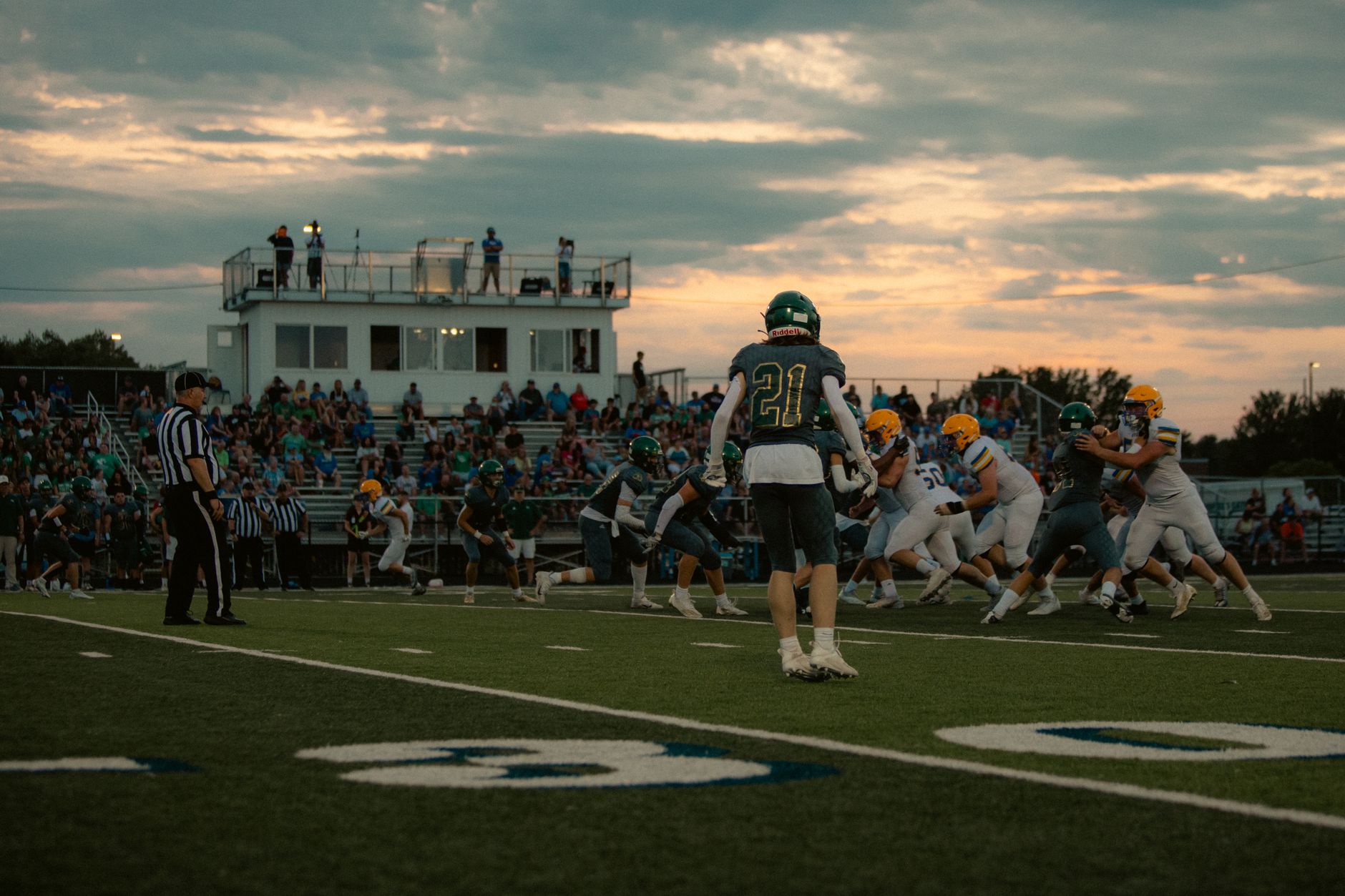
The game started on time. I won’t give you a play-by-play, because I couldn’t. Archer Falls had a running back the size of a refrigerator, and he scored twice in the first half, and we answered with a field goal and a long pass.
At halftime we were down fourteen to ten. The band came out. I poured myself a fresh coffee from the thermos and left the second cup where it sat.
In the third quarter we got a defensive stop and a long drive, and Parsons caught the ball in the corner of the end zone with a defender on his back. The home side went up like a flock of birds. I stood up. I clapped. We took the lead. Then the refrigerator scored again, and with four minutes left we were down three, the ball on our own thirty.
Orville had gone quiet again. He had stopped turning around.
That’s when someone stopped in the aisle beside me.
I felt it before I saw it. A shadow went across the canvas of the coat and across my knees. Somebody was standing there on the step, very still, as if he had come to the end of a long walk and was not yet ready to put his foot down.
“Sir,” a man said, low. “Is this seat taken?”
I had heard those words a dozen times over two seasons. From a man with a bad back. From a woman who wanted to be near the aisle. From two boys off the visitors’ side who had come across the track by mistake.
I had a habit by then, and the answer came out of me before I had thought about it.
“It’s saved,” I said, and I kept my eyes on the field.
He did not go away. Every other person had said sorry and moved on. This one stood there, and the quiet went on long enough for the home crowd to roar at something I did not see.
“I know it is,” the man said. “I’ve heard.”
There was something about the way he said it. It was a voice that had been asked to be quieter than it was.
I had my hand on the coat. I felt the canvas under my palm, and the patch, and the edge of the corduroy collar.
And I knew that voice before I knew I knew it. The way you know your own front door in the dark.
I turned my head.