The Seat I Saved Every Saturday
Homecoming
The third home game was homecoming, and I should have seen trouble coming.
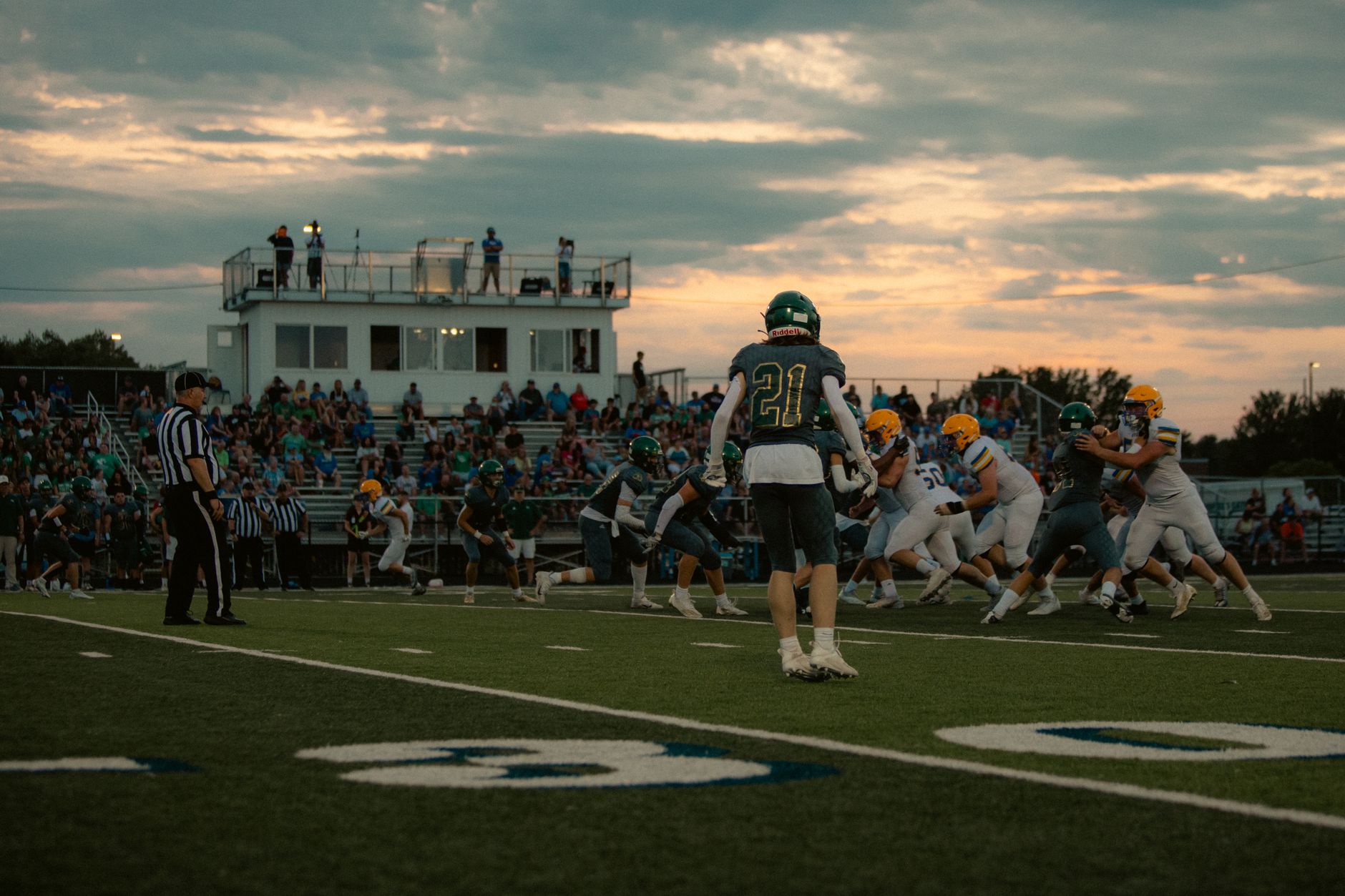
By a quarter to one there were people standing in the aisle with their elbows touching, and the only open space on the entire home side was a coat-sized place on a bench in row seven.
A young couple worked their way up the steps. I knew the husband slightly, Josh Brill, who had been a freshman when Nate was a senior. His wife, Hannah, was holding a baby against her shoulder, a little boy in a knit cap with ears.
“Is this seat free?” he asked.
“It’s saved,” I said.
He looked at the coat. A tired man with a baby behind him and a cooler in his arms. I could see him doing the arithmetic.
“For a coat?”
“For my son,” I said. “He’s deployed.”
I watched it go across his face. He went red from the collar to his ears, and he said, “Oh, no, sir, I’m sorry, I didn’t know,” and then he said it again, and Hannah put her hand on his arm.
“We’ll find somewhere else,” she said.
They did not find anywhere else. The stands were full. They stood against the rail at the end of the row the whole game with that baby, who got heavier and heavier on her shoulder, and I watched them out of the corner of my eye for four quarters.
I felt terrible. I sat there with my hand flat on the canvas, and I did not move it.
The next home game, I came up the steps at noon and found two lawn chairs set up on the track right beside row seven, with a blanket on the ground between them and a diaper bag. Josh and Hannah Brill had been there since eleven-thirty.
They have been there every home game since. They never brought it up and neither did I. Every game, Hannah waves, and the baby, who was about to turn one then, looks at the coat and points at it with his whole fist.
Nine days
Nate called when he could. It was never at a good time.
The first call came on the second Sunday in September, at four o’clock in the morning. I got to the phone on the sixth ring, with Arlene right behind me in her robe, and then the three of us stood in the dark kitchen listening to each other breathe. His voice was a half second behind itself. He sounded tired and alive and about nine years old.
He wanted to know about the game. I told him the score, and who had played tight end, and when I said the kid was no Mattingly, I heard him laugh. It went right through me. Arlene put her hand over her mouth.
“You still in row seven, Dad?”
“Where else.”
I did not tell him about the coat. That was a decision. I thought it would weigh on him, thinking about me up there on my own in the stands, talking to a coat. A boy has enough to carry. He did not need to carry me.
The first season ended in October with a loss to Archer Falls in the rain, and I poured out the second cup of coffee one more time, and drove home.
Winter was long.