The Mic the Deacon Left On
Half of Hollins, Nebraska heard what Deacon Royce Albrecht really thought of me before I did, because the little camera at the back of First Baptist was still running when he said it.
I need to tell you who Royce was to us first, or none of this will hurt the way it should.
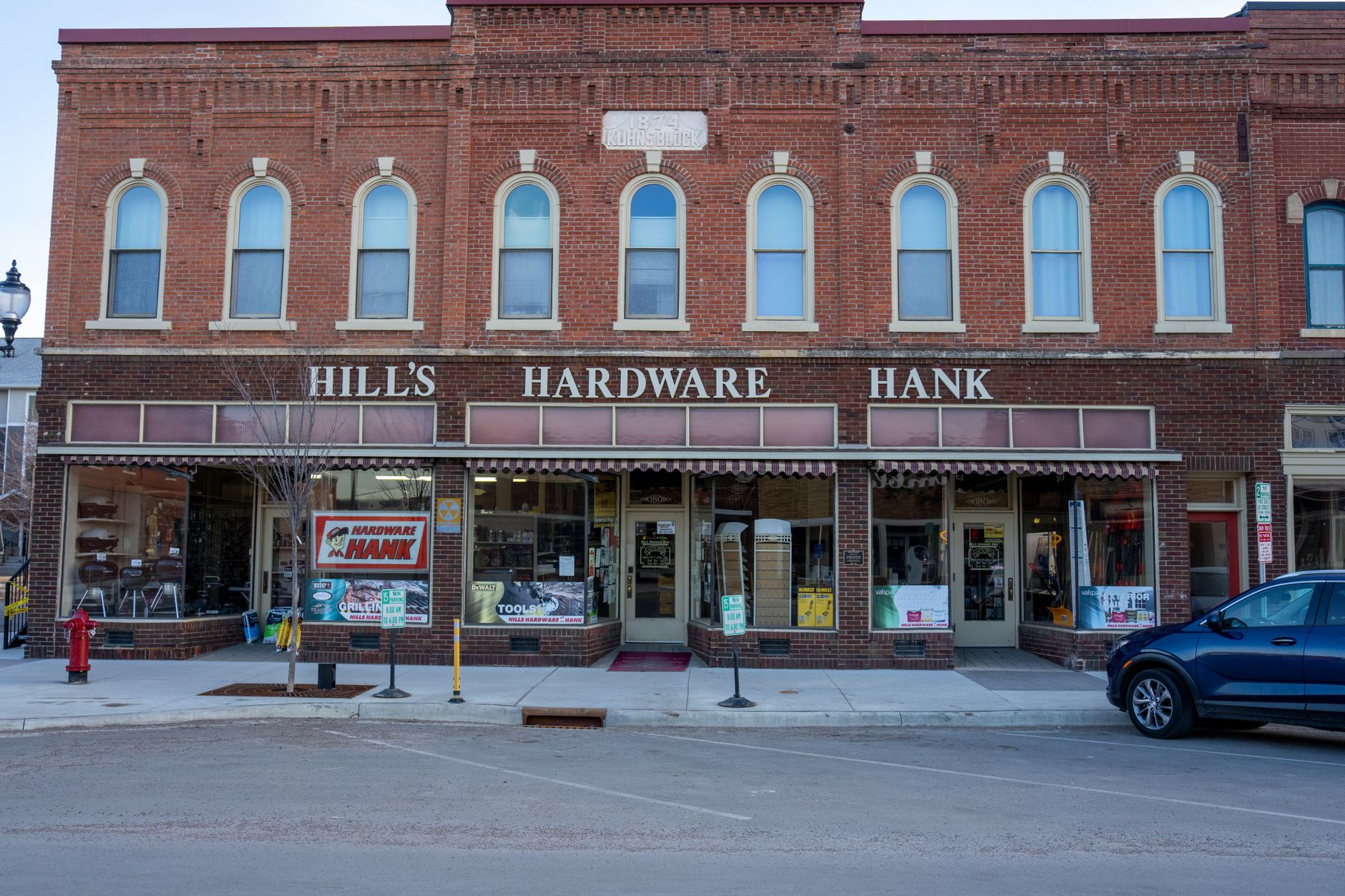
My name is Imogene Haskett. I am seventy-one years old. My husband Lowell and I ran Haskett Hardware on Main Street for forty-six years, the store his father opened in 1961, the one with the creaky oak floor and the bins of loose nails you scoop by the pound and the popcorn machine by the register that Lowell refused to get rid of even after the health inspector gave him a look. Royce Albrecht was Lowell’s best friend from the first grade on. He was the best man at our wedding. He held our boys at their baptisms. When Lowell had his heart attack in the back office of the store last June, sitting in the same chair he had sat in for half a century, it was Royce who drove me to the hospital in Grand Island, and it was Royce who stood at the head of the casket at the funeral with his big hand on the lid like he was keeping it shut against the weather.
So when Royce started coming by the store in July to “help,” I let him. Of course I let him.
He helped with the books, because grief had made a mess of my handwriting. He helped me talk to the suppliers. He took a key to the back door so he could check on things when I went home early, which I did a lot that summer. And sometime in August, he sat me down at the little table by the popcorn machine and told me that Lowell had said something to him in the hospital that he had been waiting for the right time to share.
“He told me, Genie, take the store off her hands. Don’t let her wear herself out down there. Make sure she gets something fair for it.”
Something fair turned out to be thirty-five thousand dollars, for the building and every item on the shelves. Royce said the roof needed work. He said Main Street was dying. He said a woman my age had no business climbing ladders to the top shelf for paint rollers, and he was not wrong about the ladders, and that is how he got me. A good lie always has one true thing in it to stand on.
I said I would think about it. I thought about it for a month, and in that month a strange thing started happening. My sons started calling more. Paul in Lincoln. Danny in Kearney. They would ask how I was sleeping. They would ask if I had been forgetting things. Paul, my oldest, finally said the words one night, very gently, the way you would ease a bandage off a child. “Mom, Royce says you left the burner on at the store twice. He’s worried about you. We all are. Maybe the store is too much now.”
I had left a burner on once. Once. It was the coffee pot in the back, and it was the week after the funeral.
I went to bed that night and lay there in the dark wondering if I was slipping, if this was how it starts, if everybody could see it but me. That is the cruelest thing you can do to an old woman. You do not have to take a thing from her. You only have to make her doubt she can hold it.
I agreed to sign on a Tuesday at ten o’clock. Royce was bringing a lawyer from Grand Island.
Now I have to tell you about the camera.
After Lowell died, his sister Arlene could not make it up from Arizona for the funeral, so our church streamed the service online for her, the first time First Baptist had ever done such a thing. Afterward, people gave money in Lowell’s memory, and the deacons voted to spend it on a proper camera and some little clip-on microphones so the shut-ins could watch Sunday service every week. It was Royce who made that motion. It was Lowell’s memorial money that paid for it.
They put Micah Dunn in charge of it. Micah is sixteen, a skinny, polite boy with his grandmother’s red hair, and he runs the whole thing from a laptop in the back pew. Every Sunday the stream goes out, and every Sunday the Linden Manor nursing home puts it up on the big television in their dayroom, and nobody over there turns it off until they bring the lunch trays.
The Sunday before the signing, Royce read the scripture. He wore one of those little clip microphones on his lapel. I went home right after the benediction with a headache, so I was not there for what happened next.
Micah’s grandmother was waiting dinner on him, so he shut his laptop lid and ran. He did not know that shutting the lid does not end the stream. The camera sat at the back of that church pointed at the pulpit for nineteen more minutes.
And Royce sat down in the front pew with his nephew Curt, and Royce still had that little microphone clipped to his chest.
I have watched the recording more times than I should. I can tell it to you word for word, and I will tell you only the part that matters.
“Tuesday at ten she signs,” Royce said. “Thirty-five thousand for a building Lowell paid off in ’09, and the whole stock thrown in. That dollar-store outfit is offering two hundred forty for the lot. You’ll have it flipped by Christmas.”
Curt asked him what if the boys made trouble.
“The boys think she’s slipping. I’ve been telling them so since August.” And then he laughed, a soft, easy laugh, and he said the thing I will hear for the rest of my life. “That’s the beauty of a widow, Curt. She’ll thank you for the knife if you hand it to her handle first.”
At 6:40 Monday morning, my telephone rang.
It was Hettie Brandvold. Hettie is ninety-one. She taught Lowell to read in the first grade, and she lives at Linden Manor now, and her voice was shaking so hard I thought someone had died.
“Imogene, honey,” she said. “Don’t you sign anything tomorrow. Don’t you sign one thing.”
Then she told me. Her, and the whole dayroom. Thirty-some old folks in their wheelchairs and recliners, waiting on their lunch trays, had sat and watched Royce Albrecht say it. Hettie said nobody spoke for a long time after. Then old Mr. Kvasnicka, who served in Korea and has not said ten words a day since his wife passed, said, “Somebody better call Lowell’s wife,” and Hettie said, “I will,” and she had lain awake all night waiting for a decent hour.
By noon I had six more calls. By three o’clock I had stopped answering the phone, and that was when the bell over the store door rang and Micah Dunn walked in, white as flour, holding his phone in both hands like it was something that might break.
“Mrs. Haskett,” he said, “I’m so sorry. I forgot to hit End.”
Pastor Gene had called him that morning and asked him to take the video down, and Micah had, but first he had saved a copy, because, he said, “It didn’t seem right that you’d be the only one who never got to see it.”
He held the phone for me across the counter, right there next to the popcorn machine, and I watched my husband’s best friend call me a fool in Lowell’s own church with Lowell’s own memorial money paying for the microphone.
I did not cry. I want you to know that. I put my hand flat on that old oak counter, the one Lowell’s father built, and I felt something come back into me that had been gone since June. It was not grief. It was the feeling of being sure.
I asked Micah to send the video to my phone and show me how to forward it. Then I sent it to Paul and to Danny with one line: “This is the man who has been telling you I’m slipping.”
Danny was in my kitchen in Hollins by eight o’clock that night. He had driven ninety minutes without stopping. He hugged me in the doorway the way he used to when he was small and had done something he was ashamed of, and he said, “Mom, I’m sorry I believed him.” Paul called and could barely talk.
Tuesday at ten, Royce came to the back office of the store with Curt and a lawyer in a gray suit. He had a folder of papers and a box of donuts from the Casey’s. He sat in Lowell’s chair. He started in on how Lowell would be at peace now, how this was the kindest thing for everyone, how he was only doing what his friend had asked.
I let him finish. Then I set my phone on the desk, face up, and I pressed play.
You have never heard a room so quiet as a room listening to a man’s own voice say a cruel thing he never meant for it to hear. When it got to the part about the knife, the lawyer from Grand Island closed his folder, very slowly, and said he had not been told the building was owned free and clear, and he believed he would be going now. Curt left behind him without a word.
Royce sat there in my husband’s chair, and his big face went the color of brick, and he said, “You’d shame me over a private conversation?”
“It wasn’t private, Royce,” I said. “You said it in the house of the Lord with a microphone on your chest. I’d say the only one in that building who wasn’t surprised was God.”
Danny opened the back door for him. Royce put the key to it on the desk on his way out. He left the donuts.
The deacon board met that Thursday. Royce resigned before they could vote. He still lives in Hollins, and he still comes to church, and he sits in the back pew now, near Micah’s laptop, and when he walks into the Main Street Café for coffee in the morning, the old men at the long table do not wave him over anymore. Nobody had to make a speech. In a town this size, the quiet does it for you.
Haskett Hardware is still open. Danny moved home in September and runs the ladders now, and I run the register and the popcorn machine. Micah works Saturdays. He is good with the paint mixer and terrible with the nails, and I would not trade him for the whole dollar-store outfit and their two hundred forty thousand dollars.
Last month Pastor Gene asked me to read the scripture. I stood up at the pulpit and Micah came forward and clipped that little microphone to my collar, and he whispered, “I’ll turn it off after, Mrs. Haskett, I promise.”
I told him to leave it on. I have nothing to say in an empty church that I would not say in a full one.