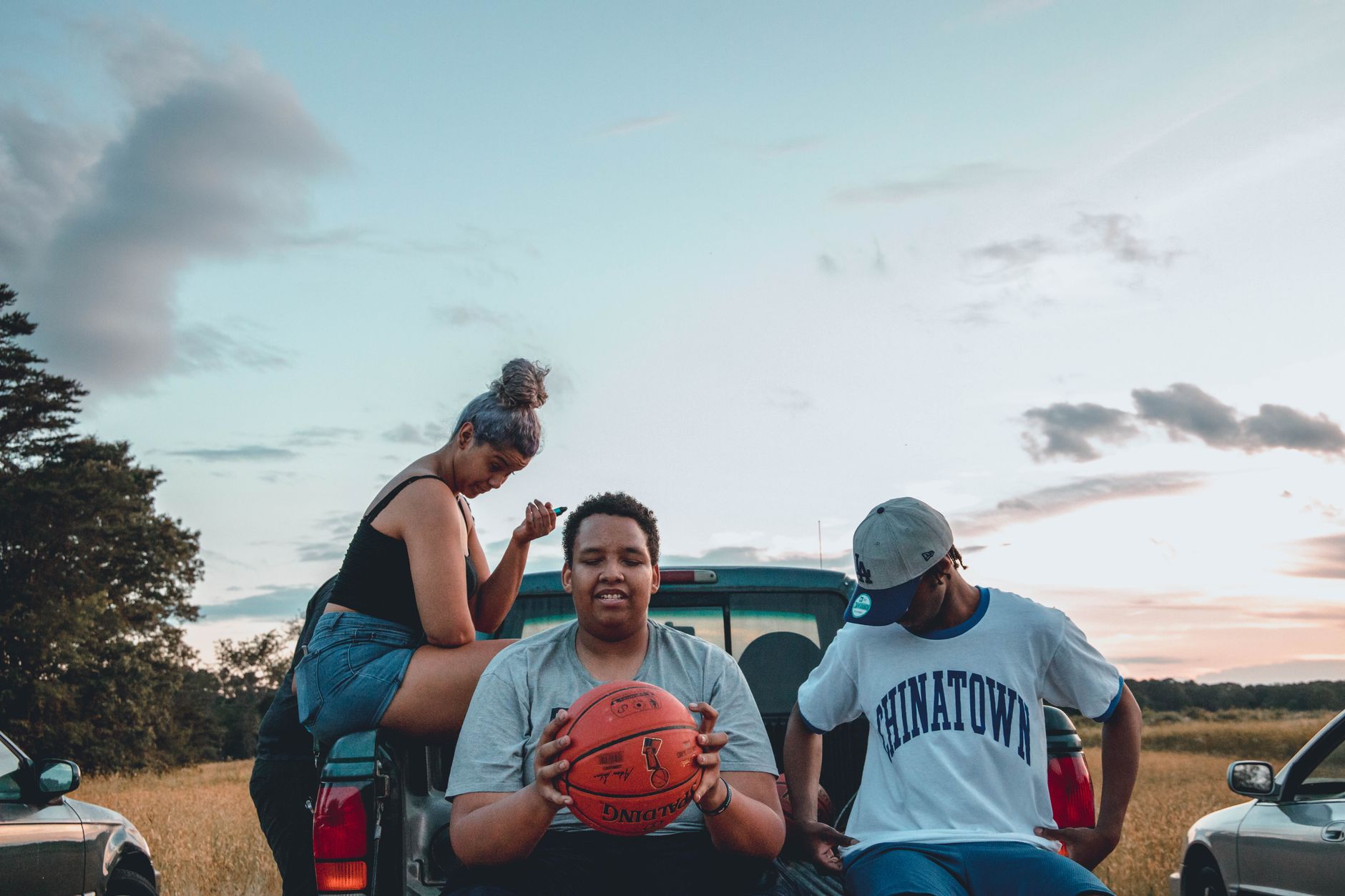
The Man Who Drove Cody to Practice
Forty minutes in the driveway
When Cody was fifteen, he decided he was done with basketball.
It was his freshman year, and he had made junior varsity, and he was good. But the friends he’d made had mothers who sat in the bleachers on Tuesday nights with seat cushions and thermoses. Cody’s mother was a shape at the back of the gym on the three nights a month she wasn’t at work. His ride was a twenty-year-old pickup with duct tape on the seat, driven by a white-haired man who hung back by the door.
I didn’t know that was what bothered him until later. He just said he was tired, and that he didn’t think he was that good, which was a lie so large I didn’t know where to start.
On a Tuesday in November, he stayed in his room at four fifteen with the door closed.
At four twenty-nine the pickup pulled into the drive. I was home that day with a bad back. I heard the engine shut off, which was the first strange thing. Coach always kept it running.
Then nothing.
I got up slowly and looked through the curtains. Coach sat at the wheel with both hands in his lap, looking through the windshield at the barn across the field. He wasn’t honking. He had his thermos on the dash and a peppermint in his cheek, and he looked like a man waiting for a train.
Four forty-five. Five o’clock.
Cody came out of his room at ten after five and stood at the window. His jaw was working.
“Mom, he’s not leaving.”
“Did you tell him I wasn’t going?”
“I haven’t said a word to him.”
Cody stood another minute. Then he grabbed his bag, walked across the gravel, and opened the passenger side. I watched him lean in and say something, and Coach say something back. Then Cody got in, shoved the glove box shut with the heel of his hand, and they backed out of the drive.
I asked him about it that night when he came home. He was at the counter eating cold chicken with his fingers.
“What did he say?”
“He said, ‘Practice starts at five thirty, son. We’re late.'”
“That was it?”
“That was it.” Cody chewed. “I told him I didn’t want him driving me anymore. I said everybody else’s mom came. And he just looked at the road for a while and said, ‘I know it. Wish I could fix that for you.’ And then he said, ‘I can’t fix it. But I can get you to practice.'”
Cody put down the chicken bone.
“And I thought, well. That’s something.”
He played three more years. As a senior he averaged eleven points a game on a team that went seventeen and seven, which for our school was a banner season. I did not miss many home games after that. I traded shifts and sat in the second row and watched a white-haired man on the bench clap with his hands held low, as if he didn’t want to be noticed doing it.