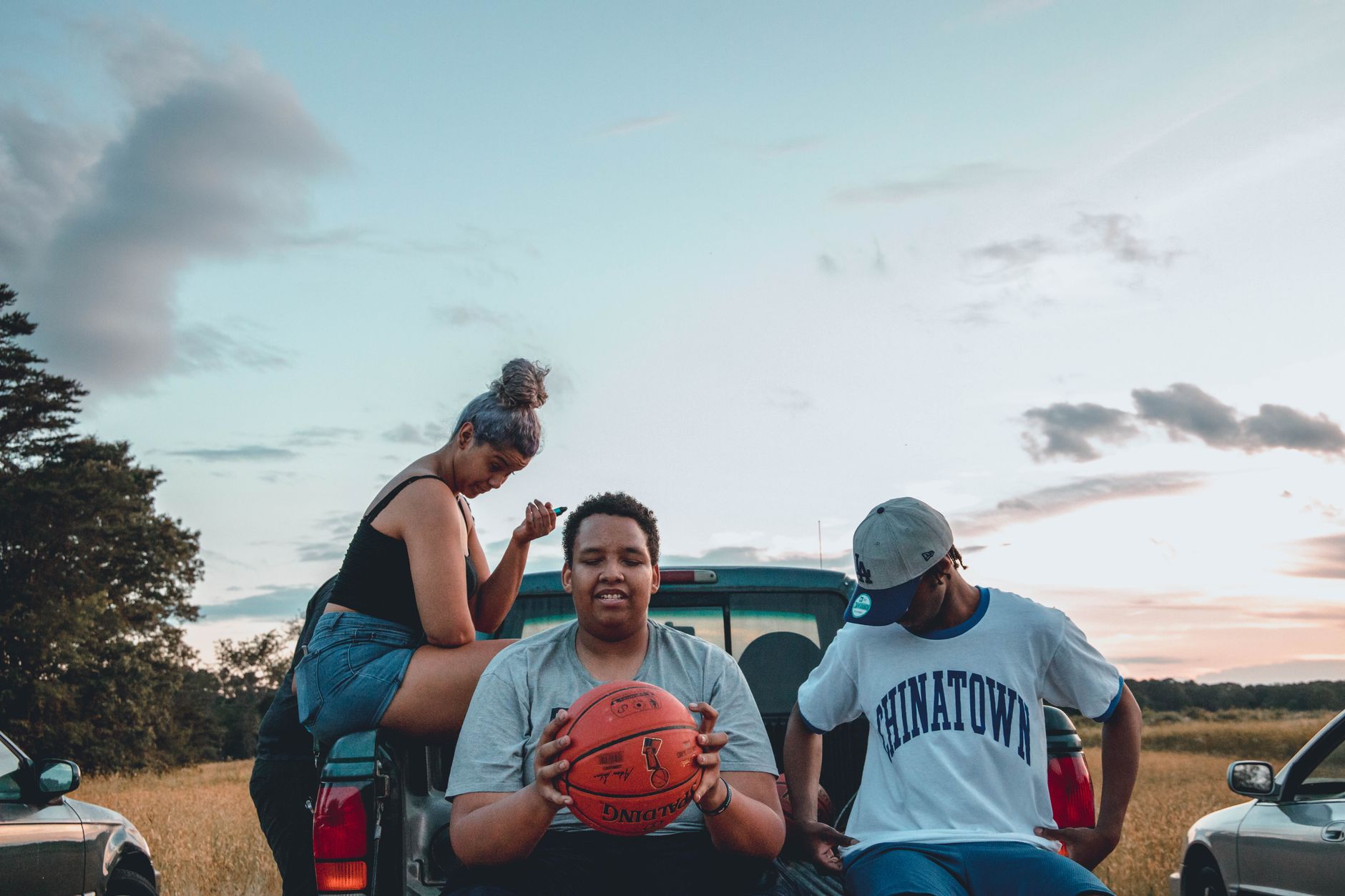
The Man Who Drove Cody to Practice
The pie
Of course I tried to pay him. The second week, I put a twenty-dollar bill in an envelope and left it on the truck seat with the word Gas written on the front. That was close to two hours of my pay after taxes. The next afternoon the envelope came back in Cody’s gym bag, unopened, with a note on the back in blocky pencil.
Put it toward the concession stand.
I tried again at Christmas with a card and a fifty. It came back with a peppermint taped to it.
So I did the only thing I had left, which was bake. My mother taught me her sugar cream pie when I was twelve, the Hoosier kind, just cream and sugar and a little vanilla in a shell, nothing to hide behind. I started leaving one on the truck seat on Thursday afternoons, wrapped in a dish towel, on a glass plate I couldn’t spare.
Coach never mentioned it. But the plate came back Friday in Cody’s gym bag, washed and dried, with the dish towel folded in thirds. I have thought about those folded towels more than any other part of that first year. A man who folds a towel in thirds for a stranger was loved well once and is trying to pass it on.
Fifty-six miles
Cody was twelve when he figured it out.
It was a Sunday evening in February. I’d traded a shift, and we were eating canned soup at the kitchen table. Cody had been quiet all through supper. Then he put his spoon down.
“Mom. Coach doesn’t live out our way.”
“What?”
“He lives clear on the other side of Bedford. On the east side, past the old school. I saw his address on a water bill in the glove box, so I looked it up on the map at the library.” He said it as if he were confessing to something. “It’s eighteen miles from his house to our lane. And then fourteen to the gym.”
“He said he passes our road anyway.”
“No, ma’am,” Cody said. “He doesn’t.”
He had done the math on the back of a homework sheet. Coach’s own house to the gym was four miles. Instead, he drove eighteen miles to our lane, fourteen to the gym, fourteen back to our lane, and eighteen home. Sixty-four miles for a trip that ought to have been eight. Fifty-six extra miles, Monday through Thursday, plus Saturdays.
“That’s a lot of gas,” Cody said, very quietly. “Mom, is he doing all that for me?”
The next weekend I took the first Saturday off I’d had in four months and rode with Cody to a tournament in Jasper, because I could not stand not knowing anymore. I had planned to say something grateful and dignified. What I said, somewhere past Huntingburg, was, “Mr. Voyles, why on earth would you do this?”
He kept his eyes on the road. He drove with both hands on the wheel at ten and two, like a man who had been taught properly once and never forgot.
“My wife’s name was Evelyn,” he said. “She passed in the spring of 2004. We never had children. Between four and six o’clock was when she’d have the radio on and start supper, and after she was gone, that was the part of the day I couldn’t get through. I’d sit in the kitchen and listen to the house.” He shifted his grip a little. “The rec center was short a coach for the sixth grade. I said I’d take it for one season.”
He let that sit for a mile.
“And then there was Bud Hartsock.”
“Who’s Bud Hartsock?” Cody asked, from the other side of me.
“Fella who ran the feed store in Springville. Nineteen fifty-eight, I was fourteen, the only boy on our team who lived on a farm with no truck. Bud drove me nine miles to practice and nine miles home, four years running, in a Dodge with a bad heater. He never took a dime. I tried once, my senior year. He said, ‘Wendell, I’ve got a seat in this truck and it’s empty anyway. You’ll find somebody to put in it.'”
Coach turned the heater down a click.
“It took me forty-nine years to find somebody.”